John Oliver Delivers Scathing Critique of Police Sting Operations
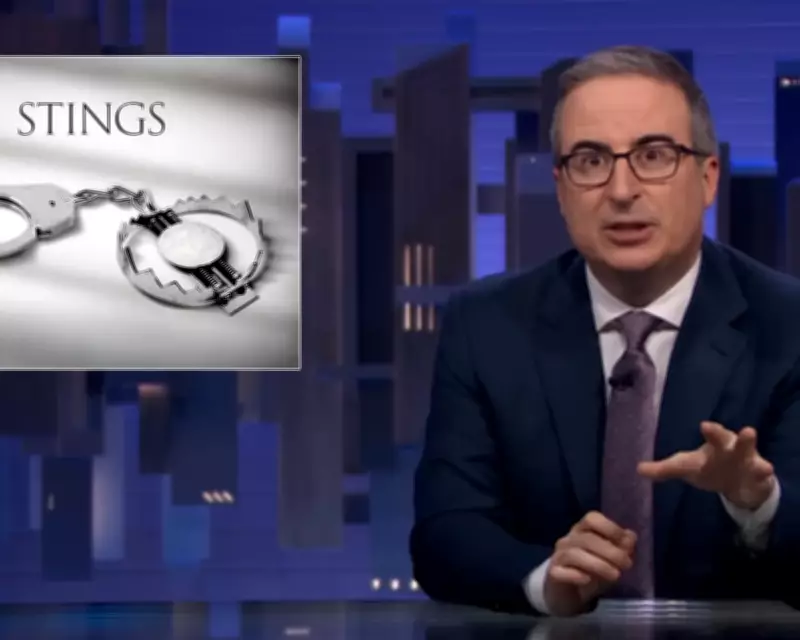
In a recent episode of his HBO programme Last Week Tonight, comedian and host John Oliver launched a comprehensive attack on police sting operations, asserting they "might actually be doing more harm than good." Oliver meticulously dissected how these tactics, which have become a cornerstone of law enforcement over the past forty years, often manufacture criminals for crimes that would not otherwise exist.
The Questionable Evolution of Sting Operations
Oliver began by tracing the historical roots of police stings, noting their proliferation in the 1970s as law enforcement shifted from reacting to crime to attempting prevention. This transition was heavily influenced by Supreme Court rulings that restricted coercive interrogation methods, prompting police to adopt deception as a primary tool. "The appeal of stings was obvious," Oliver explained, "catching people on tape makes for very easy prosecutions." He highlighted the minimal legal restrictions and nearly limitless capacity for deception that characterise these operations.
Manufactured Crimes and Real Consequences
The host provided stark examples to illustrate his argument. He discussed predator stings, where law enforcement officers contact adult men on dating sites to fabricate criminal scenarios. "While the crimes in these operations can be made up, the punishments can be very real," Oliver emphasised. Similarly, he examined stash house stings, where undercover agents recruit individuals to rob fictitious drug-filled properties. Oliver pointed out that mandatory minimum sentencing laws often leave little room for leniency in these contrived cases.

Although many such operations may appear to constitute entrapment, Oliver clarified that "the legal bar for proving entrapment is incredibly high." Prosecutors can successfully argue that targets were predisposed to commit the crimes, making legal challenges difficult for defendants.
Disproportionate Targeting and Vulnerable Communities
Oliver further criticised the demographic focus of many sting operations. He noted that alleged criminals are frequently lured with financial incentives, with police disproportionately targeting low-income neighbourhoods, minority groups, and individuals with mental illnesses or disabilities. This practice raises significant ethical concerns about equity and justice within the criminal system.
The Perils of Confidential Informants
The segment also addressed the use of confidential informants—civilians pressured by police to go undercover. Oliver warned that untrained individuals facing immense pressure to fabricate information often find themselves in dangerous situations. "If you're thinking pressuring untrained civilians into doing the job of undercover cops could end badly, you'd be right about that," he stated, citing examples of informants who have been assaulted or murdered during operations.
Counter-Terrorism Stings and Their Legacy
Oliver extended his analysis to counter-terrorism stings implemented after the September 11 attacks, which predominantly targeted Muslim communities. While authorities secured convictions in the overwhelming majority of these cases, Oliver noted that most ultimately lacked genuine terrorism connections. This pattern underscores broader concerns about the efficacy and ethics of sting-based policing.
A Damning Verdict on Modern Policing Tactics
In his concluding remarks, Oliver delivered a powerful indictment: "The long history of police stings has far too often left us with a bunch of fake crimes from manufactured criminals resulting in very real punishments." He characterised these operations as "an easy way for police to rack up arrests and sell the illusion that they're addressing these crimes" while fundamentally failing to enhance public safety.
Oliver asserted, "As it stands police seem utterly addicted to stings even though for what it's worth, making up imaginary crimes and arresting people for them isn't law enforcement, it is theatre." His critique challenges viewers to reconsider the role and impact of deceptive policing methods in contemporary society.