Kyiv Supermarket Massacre Ignites Fierce Debate Over Handgun Legalisation in Ukraine
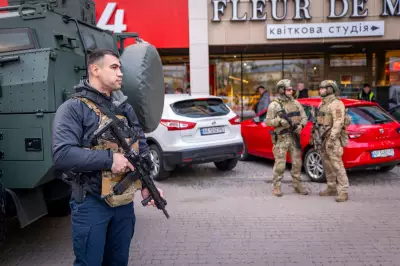
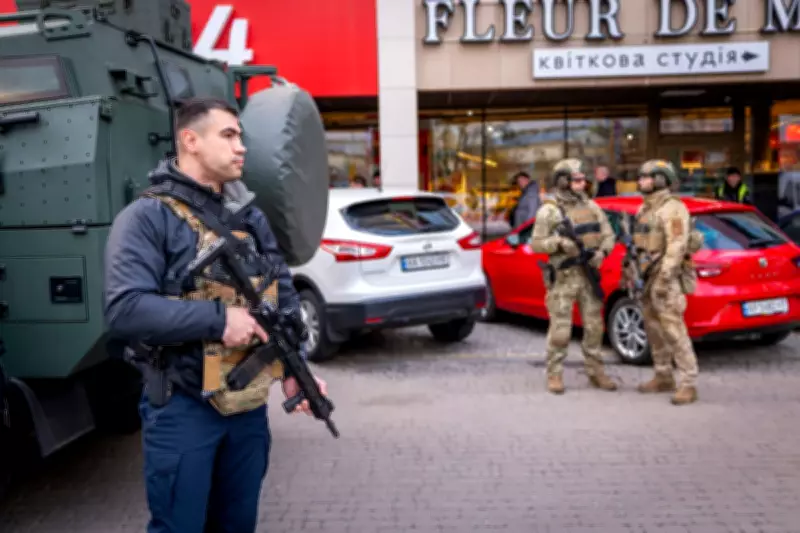
A horrific shooting in Ukraine's capital has sparked a polarising national debate about legalising handguns for civilian self-defence. The tragedy occurred when a gunman took hostages in a Kyiv supermarket on Saturday, killing seven people before being neutralised by police.
Immediate Calls for Armed Self-Defence Rights
In the aftermath of the violence, Deputy Commander of the 3rd Army Corps Maksym Zhorin declared on Telegram: "Legalising handguns is the only correct conclusion to draw from this tragic event." He argued that armed citizens could have reduced casualties, stating: "If the people who encountered the terrorist today had been armed, there wouldn't have been so many victims."
Interior Minister Ihor Klymenko, facing criticism over police handling of the incident, has voiced support for the measure: "I believe that people should have the right to armed self-defence."

Historical Context and Current Legal Framework
Ukrainian civilians are currently prohibited from carrying firearms, with no comprehensive law regulating armed self-defence. This contrasts sharply with the early days of Russia's 2022 invasion, when authorities distributed weapons to civilians to help repel invaders, on condition they be returned post-war.
Ihor Fris, co-author of a draft law on civilian firearm circulation that passed its first reading in 2022, argues: "While criminals will find ways to get weapons, civilians in Ukraine are left with no means of defending themselves." The ruling Servant of the People party member told Reuters that lawmakers, the interior ministry, and experts will soon discuss preparing the draft for a second reading.
Shifting Public Opinion Amid Ongoing Conflict
Historically, most Ukrainians opposed firearms liberalisation, but attitudes have shifted dramatically since Russia's invasion. A state-run poll in mid-2022, involving over 1.7 million participants, revealed:
- 59% supported the right to carry handguns in public places
- 22% categorically rejected the idea
- 19% favoured gun rights but opposed carrying firearms in public
Heorhiy Uchaykin, chair of the Ukrainian Gun Owners' Association, estimates Ukrainians may hold up to 7 million undeclared small arms, many distributed during the war's early stages. "If the constitution guarantees me the right to defend my own life, I must have the means to do so," he asserted.
Opposition Voices and Safety Concerns
Despite growing support, significant opposition remains. Daryna, a 31-year-old resident of the Holosiivskyi district where the shooting occurred, warned: "I'm actually very much against the call for firearms for people. Because we see what's happening in the US. Firearms are allowed there and there are many more such situations there."
Roman Kostenko, a member of the parliamentary defence and security committee with extensive battlefield experience, cautioned: "I see many arguments in favour from people who have never been in a situation where they had to decide whether to use one, let alone actually use one and understand the consequences."
Inna Sovsun, another lawmaker, questioned: "The system has given a weapon to this man. Why do we assume that, in the future, only good people will be given arms to protect us from the bad ones?"
Statistical Context and Implementation Challenges
Unlike the United States, where mass shootings are frequent, such incidents remain extremely rare in Ukraine. However, weapons-related violence has increased dramatically:
- 2021: 273 registered cases of weapons-related violence
- 2023: Over 11,000 registered cases
Fris proposes a tightly regulated system with comprehensive background checks and mandatory training at gun schools, similar to licensed driving academies. He emphasises the need for a transitional period of at least one year to establish such a system and amend Ukraine's criminal code to clearly define self-defence rights and limits.
Psychological Considerations and Political Caution
Many opponents express concern about introducing widespread handgun access in a society experiencing extremely high levels of war-related trauma, including post-traumatic stress disorder among millions of citizens.

Olha Vasylevska-Smahliuk, a lawmaker from the ruling party, urged restraint: "We must not legalise guns based on emotions after tragedies." This sentiment reflects broader political caution about rapid legislative changes in response to traumatic events.
The debate continues as Ukraine balances security concerns with individual rights in a nation still fighting for its sovereignty against Russian aggression.