Labour's Sweeping Police Reforms Unveiled Amid Accountability Concerns
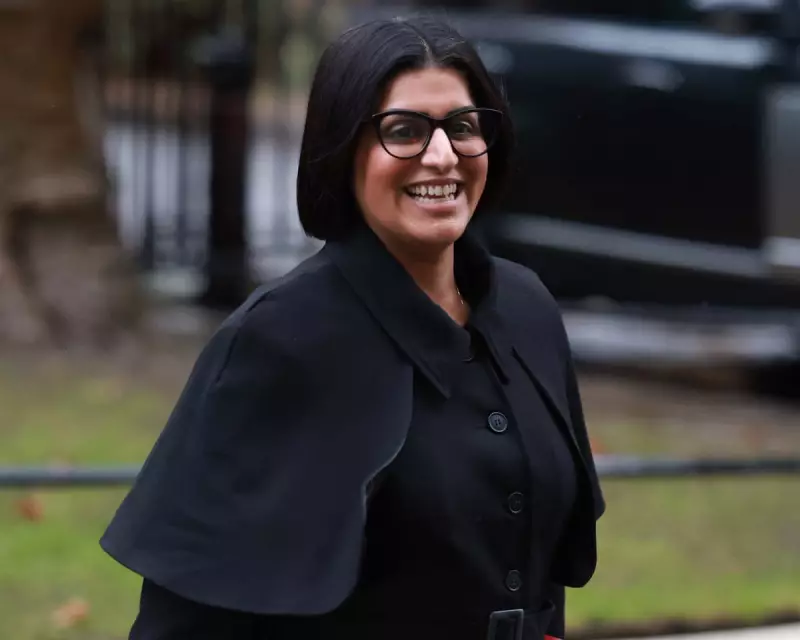
Home Secretary Shabana Mahmood has declared policing to be "the last great unreformed public service" as she unveiled ambitious plans to completely restructure England's law enforcement landscape. The comprehensive white paper proposes abolishing the current system of 43 separate police forces, most of which serve individual counties, replacing them with a smaller number of larger regional organisations.
A New National Police Service: Britain's FBI
At the pinnacle of this restructured system would sit a new National Police Service, described by many observers as a British equivalent of the American FBI. This powerful central body would assume responsibility for counter-terrorism operations currently handled by London's Metropolitan Police, along with serious and organised crime investigations presently managed by the National Crime Agency established under David Cameron's government.
The proposed national force would also take charge of major fraud investigations while absorbing functions currently performed by the National Police Chiefs' Council and the College of Policing. This consolidation would place training, standards, and leadership development under a single organisational umbrella for the first time, with the leader of this new entity becoming the country's most senior police officer.

Local Policing in the New Structure
Despite this significant centralisation, the government recognises the importance of maintaining visible local policing. With violent crime statistics showing some improvement but public concern growing about shoplifting and phone thefts, the proposed new local police areas will be required to keep officers active and visible in communities. The current system of Police and Crime Commissioners would be scrapped entirely, replaced by local boards intended to maintain community connections.
Policing by consent remains a central principle in the government's proposals, though exactly how this will be maintained under the new structure requires further clarification. The abolition of local commissioners raises questions about democratic oversight at community level, particularly as power appears to be shifting toward centralised bodies.
Evidence Gaps and Accountability Questions
One of the most significant concerns surrounding the proposals centres on Home Secretary Mahmood's assertion that larger police forces deliver better outcomes. This position appears to lack supporting evidence from crime clear-up rate data, which shows no consistent correlation between force size and investigative effectiveness. The government has yet to provide detailed justification for this fundamental assumption underpinning the entire reorganisation.
Recent international examples provide cautionary tales about centralised law enforcement. The situation in Minneapolis offers a chilling reminder of how centralised, unaccountable policing can operate under certain conditions. Labour must address legitimate concerns that increased powers for the Home Secretary bring substantial risks alongside potential benefits, with operational independence requiring stronger safeguards than currently outlined.
Implementation Challenges and Wider Context
The ambitious scale of these reforms, coupled with their extended implementation timeline, means they will require cross-party support to succeed. The proposals remain incomplete in several key areas, with detailed plans for force mergers still being developed. Efficiency gains are presented as the primary justification for reorganisation, yet the government has provided insufficient detail about the inevitable costs involved.
Further complicating matters is the wider context of a criminal justice system struggling with substantial court backlogs that represent a significant obstacle to progress. New performance targets proposed under the reforms will require particularly close scrutiny, given historical examples of how such metrics can distort policing priorities and lead to forces "hitting the target but missing the point."

Political Dimensions and Next Steps
Shabana Mahmood has established herself as one of the government's more effective communicators, and the sweeping nature of these reforms serves Labour's political objective of distancing themselves from the previous administration's record on law and order. However, history demonstrates that public service overhauls frequently disappoint, with unintended consequences often emerging during implementation.
The coming period will require intensive scrutiny and robust challenge to ensure these substantial changes genuinely improve policing while maintaining the local connections and accountability essential to public trust. As the details are fleshed out, the government must address fundamental questions about evidence, oversight, and how precisely the new structure will maintain the community relationships that underpin effective, consent-based policing.