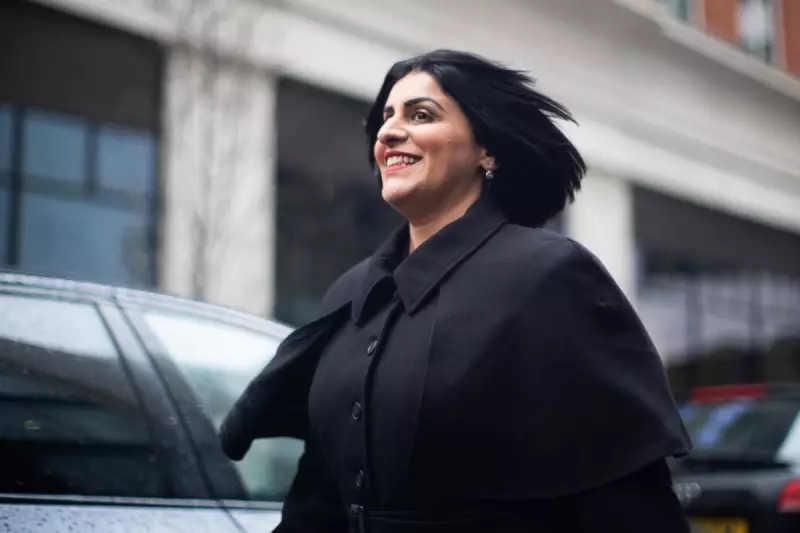
In a landmark statement to the House of Commons, Home Secretary Shabana Mahmood has unveiled the most significant overhaul of policing structures in two centuries. The comprehensive reforms, detailed in a new Government White Paper, aim to transform what Ms Mahmood described as the "last great unreformed public service."
Nationwide Expansion of Live Facial Recognition
Central to the reforms is a dramatic expansion of live facial recognition technology. The existing fleet of ten specialist vans will be increased to fifty, enabling every police force across England and Wales to deploy the technology. These mobile units will be used to identify individuals on police watchlists in real-time.
The national rollout will adhere to the operational standards currently employed by the Metropolitan Police. A new national centre for artificial intelligence, named Police.AI, will be established with a £115 million investment over three years to oversee the responsible use of this and other AI technologies, aiming to reduce bureaucratic burdens on frontline officers.

Creating a 'British FBI' and Merging Forces
The reforms propose the creation of a powerful new National Police Service (NPS), dubbed a "British FBI." This elite service will merge several existing national bodies, including the National Crime Agency, Counter Terror Policing, the National Police Air Service, and National Roads Policing, into a single organisation focused on tackling serious and organised crime, as well as terrorism.
Concurrently, the number of regional police forces in England and Wales will be "significantly reduced" from the current 43. A review this summer will determine the final number, with briefings suggesting a consolidation into between 10 and 12 larger regional forces. These new entities would be subdivided into local areas aligned with cities, towns, and boroughs, with the Government proposing that every local council ward should have its own dedicated, contactable police officer.
New Powers and Accountability Measures
The White Paper also introduces stringent new accountability frameworks. A novel "licence to practice" will be mandated for all police officers. Furthermore, the Home Secretary will be granted explicit powers to dismiss underperforming chief constables and to intervene directly in forces deemed to be failing.
Ms Mahmood emphasised the scale of the changes, stating: "Taken together, these are, without question, major reforms. A transformation in the structures of our forces, the standards within them and the means by which they are held to account by the public."
Political and Union Reaction
The proposals have sparked immediate debate. Shadow Home Secretary Chris Philp voiced strong opposition to the force mergers, warning that creating vast regional forces covering areas from "Dover to Milton Keynes" would make policing "remote from the communities they serve" and draw resources away from towns and villages.
Ben Priestley, Unison's national officer for policing, highlighted financial concerns, noting that forces face a projected £1 billion budget shortfall by 2027. He argued that mergers are expensive and won't yield short-term savings, calling for "significant investment" and reassurances that local services and democratic accountability will not be weakened.
Regulatory Framework and Implementation
The implementation of these sweeping changes will be phased, with some elements requiring new legislation. Work to establish the National Police Service will begin this year, but it is not expected to be finalised until the next Parliament. The force mergers are anticipated to take place before the next general election.
A parallel public consultation is currently exploring how live facial recognition technology should be regulated to combat crime effectively while safeguarding public privacy, aiming to shape new, coherent laws. Currently, the legal basis for its use is derived from a patchwork of common law, data protection, and human rights legislation.