Body Language Expert Analyses Lucy Letby's 'Unsettling' Police Interview Footage in Netflix Documentary
Lucy Letby's 'Unsettling' Police Interview Footage Analysed

Body Language Expert Identifies 'Unsettling' Patterns in Lucy Letby's Police Interview Footage

A body language expert has provided a detailed analysis of what she describes as "unsettling" shifts in Lucy Letby's delivery during newly released police interview footage. The footage features in The Investigation of Lucy Letby, a Netflix documentary that launched globally on Wednesday, February 4, revisiting the convicted killer's case.

New Documentary Features Previously Unseen Interview Clips

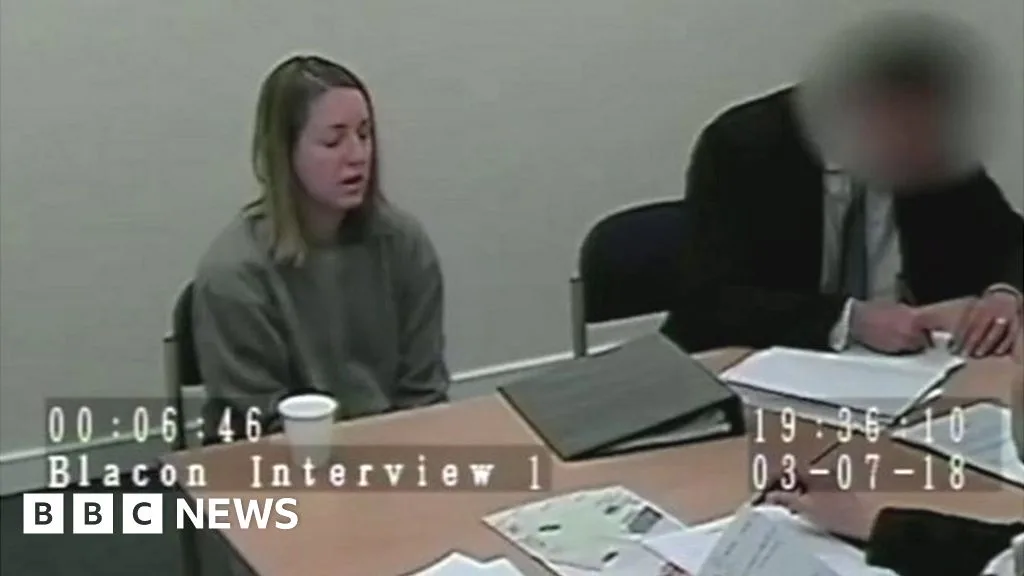
The documentary includes previously unseen clips of the former neonatal nurse during her arrest and questioning. Alongside commentary from investigators and the mother of one victim, the programme revisits the global media storm surrounding her trial, the intense social media debate it generated, and continued discussion around her conviction.

Letby, 36, from Hereford, is currently serving 15 whole-life orders after being convicted of murdering seven infants and attempting to murder seven others between June 2015 and June 2016 while working at the Countess of Chester Hospital. Police confirmed on Tuesday that she will face no further charges in relation to additional deaths and collapses that had been under investigation.

Analysis of 'Confession Notes' and Police Questioning

Among the most discussed moments in the documentary are extracts from Letby's police interviews, including her explanation of handwritten notes that were later described in court as "confession notes." During questioning, Letby stated: "I just wrote it because everything had got on top of me, it was when I had not long found out I'd been removed from the unit, I felt like they were blaming my practice, that I might have hurt them without knowing, through my practice, and that made me feel guilty."

She continued: "I was blaming myself, but not because I'd done something, because of the way people were making me feel. I felt like I'd only ever done my best for those babies and then people were trying to say that my practice wasn't good or that I'd done something and I just couldn't cope with it. And I did just not want to be here anymore."

The notes themselves played a significant role in her trial. Written across Post-it notes and a torn sheet of paper, they included phrases such as "I am evil I did this," "I killed them on purpose because I am not good enough to care for them and I am a horrible evil person," and "hate." Prosecutors relied on these writings as part of their case, repeatedly drawing the jury's attention to the statement "I am evil I did this." However, the same pages also contained statements including "Not good enough," "Why me?" "I haven't done anything wrong," and references to feeling alone, fearful and suicidal.

Expert Analysis of Vocal Tone and Linguistic Distancing

Following the documentary's release, body language analyst Dr Beth Dawson has examined Letby's behaviour during questioning. She stressed that her analysis does not point to any view on Letby's innocence or guilt, noting this has been determined by the courts, and explained that her role is limited to highlighting observable behaviours and what they might mean.

Dr Dawson suggested viewers may notice a disconnect between what she says and how she says it. "In the longer interview footage with the police, many viewers might sense that something feels 'off'. One of the main reasons for this is her vocal tone and range," she said. "When she talks about emotional or shocking events, her voice often remains calm and almost monotone. When the subject matter is emotional but the voice is not, people can feel uncomfortable because the words and the delivery do not seem to match. That mismatch is present here, even though we cannot say why it occurs."

Dr Dawson also pointed to what she described as "linguistic distancing" in Letby's language. "This sense of distance also appears in her language. When she says, 'It crossed my mind at times whether they were trying to put the blame on me for something someone else had done,' the phrasing is emotionally distanced. Expressions like 'it crossed my mind' place distance between the speaker and the feeling, rather than expressing how it felt at the time. This is known as linguistic distancing, where thoughts are described but the person seems detached."

According to Dr Dawson, this type of phrasing does not necessarily indicate deception but can shape how audiences interpret the footage. She explained: "There is also distancing in how she refers to the victims. At one point, she uses the word 'them' rather than saying 'the babies' or 'the little ones'. Vague language like this feels less personal. In behaviour analysis, this is another form of linguistic distancing. It does not automatically indicate deception or intent; it can also reflect emotional overload, coping strategies or learned communication patterns. Without a longer-term baseline, it is not possible to draw firm conclusions."

Sudden Vocal Shifts and Documentary's Broader Context

The expert added that a sudden change in tone during one exchange may be what viewers find most striking. "When she says, 'I didn't know how to feel about it or what was going to happen,' her voice lowers and becomes calmer. Instead of sounding uncertain or shaken, it becomes flatter and more controlled. The sudden switch between crying and then a steady, almost monotone delivery is something many viewers will probably find unsettling. This may reflect an attempt to regain control or regulate emotion, but for listeners the quick shift might feel jarring because the emotional content and vocal delivery don't seem to align."

The documentary also revisits the scale of attention surrounding Letby's trial and ongoing debate about the case online. It shows her being arrested at home, sitting in bed as officers inform her she is being detained on suspicion of murder and attempted murder, before leaving her house in a dressing gown. Elsewhere, the programme features contributions from police involved in the investigation and new testimony from a victim's mother, marking the first time a family member involved in the prosecution has spoken in a documentary about the case.

Meanwhile, Lady Justice Thirlwall's inquiry into how Letby was able to commit her crimes on a hospital neonatal unit is expected to publish its report later this year, examining systemic issues and the response of healthcare leaders.