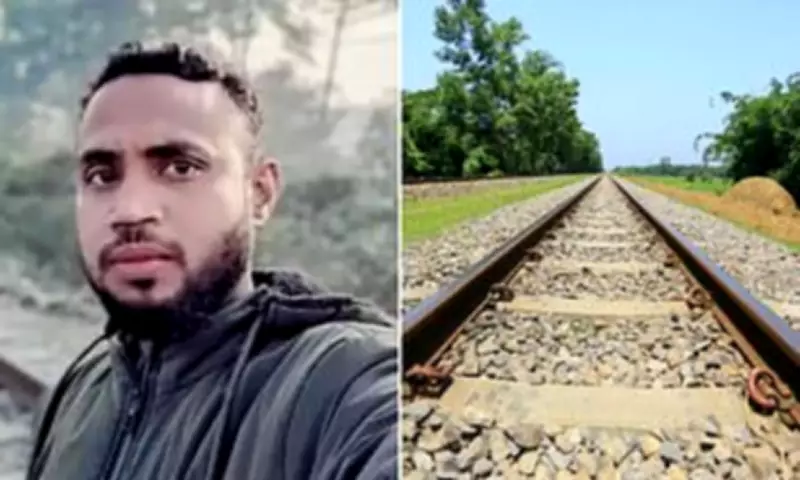
A 32-year-old man has been tragically killed by a high-speed train in eastern Bangladesh after he reportedly stood on active railway tracks to take a selfie, which he is understood to have posted on Facebook just moments before the fatal impact. The incident occurred on Sunday morning along the busy Dhaka-Chittagong railway line, highlighting the extreme dangers of risky social media behaviour near transportation infrastructure.
Fatal Morning on the Railway Line
Tuk-tuk driver Mohi Uddin was visiting Bagmara market in the city of Comilla when he stepped onto the railway tracks around 7:45 am. Witnesses told local media outlet JagoNews24 that they saw Mr Uddin positioning himself on the tracks specifically to capture a selfie photograph. According to The Daily Inqilab, other observers noted he was also talking on his mobile phone at the exact time of the collision, a detail that police authorities have since confirmed through their investigation.
Police Statement and Investigation Details
A spokesperson for Laksham police provided a formal statement regarding the tragic event: 'The deceased Mohiuddin was killed when he was hit by a moving train while sitting on the railway line and talking on his mobile phone. He has been taken to his village home. If the family complains, we will take appropriate legal action.' Police indicated that the train involved was likely the Upakul Express, which had departed from Noakhali and passed through Laksham railway station approximately fifteen minutes earlier, around 7:30 am.

The high-speed train, bound for Dhaka, struck Mr Uddin with such force that he was killed instantly. The incident serves as a grim reminder of the lethal consequences of trespassing on railway lines, particularly for the purpose of capturing photographs or videos for social media platforms.
Global Pattern of Selfie-Related Fatalities
This tragic death in Bangladesh follows a similar fatal incident involving a tourist in Sri Lanka last year, underscoring a dangerous global trend. In February, Russian national Olga Perminova, aged 53, was killed while travelling on the legendary Podi Menike railway line. Local reports citing police authorities stated that she 'died after falling off the train when attempting to take a selfie while hanging from the train footboard between the Badulla and Hali Ela railway stations.'
Ms Perminova had leaned her head out of an open train carriage door while holding onto two rails, attempting to take photographs. She subsequently smashed into a rock beside the tracks, suffering fatal head injuries. Police confirmed she 'knocked against a rock, fell off the train and sustained severe injuries' in the accident, which highlights the perilous nature of such reckless photographic attempts during travel.
Broader Safety Concerns and Warnings
These consecutive incidents raise significant concerns about public safety awareness and the potentially deadly allure of capturing dramatic selfies in hazardous environments. Railway authorities worldwide have repeatedly warned against trespassing on tracks or engaging in dangerous behaviour near moving trains, but such tragedies continue to occur with disturbing regularity.
The death of Mohi Uddin in Bangladesh particularly emphasises how ordinary daily activities—like visiting a local market—can turn catastrophic when combined with risky decisions driven by social media engagement. As mobile phone usage and social media sharing become increasingly embedded in daily life, safety advocates stress the critical importance of maintaining situational awareness and avoiding dangerous locations for photographic purposes.