Metropolitan Police Freemasonry Disclosure Policy Faces Legal Challenge
The Metropolitan Police's controversial decision to mandate officers to disclose Freemasonry membership has encountered a significant legal challenge in the High Court. This policy emerged following the examination of sixteen intelligence reports that highlighted substantial concerns regarding the secretive organisation's influence within police ranks.
WhatsApp Message Reveals Brotherhood Concerns
During a criminal investigation, authorities uncovered a revealing WhatsApp exchange between officers. One officer explicitly stated: "It's a brotherhood and that's where a lot of people tend to bend it a little in terms of promotions if you catch my drift." This message has become central to the debate surrounding potential preferential treatment and conflicts of interest.
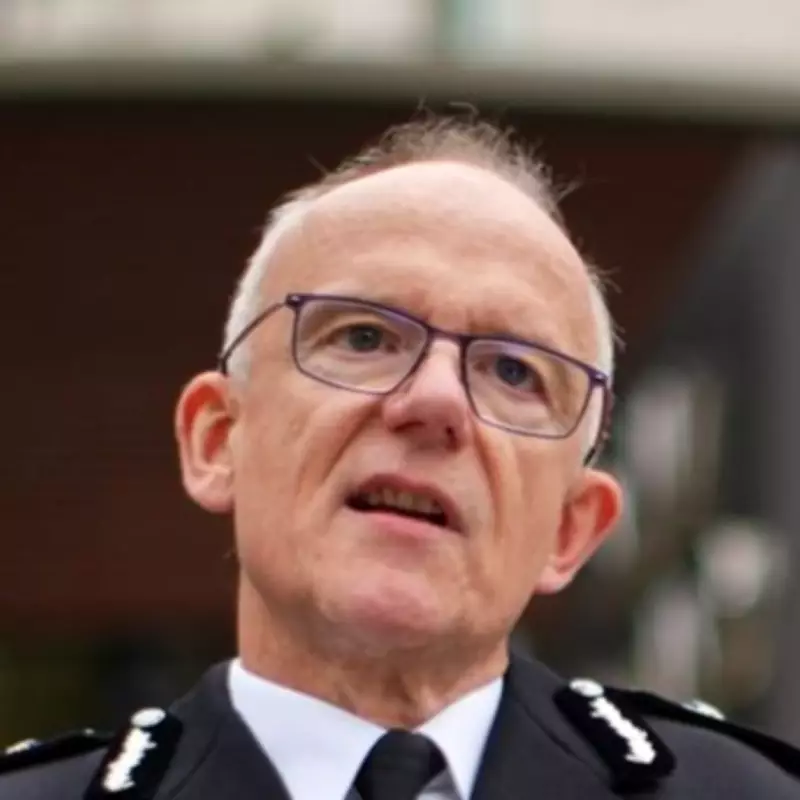
Under the new regulations implemented by Met Commissioner Sir Mark Rowley, all police staff and officers must now declare membership, whether past or present, of any organisation that maintains a hierarchical structure, confidential membership lists, and requires mutual support among members.

Human Rights and Discrimination Claims
Two serving Freemason police officers, alongside three prominent Freemasonry organisations, have initiated legal proceedings against the Metropolitan Police. Representing the claimants, Claire Darwin KC argued forcefully that the policy constitutes a fundamental breach of human rights. She characterised the measure as enabling the creation of a discriminatory "black list" that sends an "institutional signal of suspicion" toward Freemasons.
Darwin emphasised the discriminatory nature of the policy, stating: "If the Metropolitan Police were creating a list of anyone else who held a particular religion or belief, and then cross-checked promotions against that list, it would be denounced, rightly, as a discriminatory black list."
Intelligence Reports and Historical Context
The disclosure requirement follows a comprehensive review into the 1987 unsolved axe murder of private detective Daniel Morgan, which identified Freemasonry as a significant source of public mistrust in police investigations. Between 2022 and 2025, twenty-seven intelligence reports mentioned Freemasonry, with sixteen classified as "adverse or potentially adverse."
However, Darwin noted that the "vast majority" of these reports were submitted anonymously, with some containing unsubstantiated claims that could be dismissed as "office tittle-tattle" or conspiracy theories, including extreme allegations about Freemason-ordered killings.
Metropolitan Police's Defence
Representing the Metropolitan Police, James Berry KC presented written submissions defending the policy's necessity. He revealed that 397 officers and staff had already complied with the declaration requirement, demonstrating substantial implementation.
Berry argued: "The public confidence imperative in favour of officers and staff confidentially declaring their Freemasonry strongly outweighs the claimants' desire to keep membership secret." He maintained that fears of stigmatisation were "not supported by the evidence" and that human rights claims were "without merit."
The barrister acknowledged the "long-standing, complicated and contested" stigma associated with Freemasonry but emphasised the police force's responsibility to address public perception issues to maintain confidence in police impartiality and transparency.
Legal Proceedings and Future Implications
The claimants, including the United Grand Lodge of England, the Order of Women Freemasons, and the Honourable Fraternity of Ancient Freemasons, have requested that the High Court allow their challenge to proceed while temporarily suspending the policy pending a full hearing. The Metropolitan Police has countered that the challenge should be dismissed as "not arguable."
The hearing before Mr Justice Chamberlain concluded with a ruling expected later this month. This case represents a critical test of police transparency requirements versus individual rights to privacy and freedom of association, with potential ramifications for police forces nationwide.