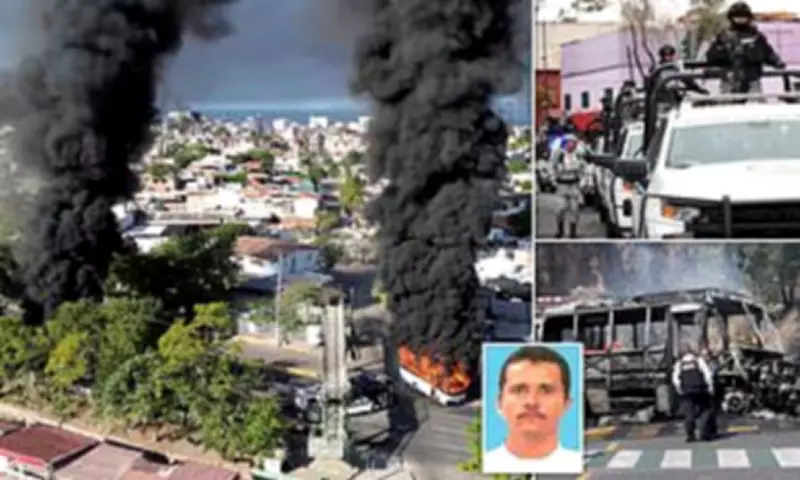
Mexican military forces have conducted a lethal operation resulting in the death of one of the country's most powerful drug lords, Ruben 'Nemesio' Oseguera, widely known as 'El Mencho'. The 59-year-old leader of the Jalisco New Generation Cartel (CJNG) was mortally wounded during a shootout in the western state of Jalisco and died while being transported to Mexico City for medical treatment.
US Intelligence and Military Cooperation
The raid was executed by Mexican Special Forces with aerial support from the Air Force and rapid-reaction units of the National Guard, acting on intelligence provided by a new US-military-led task force. This unit, the Joint Interagency Task Force-Counter Cartel, was established late last year with the objective of mapping drug cartel networks on both sides of the US-Mexico border.
White House Press Secretary Karoline Leavitt praised the operation in a social media post, stating that the Trump administration "commends and thanks the Mexican military for their cooperation and successful execution." She emphasized that El Mencho was a "top target for the Mexican and United States government as one of the top traffickers of fentanyl into our homeland."

Cartel's Paramilitary Capabilities
The operation revealed the extensive military-grade arsenal of the CJNG, including rocket launchers capable of shooting down aircraft, armored vehicles, and heavy weapons typically associated with national militaries. Former US officials have described the cartel as operating more like a paramilitary organization than a traditional drug trafficking gang, with the ability to deploy coordinated roadblocks, armed convoys, and structured enforcement wings.
American authorities had long sought El Mencho's capture, offering a reward of up to $15 million for information leading to his arrest. The Trump Administration designated the CJNG as a terrorist organization last year, citing its sophisticated operations and violent tactics.
Nationwide Violence Erupts
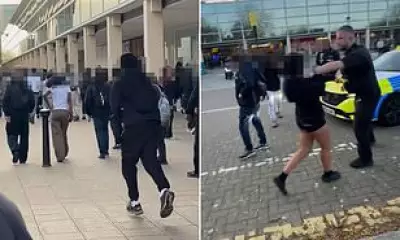
Following Oseguera's death, violence erupted across Mexico, with torched vehicles and armed gunmen blocking highways in more than half a dozen states. In the popular tourist destination of Puerto Vallarta, frightened visitors described a "war zone" as plumes of dark smoke rose from burning vehicles around the bay.
Tourists and airport personnel were seen running as armed cartel members reportedly took over the airport, leading multiple airlines including Air Canada, United Airlines, Aeromexico, and American Airlines to suspend flights in the area. Social media influencers stranded in the region shared harrowing accounts of being trapped in their resorts with limited services.
Casualties and Arrests
According to reports from Mexico City's La Jornada newspaper, 26 people were killed in the chaos on Sunday, with 17 fatalities among federal and state security forces and eight alleged CJNG members killed. State officials announced the arrest of 25 individuals in Jalisco, with 11 detained for alleged participation in violent acts and 14 others for alleged looting or pillaging.
Cartel's Criminal Empire
El Mencho, a former police officer, founded and oversaw the rapid expansion of the CJNG, which began as a splinter group of the notorious Sinaloa Cartel. Under his leadership, the organization grew into one of Mexico's most powerful criminal enterprises, with American government estimates suggesting up to 20,000 members.
The cartel diversified from drug trafficking into fuel theft, extortion, human smuggling, and complex financial frauds, generating billions of dollars in annual revenue. It became known for particularly brutal tactics including forced labor, forced recruitment, public executions displayed on social media, and attacks against Mexican politicians, judges, and law enforcement officers.
Security Concerns and Political Pressure
Security experts now worry that El Mencho's death will fracture CJNG leadership and trigger prolonged bloody infighting. Carlos Olivo, a former US Drug Enforcement Administration assistant special agent and CJNG expert, warned that "there will definitely be skirmishes between the various factions, and these spasms of violence could last for years."

Mexican President Claudia Sheinbaum has faced increasing pressure from the Trump administration to intensify her offensive against drug cartels, particularly those producing and smuggling fentanyl across the US border. While Sheinbaum has pledged to strengthen cooperation with the US to combat cartels, she has also vowed to uphold Mexico's sovereignty and warned against any unilateral military action by the United States in Mexican territory.
Despite the violence, the Mexican president stressed that activities in most areas of the country were proceeding as usual, even as schools in various states across Mexico protectively canceled classes for Monday following the deadly raid and its violent aftermath.