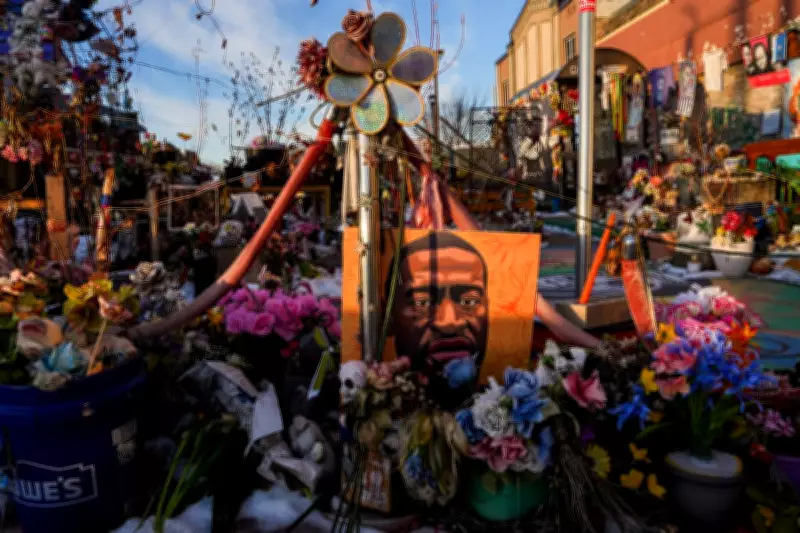
As the Trump administration's immigration enforcement operation in Minnesota concludes, the city of Minneapolis is confronted with the task of determining the future of two prominent streetside memorials. These makeshift sites honor Renee Good and Alex Pretti, two U.S. citizens who were fatally shot by federal agents last month, sparking public outcry and community mourning.
Community-Driven Memorials Emerge Rapidly
Following the killings, spontaneous memorials quickly materialized at the locations where Good and Pretti lost their lives. Piles of flowers, handwritten signs, artwork, and candles have accumulated, transforming these spots into hubs for candlelight vigils, musical performances, and regular visits from residents. The memorials serve as poignant reminders of the tragedies and have become focal points for collective grief and solidarity.
Echoes of George Floyd's Memorial
The public grieving spaces draw parallels to the community-driven memorial for George Floyd, who was murdered by a police officer in 2020 less than a mile from where Good was killed. Minneapolis took over five years to plan an official memorial for George Floyd Square, with construction slated to begin this year. Now, the city faces the additional challenge of managing two more high-profile memorial sites, raising questions about their permanence and maintenance.

Details of the Memorial Sites
The memorial for Renee Good emerged within hours of her killing on January 7 on a Minneapolis street. On the residential road where she died, orange traffic cones now create a narrow walkway for visitors, while volunteers oversee a growing mound of flowers, artwork, and signs between the sidewalk and street.
For Alex Pretti, killed on January 24, protesters swiftly used branches, police tape, and candles to mark the site before adding crosses, stuffed animals, American flags, and portraits. Located along a commercial district known as "Eat Street," traffic lanes have been temporarily rerouted and parking closed to accommodate the memorial.
Community Voices and Solidarity
Minnesota resident Karel Hoffmann expressed outrage over the killings but highlighted the memorials' role in fostering community unity. "This is so unfair, the trauma, for everyone, is too much," Hoffmann said during a recent visit to Pretti's memorial. "We're all in this together. And I'm really glad they have this here so everybody can come and be together."
Lynn Elrod, a nurse, contributed a plastic evergreen tree adorned with red hearts and portraits of both victims to Pretti's memorial. "I printed both of their pictures and put those on there again, just to signify the love that we have for both of them, really, and their contributions to the community and supporting their neighbors," Elrod explained.
City's Response and Priorities
Jess Olstad, a spokesperson for the city of Minneapolis, stated that the city's top priority is to provide space for the community to grieve and heal. "This both ensures emergency vehicles can get through the area and protects those who gather or visit the memorial," Olstad said. She added that the city is "actively working on next steps, including continued community engagement regarding both memorials."
Ally Peters, a spokesperson for Mayor Jacob Frey, noted last week that it was "too early" to comment on whether the memorials would be made permanent, indicating ongoing discussions and planning.
Background and Context
The Trump administration announced this week that its immigration crackdown in Minnesota is ending, adding urgency to the city's decisions about the memorials. As Minneapolis navigates this sensitive issue, the memorials stand as testaments to the victims' lives and the community's resilience, while highlighting broader tensions around federal actions and local responses.