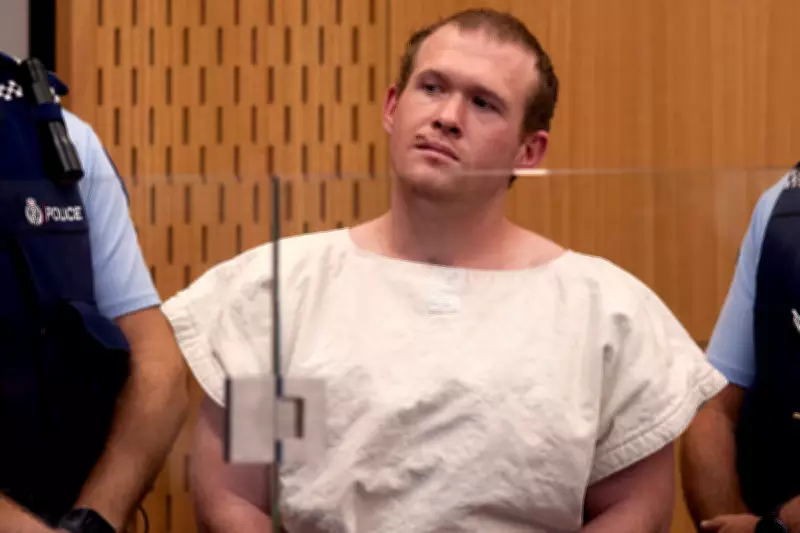
New Zealand Mosque Shooter Seeks to Overturn Guilty Pleas Citing Prison Conditions
Brenton Tarrant, the Australian man responsible for New Zealand's deadliest mass shooting that claimed the lives of 51 Muslim worshippers, has launched a legal bid to have his guilty pleas discarded. He claims that harsh prison conditions rendered him irrational at the time of his admission to the crimes.
Appeal Court Hears Claims of Mental Deterioration
A panel of three judges at the Court of Appeal in Wellington commenced a five-day hearing on Monday to examine Tarrant's assertion that he was not mentally fit to plead guilty to terrorism, murder, and attempted murder charges. The 2019 attack in Christchurch shocked the nation and led to unprecedented legal consequences.
If successful, this appeal would see Tarrant's case return to court for a full trial, a scenario avoided when he admitted to the hate-fueled shooting in March 2020. He is simultaneously seeking to appeal his sentence of life imprisonment without parole, a punishment never before imposed in New Zealand's judicial history.

Tarrant's First Public Statements Since the Massacre
Monday's proceedings marked the first time Tarrant has spoken substantively in a public setting since he livestreamed the horrific 2019 massacre on Facebook. Appearing via video link from prison, the 35-year-old wore a white button-down shirt and black-rimmed glasses, his head shaved, speaking from a stark white-walled room.
The hearing took place under exceptionally tight security measures, severely limiting attendance to select reporters and individuals directly affected by the tragedy. Tarrant described how his mental health had deteriorated due to solitary confinement conditions, with limited reading materials and minimal contact with other prisoners.
"I was suffering from nervous exhaustion and uncertainty about my identity and beliefs," Tarrant told the court, explaining his state of mind when he pleaded guilty. "There was little else I could do," he added, claiming he felt forced to admit to the crimes just months before his scheduled trial.
Crown Challenges Tarrant's Mental Health Claims
Crown lawyer Barnaby Hawes challenged Tarrant's assertions during questioning, suggesting the Australian man had alternative options available to him. Hawes noted Tarrant could have requested a trial delay on mental health grounds or proceeded to defend himself in court.
Hawes further argued that documentation from mental health experts and prison staff showed little evidence of Tarrant experiencing any serious mental crisis. Tarrant countered that signs of his mental illness went unrecorded and that he had actively attempted to conceal his condition.
"I was definitely doing everything possible to come across as confident, assured, mentally well," Tarrant testified. "My behavior reflected the political movement I'm part of, so I always wanted to put on the best front possible."
Background of the Christchurch Massacre
The self-declared white supremacist meticulously planned the attack, migrating to New Zealand specifically to carry out the massacre. His preparations included:
- Amassing a cache of semiautomatic weapons
- Taking deliberate steps to avoid detection
- Writing a lengthy manifesto outlining his extremist ideology
- Driving from Dunedin to Christchurch in March 2019
The attack left 51 people dead—including a 3-year-old boy—and dozens severely wounded. New Zealand institutions have since implemented legal measures to curb the spread of Tarrant's message, including bans on possessing his manifesto or video footage of the attack.
Legal Process and Expected Outcomes
Tarrant filed his appeal documents in September 2022, approximately two years after the standard 20-working-day deadline for such appeals in New Zealand. He attributed this delay to insufficient access to required information while incarcerated.
The hearing is scheduled to continue throughout the week, though judges are expected to reserve their decision for a later date. Should they reject Tarrant's attempt to discard his guilty pleas, a subsequent hearing will focus exclusively on his sentence appeal.

Tarrant's current legal representatives have been granted name suppression due to safety concerns about representing such a high-profile defendant. The outcome of this appeal will have significant implications for New Zealand's judicial handling of terrorism cases and the treatment of prisoners facing extreme sentences.