Nevada Murderer's Parole Release Sparks Outrage Among Victims' Family
A convicted murderer who strangled a young mother and fatally stabbed her four-year-old son is scheduled for parole release in Nevada, sparking profound outrage and anguish among the victims' surviving family members. The case has reopened deep wounds and raised serious questions about victim notification procedures within the state's justice system.
Decades-Long Legal Journey
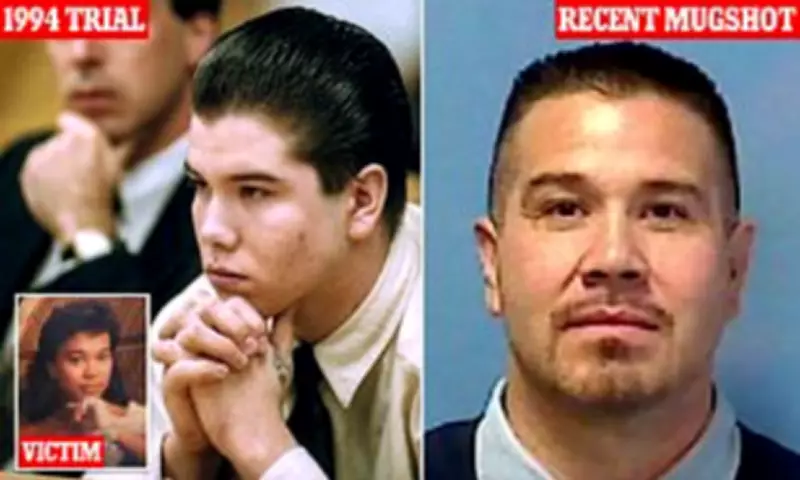
In 1994, Michael Domingues, then just 17 years old, received a death sentence for the brutal 1993 murders of 24-year-old Arjin Pechpho and her young son, Jonathan Smith, in Las Vegas. Domingues became the youngest person in modern Nevada history to receive capital punishment for his crimes. However, his legal fate shifted dramatically following a landmark 2005 US Supreme Court decision that eliminated the death penalty for defendants under 18 years old.
This judicial change prompted District Judge Michelle Leavitt to order a new penalty hearing in 2019. The following year, Domingues received an updated sentence of 30 years to life in prison with parole eligibility, with credit given for time already served during his decades of incarceration. Now 49 years old, Domingues has spent his entire adult life behind bars at High Desert State Prison.

Parole Board Decision and Family Reaction
Late last year, the Nevada Board of Parole Commissioners granted Domingues parole, making him eligible for release on February 13. The decision has devastated the victims' family, who learned about the parole release from a reporter rather than through official notification channels from the parole board itself.
Tawin Eshelman, mother of murder victim Arjin Pechpho and grandmother of four-year-old Jonathan Smith, expressed her profound distress through tears when speaking with the Las Vegas Review-Journal. "Why do we have to go through this again?" she asked emotionally. "Why?" Eshelman revealed that had she known about Domingues's potential release, she would have addressed the parole board directly to oppose it.
Her husband, Vernon Eshelman, voiced his disbelief at the lack of notification. "I just cannot believe that nobody has let us know this before now," he told reporters. "How the hell can the parole board have a hearing on this numbskull and not include us? That's insane." He added with deep emotion, "They go to hell for what they've done. This is the worst news we could absolutely, possibly endure."
Victim Notification Failures
The family emphasized that despite not mailing in a formal victim notification form, they had taken deliberate steps to remain easily contactable about the case. Tawin Eshelman explained she has lived in the same house since the 1970s and intentionally never changed her phone number specifically to ensure authorities could reach her regarding developments in her daughter and grandson's murder case.
Michael Smith, father of the murdered four-year-old Jonathan, also confirmed he received no notification about Domingues's impending release. "I would have said no, I don't agree with it, it's not right," Smith stated. "I can't hug my son, I can't talk to my son, I can't even see my son. So do you think it's really fair for a cold-blooded murderer to be granted to be with his family?"
Domingues's Changing Statements
During his November parole hearing, Domingues presented a markedly different demeanor from his initial 1994 trial, where he pleaded not guilty and declared, "If I could, if I was God, I would bring them back, but there is no way I can show remorse to something I have not done," according to court transcripts.
Three decades later, Domingues told the parole board, "I don't know how to ask for my freedom because what happened was really horrible. The person that did that does not exist no more." He requested a "chance at life" and expressed wishes that he could "go back and make things different."
When recently questioned by the Las Vegas Review-Journal about whether he still maintains his innocence, Domingues declined to answer, expressing concern that media attention might jeopardize his release chances. "I'm going home because they've seen a change in me," he told the outlet.

Remembering the Victims
The family continues to honor the memories of those lost. Arjin Pechpho would have been 57 years old if alive today, while her son Jonathan would be 36. Tawin Eshelman often reflects on how her grandson might have had children of his own by now, and she still becomes emotional when discussing her daughter and grandson.
She described her daughter as a straight-A student and reliable employee who never missed a day of work at the Circus Circus Casino reservations department. Pechpho was attending night school to become a court recorder and had purchased her own home by age 24 without financial assistance from her mother.
Michael Smith remembered his son as "very bright," recalling that he had been teaching the four-year-old to recite the alphabet around the time of the murder. "I think about my dead son pretty much every day," Smith shared.
Brutal Crime Details
Prosecutors during early trials revealed disturbing details about the 1993 murders. After strangling Arjin Pechpho to death, Domingues attempted to electrocute four-year-old Jonathan by placing him in a bathtub and dropping a hairdryer into the water. When this method failed, he fatally stabbed the young boy. Domingues later confessed the crimes to his girlfriend, who lived next door to the victims, and admitted to taking and using one of Pechpho's credit cards following the murders.
The case continues to raise significant questions about justice, rehabilitation, and victim rights as Domingues prepares for his February release after more than three decades of incarceration.