Nottingham Attack Inquiry: Father's Harrowing Account of Tracking Son's Phone
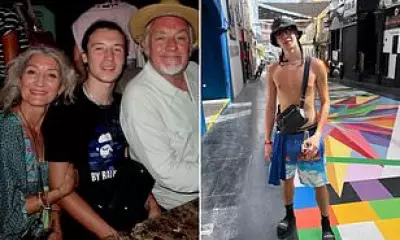
The father of murdered Nottingham student Barnaby Webber has described the chilling moment he watched his son's phone move to a police station via a tracking app, as the public inquiry into the 2023 attacks heard detailed testimony of systemic failures and family anguish.
Panic and Desperation on the Morning of the Attack
David Webber told the inquiry how, on the morning of June 13, 2023, he and Barnaby's mother Emma turned on the television to see news reports of a man and woman killed in Nottingham. His immediate instinct was to contact his 19-year-old son, a university student.
"I messaged him and got no response, so I thought I'll phone him. I phoned; still got no response, which was quite unusual because Barney would normally answer the phone," Mr Webber stated, his voice heavy with emotion during the proceedings.

The Tracking App Revelation
After failing to reach Barnaby, Mr Webber checked the Find My Phone application, which showed his son's location on Ilkeston Road near his student accommodation. He immediately contacted the police, noting a "distinct change in tone" from the operator when he identified himself and his son.
Police informed him it was a "fast-changing scene" and that no one could speak to him at that moment, promising a callback. It was then that the parents watched in mounting horror as Barnaby's phone began moving on the tracking app.
"We watched it go all the way to Radford Road police station," Mr Webber recounted. "I said 'we've got to go now', just said 'something is wrong'."
The Victims and the Perpetrator
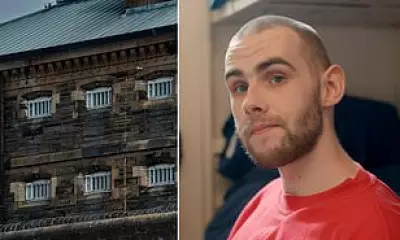
Barnaby Webber and fellow student Grace O'Malley-Kumar, both 19, were walking home in the early hours when they were stabbed to death by Valdo Calocane, a 34-year-old paranoid schizophrenic with a documented history of violence. Calocane subsequently killed school caretaker Ian Coates, 65, during his rampage.
The inquiry heard that Calocane had been released by medical professionals who decided against sectioning him, with concerns raised about "too many black men in custody" influencing their decision.
Family Outrage and Systemic Failures
Emma Webber condemned what she described as excessive focus on discrimination concerns at the expense of public safety. "We're spending far too much time worrying about discrimination and segregation and doing the wrong thing because somebody's of a certain colour or certain religion. If you're dangerous, you're dangerous, and it does not matter what colour you are or where you're from," she told the inquiry.
She also expressed disgust at police officers who accessed crime scene footage and discussed it on WhatsApp, describing messages that referred to the victims as "properly butchered" and containing graphic descriptions as "disgusting and grotesque."
Other Families' Anguish
The inquiry heard from Grace O'Malley-Kumar's parents, Sinead and Sanjoy Kumar, who described repeatedly trying to phone their daughter after hearing news of the attacks. "She knew when daddy called, it was only for something really quite important, otherwise daddy doesn't call. I rang her phone at least eight times, and there was no answer," Mr Kumar testified.
Ian Coates' partner was initially misinformed by police that the caretaker had died in a car crash, adding to the families' trauma and confusion.
Legal Proceedings and Inquiry Scope
Valdo Calocane was sentenced to an indefinite hospital order in January 2024 after admitting manslaughter by diminished responsibility and three counts of attempted murder. Prosecutors had dropped murder charges, a decision that caused significant distress to the victims' families.
Inquiry chairwoman Deborah Taylor, a senior retired judge, stated the probe would "examine what could and should have been done, and the effects of key actions, omissions and decisions" regarding the attacks and their aftermath.
The public inquiry continues to investigate the circumstances surrounding the Nottingham attacks, with testimony revealing profound failures in mental health care, police communication, and systemic decision-making that contributed to the tragedy.