NYC Murder Trial Hears Schizophrenia Defence in Chinatown Metal Bar Killings
A Manhattan courtroom is hearing a harrowing case where a man accused of bludgeoning four people to death with a metal bar is asserting an insanity defence, claiming schizophrenia and commanding voices drove his actions.
Defence Claims Voices Ordered Killings to Save His Own Life
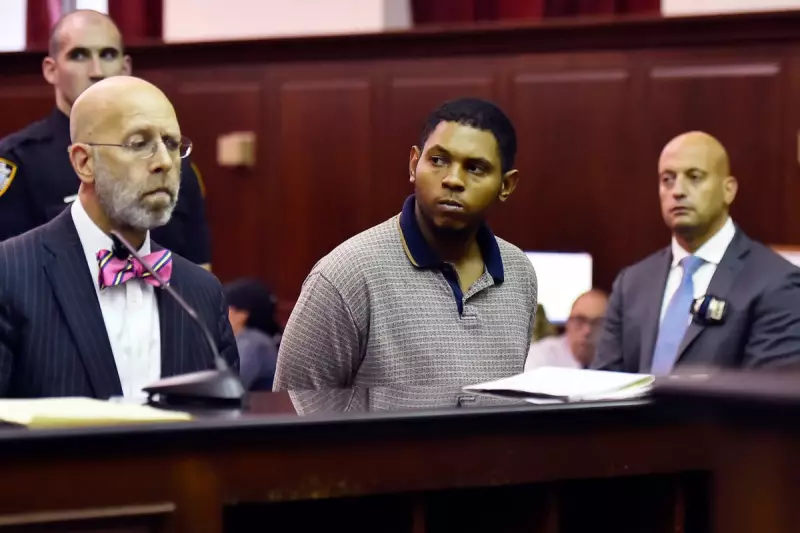
Randy Santos, aged 31, is on trial in New York State Court for the 2019 Chinatown rampage that left four men dead and two others severely injured. His lawyer, Marnie Zien, told jurors in her opening statement that Santos had been diagnosed with schizophrenia upon leaving jail months before the attacks and was hearing voices instructing him he needed to kill forty people or face his own death.
"He needed the voices to stop. He needed to save his own life," Zien stated. "He saw no other way out." Santos has pleaded not guilty to charges including first-degree murder for the deaths of Florencio Moran, Nazario Vásquez Villegas, Anthony Manson, and Chuen Kok, alongside attempted murder charges.

Prosecution Details Premeditated Attacks on Sleeping Victims
Assistant District Attorney Alfred Peterson presented a contrasting narrative, urging jurors to find Santos guilty on all charges. Surveillance video allegedly captured Santos "repeatedly lifting the bar up over his head and bringing it down on the head" of one victim. Peterson described how Santos looked up and down the street, saw the coast was clear, and even paused to let a pedestrian leave before attacking another man.
"He knew exactly what he was doing and the consequences of what he was doing — that he was killing these men," Peterson asserted. Police found Santos carrying the blood and hair-covered bar, with forensic testing revealing his DNA on one end and victims' blood on the other.
Verdict to Determine Psychiatric Commitment Versus Life Imprisonment
The jury's decision carries profound implications. If they convict Santos, rejecting the insanity defence, he could face life in prison. Conversely, if they accept the mental illness argument, he could be involuntarily committed to a psychiatric treatment facility for as long as necessary.
This case highlights the challenging legal landscape for insanity defences in New York, where success requires proving the defendant did not understand the consequences of their actions or distinguish right from wrong. Santos's lawyers must convince the jury that his schizophrenia rendered him incapable of such comprehension.
History of Violence and Prior Diagnoses Presented
Zien outlined a history of escalating violence, beginning with a clash with his grandfather. Santos has at least six prior arrests, including allegations of assaulting a tourist on a subway, choking a man at an employment agency, and punching a homeless man in a Brooklyn shelter.
During his last jail stint before the killings, Santos was diagnosed with schizophrenia and released in August 2019 with referrals for treatment and medication prescriptions, which he never used. He had previously been diagnosed with schizophreniform disorder and had sought hospital help for hearing voices, but Zien claimed he did not receive adequate treatment.
Context of Similar Cases in New York Jurisprudence
The trial draws parallels to other high-profile cases. In 2022, a man who drove a car through Times Square crowds was cleared and sent to a mental health facility after a jury found extreme psychological disturbance. However, in 2018, a Manhattan nanny was convicted of killing two children despite claims of undiagnosed mental illness and hallucinations.
The victims in Santos's case, aged between 39 and 83, were attacked as they slept on the streets in the early hours of October 5, 2019. The lone survivor, 49-year-old David Hernandez, was critically injured. Peterson also mentioned a "trial run" attack a week earlier, where Santos badly hurt another man with a wooden stick in a different Manhattan neighbourhood.

As the trial proceeds, Santos, a native of the Dominican Republic who moved to New York as a child, listens through a Spanish interpreter. The outcome will not only determine his fate but also reignite debates on mental health, criminal responsibility, and the efficacy of treatment systems in preventing such tragedies.