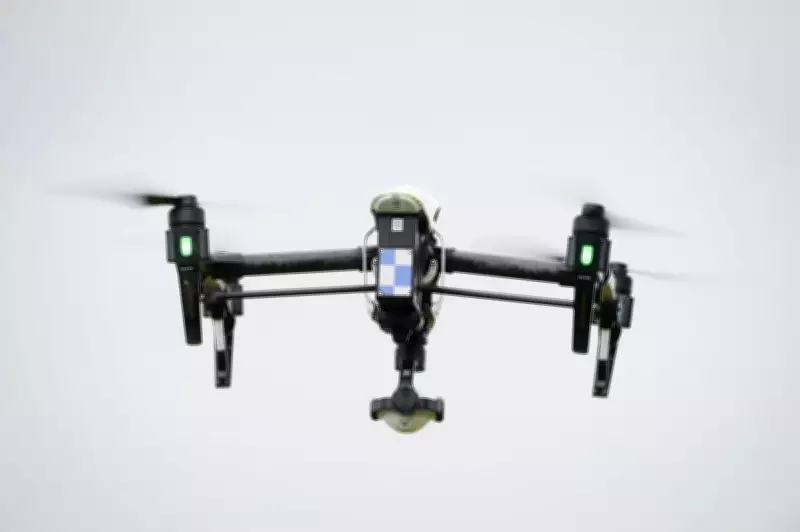
A Denver woman has described feeling deeply "violated" after a police drone unexpectedly appeared outside her apartment window while she was taking a bath, raising significant questions about privacy and surveillance in residential areas.
Shocking Discovery During Private Moment
The incident occurred on Monday night when the woman, who asked to be identified as Eden, was relaxing in her bath. "I was just playing on my phone, relaxing, and I saw a flashing light coming from the window," Eden told local news outlet KUSA. "It was a drone, and I was like, 'Oh my God'... I felt violated."
Eden immediately called out to her boyfriend, Carlos, who was also in the apartment. Both witnessed the drone flying alarmingly close to their window, estimating it was approximately 30 feet from the ground. "I mean, I saw it right out of my window," Carlos told KUSA. "At least, close enough to where I feel like if I threw a rock, I'd be able to hit it."

Police Response and Program Details
When contacted about the incident, Denver police confirmed the drone belonged to their department and was part of an ongoing four-month first responder program. Authorities explained the drone was en route to respond to a call about a suicidal person near the apartment building.
Despite police assurances that the camera was pointed away from the window during the incident, Eden remained uncomfortable with the encounter. "I almost preferred that it was a stranger because the police are here to protect and not to violate," she told KUSA. "It didn't feel good. It didn't make me feel safe at all."
Conflicting Accounts and Transparency Measures
The Denver Police Department offered to show Carlos footage from the drone flight, which was confirmed by department logs. Police maintained the drone was flying at 200 feet throughout the entire flight, a claim the couple strongly disputes based on their observations.
According to DPD, the drone was only in the area for approximately two minutes and circled the location of the emergency call during that time. All flight information is stored on the department's Drone as First Responder Transparency Dashboard for 60 days as part of their accountability measures.
Program Statistics and Community Impact
The first responder drone program has been operational since October last year, though it was implemented quietly without extensive public notification. Department statistics reveal these drones have been deployed to 622 calls for service through February 12.
Notably, drones arrive on scene before human officers more than 84 percent of the time, and drone pilots can determine whether physical patrol response is necessary in over 36 percent of cases. This efficiency theoretically frees up officers for more serious incidents while providing rapid assessment capabilities.
Despite her negative personal experience, Eden acknowledged that drones "can be used in a right way" for public safety purposes. However, she expressed concern about their deployment in residential areas: "I don't like the fact that they were hovering in a very residential spot where people could get the wrong idea."
The incident highlights the growing tension between law enforcement's use of emerging technology for public safety and citizens' expectations of privacy in their own homes. As police departments increasingly incorporate drone technology into their operations, such encounters may become more frequent, necessitating clearer guidelines and public communication about surveillance practices in residential communities.