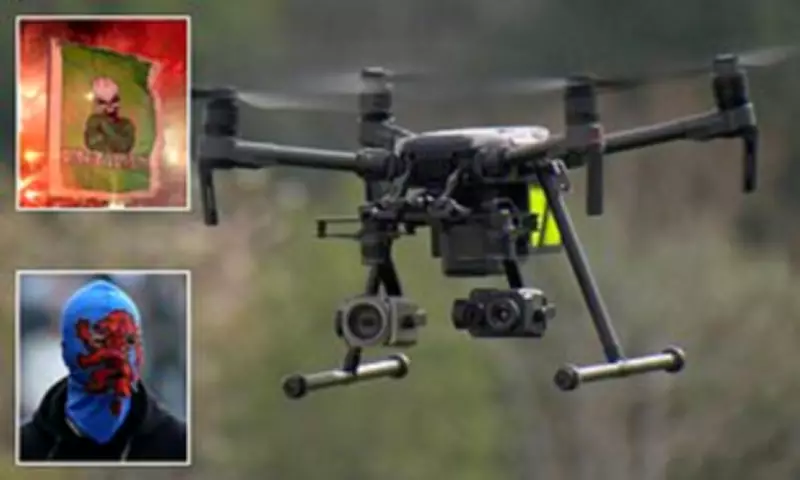
Police Drones Double Surveillance on Scottish Football Fans Amid Rising Violence
Police forces across Scotland are significantly escalating their use of aerial surveillance technology to monitor football supporters, as authorities grapple with a concerning surge in match-day violence and public disorder. Newly released data from Police Scotland reveals a dramatic increase in drone deployments at football events, with the tactic becoming a cornerstone of crowd control strategies.
Surveillance Statistics Show Sharp Increase
Official figures indicate that drones were deployed to monitor football crowds on 29 separate occasions last year. This represents more than a doubling from the previous year's total of just 13 deployments. In addition to drone usage, Police Scotland's helicopter was called into action eight times last year for football-related monitoring, compared to only two deployments the year before.
The aerial surveillance has targeted supporters attending matches at numerous Scottish clubs, including Celtic, Rangers, Hearts, Hibernian, Aberdeen, Dundee, Ayr United, Kilmarnock, Airdrieonians, Motherwell, Raith Rovers, and Dunfermline Athletic. Monitoring has also extended to games held at the national stadium, Hampden Park.

Ultras Culture Fuels Police Response
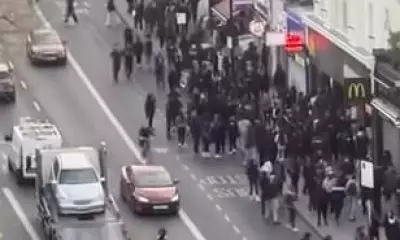
The intensified monitoring comes against a backdrop of escalating football-related violence across Scotland. Last month witnessed particularly disturbing scenes at Ibrox Stadium during a Scottish Cup quarter-final match between Celtic and Rangers. The confrontation resulted in both on-pitch invasions and violent skirmishes outside the ground, leading to 17 arrests thus far.
Much of this thuggish behaviour has been attributed to organised fan groups who identify themselves as football 'ultras'. Inspired by similar movements in Italy and across Europe, these groups are known for their intense vocal support, elaborate choreographed displays called tifos, and prominent flag-waving. However, a more sinister element has emerged, with ultras frequently employing dangerous pyrotechnics like flares and engaging in violent confrontations with rival supporters.
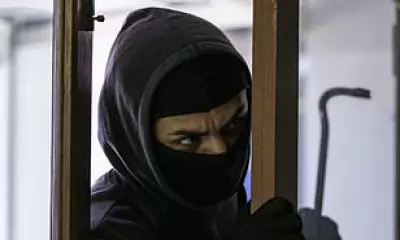
"These groups often wear uniform dark clothing and balaclavas to conceal their identities from police and stadium authorities," noted one security analyst. This practice has prompted some clubs, including Forfar Athletic, to implement bans on face coverings during home fixtures following incidents of disorder.
Civil Liberties Concerns Raised
The Scottish Football Supporters Association has expressed serious reservations about the expanding surveillance net potentially ensnaring innocent spectators. Spokesman Paul Goodwin acknowledged the policing challenges presented by ultras culture but emphasised the need for balance.
"There's an argument that with the rise of the ultras culture police have to take these precautions," Goodwin stated. "But there has to be a balance. If it were to become a blanket thing we would expect the police to be sitting down with fans and having a discussion around it."
Goodwin highlighted that Scottish fans have historically opposed other surveillance technologies used in European football, particularly live facial recognition systems that the SFSA has criticised for turning "public spaces into a police line-up." Police Scotland previously explored facial recognition technology but abandoned those plans following backlash over human rights and data protection concerns.
"Policing by consent is a way forward," Goodwin added, "where if they are going to do stuff like that, we know about it in advance."
Real Dangers to Public Safety
The risks posed by football violence extend far beyond organised hooligans, with innocent supporters frequently caught in the crossfire. In one particularly alarming incident in February 2024, a ten-year-old schoolboy suffered facial burns after being struck by a flare during Dundee's match against St Johnstone. Medical professionals confirmed that had the projectile landed just millimetres closer to the centre of his face, the child would have lost an eye.

Additional disturbing incidents captured on video last year showed Airdrie casuals confronting St Johnstone fans in a local bar before their Scottish Cup tie, with bottles thrown and fights spilling into the streets. Forfar Athletic reported similar disorder involving young fans both inside their stadium and around the town during a match against Spartans on March 21.
Police Defend Surveillance Strategy
Police Scotland superintendent David Howieson defended the increased drone deployments, emphasising that public safety remains the force's primary concern. "We are committed to developing and exploring our air capability. Drones are a valuable policing resource. They are very effective in supporting our operations and helping to keep people safe," Howieson explained.
The superintendent detailed how aerial surveillance provides commanders with crucial real-time intelligence: "The use of drones in support of police at large events, including football, allows commanders and officers to have a clearer picture of what's happening on the ground, to understand crowd dynamics, to make informed decisions on deployment of physical resources in a more flexible, effective and proportionate manner and to respond to any acts of disorder or criminality."
Howieson added that this approach enables police to "improve public safety, reduce risk and deliver a more effective service to our communities." He also noted that Police Scotland aspires to expand drone usage further but would conduct public consultation before doing so.
Police Scotland has confirmed that all drone operations adhere to Civil Aviation Authority regulations and that any footage retained for evidential purposes relating to disorder or criminality is managed according to established data protection policies.