Official Home Office statistics have exposed a significant decline in the number of police officers serving in frontline operational roles across England and Wales, with figures dropping to their lowest point in six years under the current Labour administration. The data, obtained by the Daily Mail, indicates there were precisely 67,085 officers in 'visible frontline operational' positions as of the end of March last year.
Manifesto Pledge Versus Reality
This substantial reduction stands in stark contrast to Labour's explicit election manifesto commitment to bolster community policing by putting '13,000 additional neighbourhood police and community PCSOs' back on the streets. The latest recorded total represents the smallest frontline workforce since the 2018-19 period, when numbers previously hit a concerning record low of approximately 63,000 officers.
Historical Context and Recent Trends
That earlier decline prompted the former Conservative government to initiate a major recruitment drive, aiming to bring 20,000 extra officers into service. The Tories successfully fulfilled this pledge by 2023, with the number of officers in visible frontline roles reaching a peak of just under 77,000 in March of that year. However, the subsequent twelve months witnessed a sharp reversal, with a loss of 4,700 officers from these critical positions.

Most alarmingly, during the year leading up to March last year—a period predominantly under Labour governance—the force saw a reduction of more than 5,000 'full-time equivalent' officers. This trend has raised serious questions about the government's ability to deliver on its law and order promises during a time of increasing public concern about crime.
Imminent Major Police Restructure
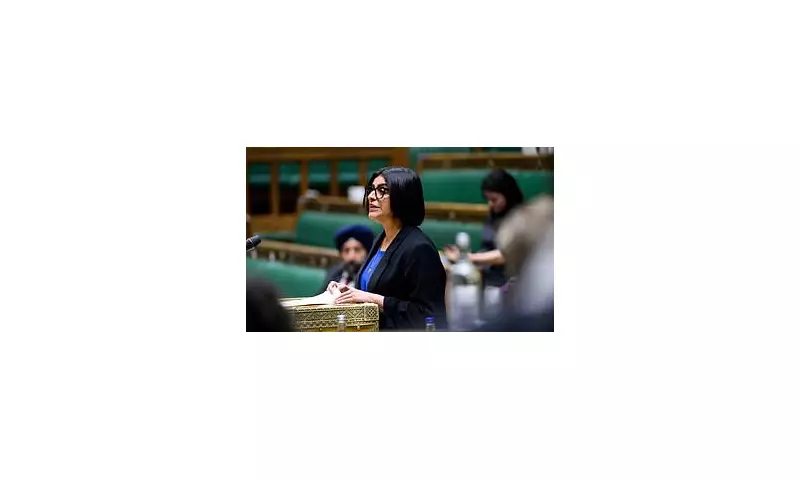
Against this backdrop, Home Secretary Shabana Mahmood is preparing to announce what is being described as the most significant overhaul of police forces in over six decades. The forthcoming policy document, a long-awaited White Paper on police reform, is expected to be unveiled next week as part of a coordinated government publicity campaign.
The radical restructuring plan is likely to propose consolidating the current patchwork of 43 separate police forces in England and Wales into a more streamlined system of between 10 and 20 regional entities. This ambitious reorganisation aims primarily to reallocate officers currently tied up in backroom administrative duties, freeing them to return to visible frontline roles where their presence is most needed by communities.
Concerns Over Cost and Disruption
Nevertheless, considerable apprehension has emerged regarding the practical implementation of such a sweeping transformation. Critics warn that a shake-up of this magnitude will inevitably incur enormous initial costs and consume vast amounts of senior officers' time and attention for several years. Furthermore, the consolidation would likely render dozens of chief constables and other high-ranking officers redundant, adding a layer of institutional turbulence to the process.
There is growing frustration within Whitehall regarding the perceived inability of the current policing model to adapt effectively to modern crime patterns. Home Office insiders argue that reform has become an urgent necessity, pointing to crimes like robbery, mobile phone theft, and shoplifting often going 'unpunished,' alongside more complex cross-border offences such as online fraud.
'The current system of policing leaves local forces facing unreasonable national burdens, distracting them from meeting the needs of their local communities,' a government source stated.
Winners and Losers in Proposed Reorganisation
The proposed restructuring is expected to create clear hierarchies within the new landscape. The chief constables of the largest metropolitan forces—such as the Metropolitan Police and Greater Manchester Police (GMP)—are anticipated to be among the primary beneficiaries, as their jurisdictions expand to absorb neighbouring smaller patches.

Conversely, in other regions, particularly the shire counties, fierce competition is predicted among current chief constables vying for the top positions in the new, much larger 'regional' police forces. The disparity in current force sizes is considerable: the smallest forces (excluding the City of London Police) include Warwickshire, Lincolnshire, and Wiltshire, each with roughly 1,100 to 1,200 officers. In contrast, the largest forces are West Midlands with 5,000 officers, West Yorkshire with 6,000, GMP with 8,000, and the Metropolitan Police with a substantial 33,000 officers.
A System Deemed 'Irrational'
In a speech delivered last November, Home Secretary Shabana Mahmood strongly criticised the existing structure of 43 separate forces, labelling it as 'irrational.' She issued a stark warning: 'Clearly too much police time is spent behind a desk.' This sentiment underscores the government's driving motivation behind the proposed reforms—to maximise officer visibility and operational efficiency.
The last comparable major reform of policing structures occurred between 1964 and 1966, when a series of amalgamations reduced the total number of forces from 158 to the current figure of 43. The proposed changes would therefore represent the most profound transformation of British policing in nearly sixty years, undertaken at a time when frontline numbers have hit a worrying low.