Police Officer Numbers Decline by Over 1,300 Across England and Wales
Newly released statistics from the Home Office have revealed a concerning trend in police staffing levels across England and Wales. The figures show that the total number of full-time equivalent police officers has decreased by more than 1,300 over the past twelve months, marking a significant reduction in frontline law enforcement personnel.
Sharp Decline at Metropolitan Police Drives National Trend
The overall reduction in police officer numbers has been almost entirely driven by a dramatic decrease at the Metropolitan Police, the country's largest police force. While 24 police forces across England and Wales actually reported year-on-year increases in officer numbers, these gains were completely offset by substantial losses elsewhere.
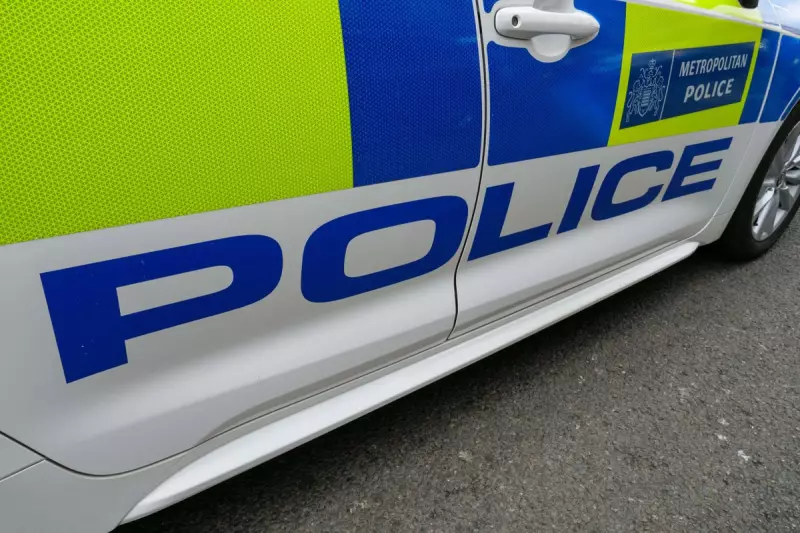
The Metropolitan Police alone reported a net fall of 1,461 officers, representing a decrease of 4.3% in their workforce. This substantial reduction at Britain's largest police service has had a disproportionate impact on the national statistics, overshadowing modest gains made by other forces.

Mixed Picture Across Different Police Forces
The Home Office data reveals a complex and varied picture across different regions. While the overall number of full-time equivalent police officers stood at 145,550 at the end of September 2025, this represents a decrease of 1,318 officers (0.9%) compared to the previous year.
This decline becomes even more significant when viewed against recent historical data. The current officer numbers are now 2,195 below the record-high figure of 147,745 officers recorded at the end of March 2024, representing a 1.5% reduction from that peak.
Among the 43 territorial police forces in England and Wales, 24 forces actually increased their officer numbers, resulting in a combined increase of 457 officers. However, these gains were completely negated by reductions at the remaining 19 forces, which collectively lost 1,775 officers.
Government Reforms and Future Plans
These concerning figures emerge just days after the Home Secretary announced what has been billed as the most significant changes to policing in the service's history. The government's new white paper outlines ambitious plans to fundamentally reshape policing structures across England and Wales.
Under these proposed reforms, ministers intend to significantly reduce the number of police forces by the end of the next parliamentary term. The new, larger forces would then be divided into local areas corresponding with cities, towns and boroughs, creating a more streamlined operational structure.
Simultaneously, the government plans to scrap the existing officer maintenance grant scheme, which ministers claim has encouraged forces to employ uniformed officers to meet headcount targets, only to place them in administrative roles such as IT or human resources departments.
Technological Advancements and Community Policing
The government's reform package also includes significant technological components designed to modernise policing practices. Live facial recognition vans will be rolled out nationwide, while artificial intelligence implementation will be overseen by a new national centre called Police.AI.
These technological advancements are intended to free up officers from paperwork and administrative tasks, allowing them to focus more on frontline duties. The government has emphasised that these measures will ensure responsible use of new technologies while improving operational efficiency.
Ministers have already committed to recruiting 13,000 additional neighbourhood policing officers by 2029, with 3,000 new recruits expected to be in post by spring this year. Home Office data indicates that 2,383 new police and community support officers were already in neighbourhood positions by the end of September last year.
Government Response and Funding Commitments
A Home Office spokesman responded to the figures by stating: "These figures show almost 2,400 more neighbourhood officers across the country in the past six months – getting police out on the streets, where the public want them."

The spokesman continued: "The last government left 12,000 warranted officers stuck behind desks in support roles. This Government is restoring neighbourhood policing by putting 13,000 more neighbourhood police on the streets this parliament, and has increased police funding by nearly £2 billion."
This statement highlights the government's commitment to redirecting police resources toward community-facing roles, despite the overall decline in officer numbers revealed by the latest statistics.