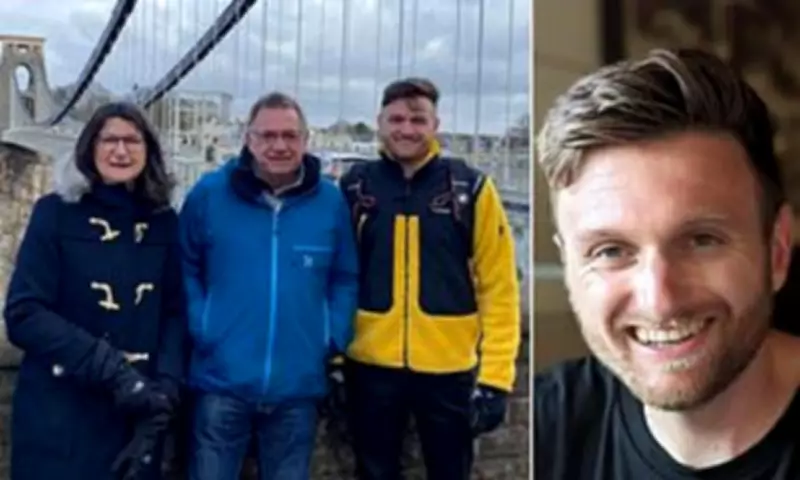
Tragic Death of Young Engineer on Cumbria Footpath
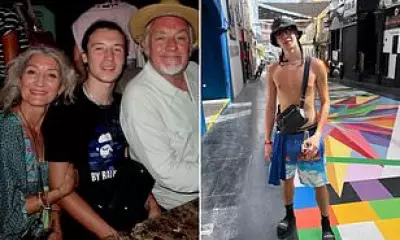
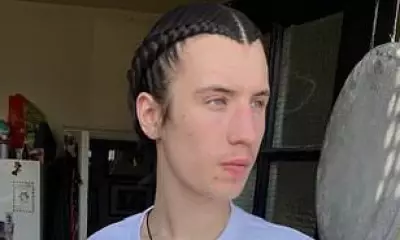
A mother's final words to her son were to 'take care' moments before he was fatally electrocuted by a low-hanging power cable while on a run, an inquest has heard. John Henry Oates, 29, known as Harry, was killed instantly when he came into contact with the faulty cable on a public footpath in Cumbria in October 2023.
Father's Harrowing Discovery
His father, Malcolm Oates, 68, discovered his son's body just five minutes from their family home on October 27, 2023. 'I was walking along the footpath and could see in the distance something white on the floor, perhaps some farm debris,' Mr Oates recounted. 'As I got closer, I could see that it was Harry. I could see there was a cable across his throat.'
He described the horrific scene: 'He was lying prone on the floor with his head and neck elevated, maybe a foot, 18 inches, with a cable burnt halfway through his throat. It was black and singed, and you could see the bone. That’s the harrowing scene I was presented with.' Mr Oates then made what he called a 'surreal' phone call to his wife Ros while standing over their son's body.

Final Moments and Family Grief
Harry's mother, Ros Oates, recalled their last conversation before he left for his run. She told The Telegraph: 'I said to him, "Take care", to which he responded, "Don't worry, mum."' Harry had assured her he was prepared, saying he had 'a drink, a snack, a telephone and a foil blanket – I will be fine.' Mrs Oates added: 'I watched him run down our garden and out into the field. That was the last time I saw him alive.'
Harry had been visiting his family home for a weekend of cycling, golf and running from his Bristol job as an aircraft engineer. He had just had an offer accepted on his first flat. When he did not return from his run, his brother attempted to track his phone, thinking perhaps he had dropped it.
Investigation Reveals Systemic Issues
The inquest heard that the power cable had been down for two days but had not touched the ground, so remained live. Emergency services took two hours to make the body safe, during which time two engineers from Electricity North West (ENWL) arrived, having noticed the power outage when Harry came into contact with the cable.
The cable had been hanging across the path due to what was described as a 'rare and complex' circumstance where porcelain insulators at the top of a telegraph pole failed, causing the line to bow into the path. Mr Oates challenged this characterization, stating that the presence of voids – microcracks in the insulators that can cause failure – was 'well known in the industry.'
He noted that the failed insulators had been installed in 1959, arguing that ENWL should have discontinued their use 'years ago' if safety was truly their top priority. Following Harry's death, ENWL tested 260 insulators across their network and found that 73 percent contained voids.
Company Response and Industry Concerns
The company has since discontinued the use of these porcelain disk insulators and begun a program to replace them at approximately 8,000 locations. However, Mr Oates expressed deep concern about the scale of the problem, questioning: 'How many is that nationwide?'
A spokesman for ENWL stated: 'Our heartfelt sympathies remain with Harry Oates’ family at this time. This was a tragic incident which both the coroner and Health and Safety Executive noted involved a rare and complex sequence of events that were unforeseeable.' The spokesman added that safety is their number one value and they continue to work with industry bodies on learnings from this accident.
Historical Precedent and Regulatory Failures
This tragedy echoes a similar incident in 2012 when Dr James Kew was killed after being hit by a fallen electricity cable while running along a footpath in Newport, Essex. In that case, the line had also become loose after a porcelain insulator failed. UK Power Networks was fined £1 million after it was revealed they had been alerted about the low-hanging line by a couple but did not immediately de-energise the network, instead sending an engineer who arrived 20 minutes after Dr Kew was killed.

The Oates family has not heard anything from ENWL since the incident, according to Mr Oates. While the inquest fell short of finding the company directly responsible for Harry's death, the family continues to blame ENWL for what they see as preventable safety failures that cost their son his life.