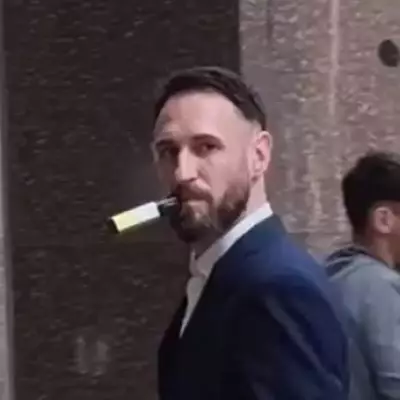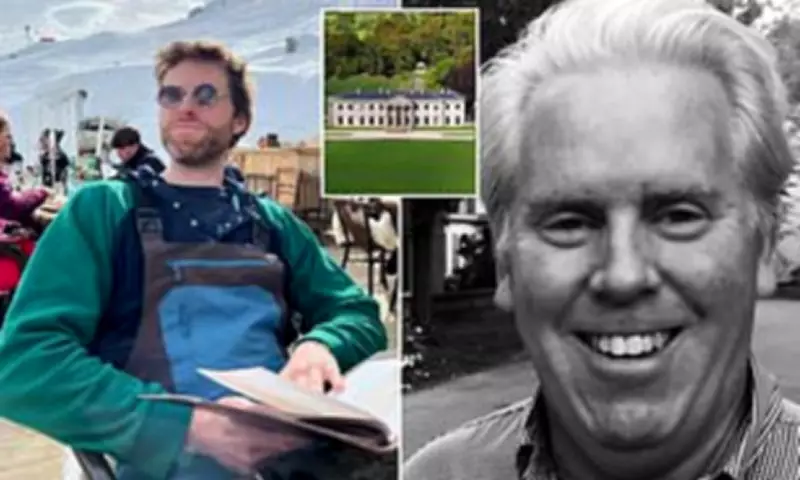
A man from New York told his father that he loved him as he strangled him to death at a luxurious five-star hotel in Ireland, a court has heard in harrowing detail. Henry McGowan, aged 31, used his bare hands to kill his 66-year-old father, John McGowan, by putting a 'full fist into his throat' just over an hour after they arrived at the Ballyfin Demesne hotel in Portlaoise, County Laois, on November 12, 2024.
Delusional Belief Led to Tragic Attack
The alleged killer, a former technology firm worker from New York, was experiencing a severe relapse of schizophrenia at the time. He was under the delusion that the person he was killing was not his father but 'an imposter', leading him to plead not guilty by reason of insanity. Henry McGowan had been battling serious mental health issues since 2022, when he disappeared from New York and was later admitted to a psychiatric ward in Paris.
History of Mental Health Struggles
In 2023, he followed a treatment plan for his bipolar I diagnosis, but he relapsed dramatically. According to a friend, he was seen roaming in London with 'a hot pink faux fur jacket' and a 'wild look in his eyes', indicating his deteriorating condition. His father, John, a successful businessman who worked on the New York Stock Exchange, discovered his son was visiting Ireland and attempted to meet him at Dublin airport to provide help and support.

Police Failures and Airport Movements
Prosecuting barrister Will Fennelly revealed that, despite concerns for Henry's condition and notifications from the Metropolitan Police, Irish police failed to locate him at Dublin airport. CCTV footage showed Henry moving around the airport for some time, twice travelling to airport car parks before returning to the terminal. In a concerning move, he discarded all his belongings, including his passport and phone, further complicating efforts to track him.
Father's Efforts to Assist His Son
John McGowan arrived at Dublin Airport from New York on November 12 specifically to help his son. He went to find him at Mater Hospital, where Henry was obtaining a prescription. The pair then took a taxi to the Ballyfin Demesne hotel in Laois. John told the hotel manager he had 'a bit of a concern' that his son hadn't been taking his medication but assured there was nothing to worry about. The manager observed the father and son as normal and engaging during their initial interactions.
Disturbing Behaviour at the Hotel
Henry was shown to the pool area and given swimming togs by staff, but he was later seen walking about the poolside naked, displaying erratic behaviour. When hotel staff met him and offered to bring him back to his room, he made an 'off colour remark', telling them the pair were staying in a cabin. When asked about his father, he chillingly stated, 'he is not my father', highlighting his delusional state.
Discovery of the Fatal Incident
John McGowan was later found in the pool area lying in a pool of blood and covered with a robe. A post-mortem examination concluded he died from asphyxia due to manual strangulation and compression of the mouth. Henry was found sitting in the hotel's library, calmly looking at the fire as emergency services attended the scene, showing a detached response to the tragedy.
Confession and Emotional Account
In an interview with Irish police, Henry confessed to the killing, providing a detailed and emotional account. He said, 'I killed him, I strangled him, I told him I would always love him no matter what as he had his last breath.' He also described counting to 49 as he choked his father, but when he was still breathing, he continued for another 20 seconds, remarking it was 'shocking how long it took'.
Motivation and Aftermath
Henry told officers that his father became furious at him for being naked in the pool, stating, 'He got super angry, the deal was to have dinner and take the medication after. I had a sense of tranquillity after in the pool.' The accused had previously admitted to doctors that he had a family history of bipolar affective disorder and a historic diagnosis of cannabis use. However, doctors did not feel he met the threshold for admission to a psychiatric unit at the time, potentially missing a critical intervention opportunity.

The trial continues today, with the court examining the complex interplay of mental health, legal responsibility, and the tragic consequences of untreated psychiatric conditions in this devastating case.