Suffolk Strangler's Sole Survivor Accuses Police of Failing to Act on Kidnap Report
The only living victim of notorious serial killer Steve Wright has publicly accused police of treating her like a "silly little girl" when she reported his attempted kidnapping, a full day before he committed his first known murder. Emily Doherty, who was 22 at the time, survived a terrifying abduction attempt by Wright in Felixstowe, Suffolk, in the early hours of September 18, 1999.
Dramatic Guilty Pleas in Old Bailey Trial
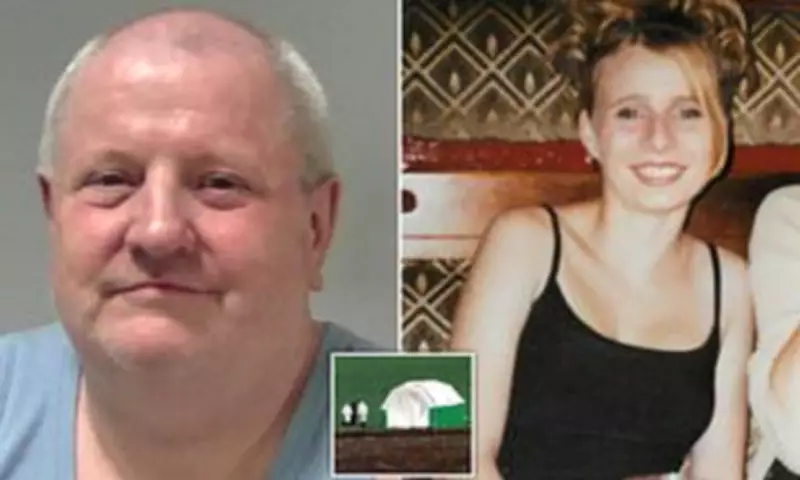
This week, at the highly anticipated trial at the Old Bailey, Wright dramatically pleaded guilty to murdering 17-year-old Victoria Hall on September 19, 1999, just twenty-four hours after his attempt on Ms Doherty. The serial killer, already serving a whole life sentence at Long Lartin Prison for the murders of five women in 2006, also admitted to the attempted kidnap of Ms Doherty in the same Felixstowe area.
In her first-ever interview, given to Sky News, Ms Doherty revealed the harrowing details of her escape and the subsequent police response that left her feeling dismissed and unheard.

A Night of Terror in Felixstowe
Ms Doherty had been walking home from the Bandbox club with her husband and another couple when the two women found themselves ahead. After her friend departed, she was left alone on Pickets Road East. She described a man repeatedly driving past her, "loitering" before parking with the engine running and a door open.
"I started running up a driveway. I found a big stick and stood there, easily for 10 minutes. I thought if he does come up here, I will pound him with the stick," she recounted. The ordeal lasted approximately forty minutes until a couple finally answered her desperate knocks and called emergency services.
Police Response and Missed Opportunities
Despite the traumatic event, Ms Doherty says the police response was profoundly inadequate. "The police came, but they didn't believe me at all," she stated. "They said 'come on, how much have you had to drink tonight?'" She insists she had consumed only soda water after a couple of beers earlier.
She provided part of the vehicle's license plate and offered to give a formal statement later that day, but was told it was unnecessary. "They treated me like a silly little girl," she emphasized. The following day, she departed for India, only to learn upon contacting home that police urgently wanted to speak with her regarding the manhunt for Victoria Hall's killer.
From the Himalayas, she gave a telephone statement. Police suggested sending officers to create an e-fit image of the suspect, but never followed through. That was the last communication she received until 2006, when Wright murdered five sex workers in Ipswich: Gemma Adams, Tania Nicol, Anneli Alderton, Paula Clennell, and Annette Nicholls.
Survivor's Guilt and Unanswered Questions
Ms Doherty, who was living abroad during the 2006 killing spree, did not see a photograph of Wright until Victoria Hall's case was reopened. She questions why she was never shown an image of the suspect during the initial investigation.
"It's devastating what happened to everyone else, absolutely devastating," she told Sky News. "You can't help thinking, if they had taken me seriously, Vicky could have survived, but certainly if they had found him sooner the five other women would still be here."
She now suffers from profound survivor's guilt. "I'm suffering massively from survivor's guilt… It's a burden that I carry. There's the guilt of not being heard. It makes me feel sick with grief," she confessed.
Legal Proceedings and Institutional Accountability
Wright, convicted in February 2008 for the 2006 murders despite denying responsibility, is due to be sentenced for the murder of Victoria Hall and the attempted abduction of Emily Doherty. Suffolk Constabulary has been approached for comment regarding the allegations of investigative failure in 1999.
This case raises serious questions about police procedures and the treatment of reports from young women, with Ms Doherty's account highlighting a potentially catastrophic missed opportunity to apprehend a serial killer before he claimed more lives.