A man suspected of carrying out a mass shooting at Brown University and killing a Massachusetts Institute of Technology professor has been found dead, authorities have confirmed.
Suspect found after frantic manhunt
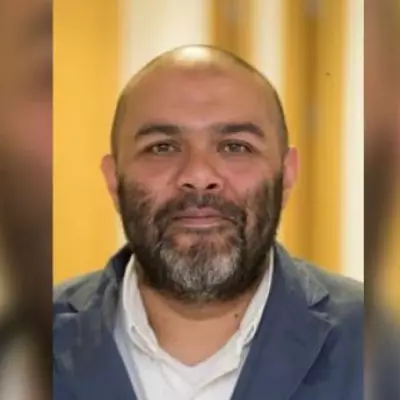
Claudio Neves Valente, 48, was discovered dead from a self-inflicted gunshot wound inside a storage facility in Salem, New Hampshire, on Thursday night. The former Brown student and Portuguese national is believed to have acted alone in both attacks, according to Providence Police Chief Colonel Oscar Perez.
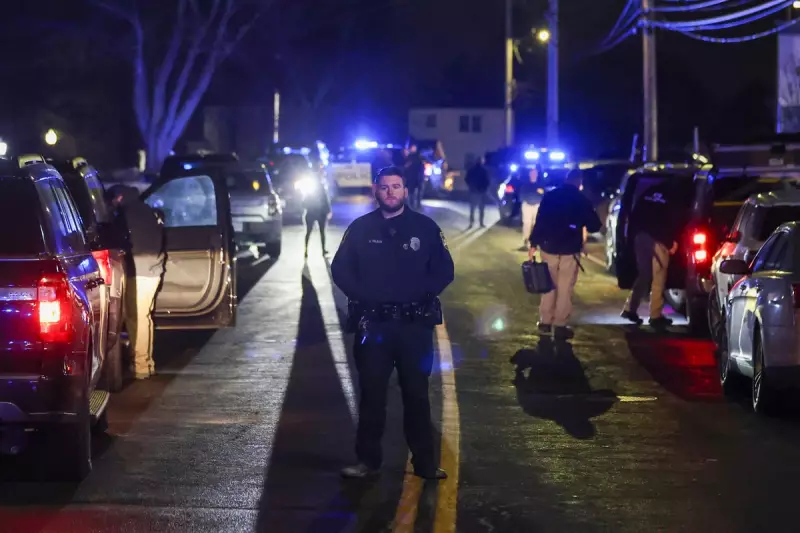
Investigators allege Neves Valente fatally shot two students and wounded nine others in a lecture hall at Brown University in Providence, Rhode Island, last Saturday. Two days later, he is suspected of killing MIT professor Nuno F.G. Loureiro at his home in a Boston suburb, nearly 50 miles from the first crime scene.

Connections between suspect and victims
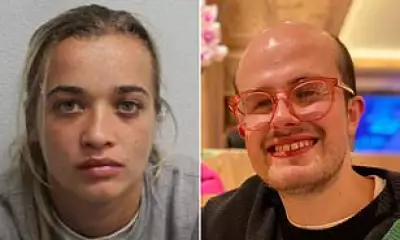
Brown University President Christina Paxson stated that Neves Valente was enrolled as a graduate physics student from autumn 2000 to spring 2001 but had no current affiliation with the institution.
US Attorney for Massachusetts Leah B. Foley revealed a deeper connection, noting that both Neves Valente and Professor Loureiro attended the same academic programme at a university in Portugal between 1995 and 2000. Loureiro graduated from the physics programme at Instituto Superior Técnico in 2000, while Neves Valente was dismissed from a position at the Lisbon university that same year.
Neves Valente initially entered the United States on a student visa and eventually obtained legal permanent resident status in September 2017. His last known residence was in Miami, Florida.
How the investigation unfolded
The breakthrough in the case came from a crucial tip provided by a witness, identified only as "John" in court documents. After seeing police security footage, John recognised the suspect from an encounter in a Brown University bathroom just hours before the shooting. He posted his suspicions on Reddit, where users urged him to contact the FBI.
His information led investigators to a Nissan Sentra with Florida plates. Using a network of over 70 street cameras operated by Flock Safety, police tracked the vehicle. They discovered Neves Valente had covered his rental car's plate with a Maine license plate to evade detection.
Footage later placed him entering an apartment building near Professor Loureiro's home and, about an hour later, the New Hampshire storage unit where he was found dead with a satchel and two firearms.
Victims remembered
The attacks claimed the lives of three individuals. Professor Nuno Loureiro, 47, was a renowned physicist and fusion scientist who had led MIT's Plasma Science and Fusion Centre since last year. Originally from Viseu, Portugal, his work focused on explaining the physics behind solar flares.
The two students killed at Brown were 19-year-old sophomore Ella Cook and 18-year-old freshman MukhammadAziz Umurzokov. Cook was active in her Alabama church and served as vice president of the Brown College Republicans. Umurzokov's family immigrated from Uzbekistan, and he aspired to become a doctor.
Of the nine people wounded in the lecture hall, three have been discharged from hospital, with the remaining six in stable condition as of Thursday.
Ongoing questions and response
Rhode Island Attorney General Peter Neronha stated there are still "a lot of unknowns" regarding the suspect's motive. "We don't know why now, why Brown, why these students and why this classroom," he said.
Following the revelation of the suspect's identity, former President Donald Trump suspended the green card lottery programme that had allowed Neves Valente to remain in the United States.
The shooting has also raised questions about campus security. Although Brown University has approximately 1,200 cameras on campus, the attack occurred in an older section of an engineering building with few cameras. Investigators believe the shooter used a door facing a residential street, which existing cameras did not cover.