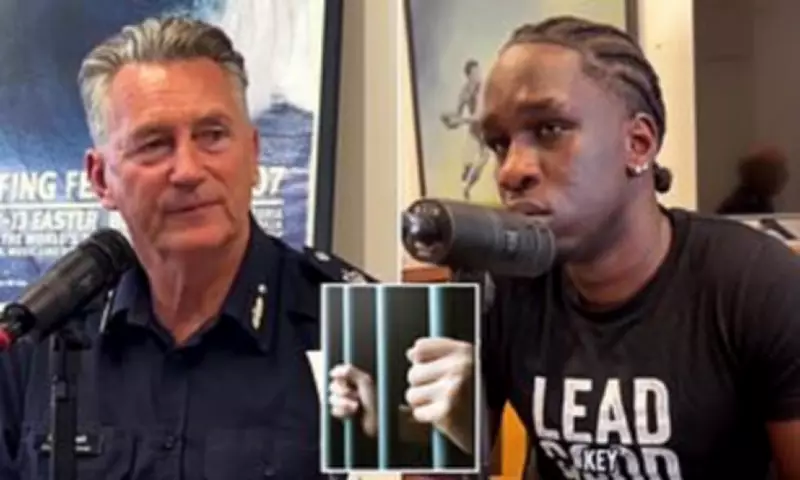
Victoria Police Chief Commissioner Slams Youth Bail Laws as 'Really Destructive'
In a rare public critique, Victoria Police Chief Commissioner Mike Bush has broken rank to condemn the state's youth bail laws, describing the current system as 'really destructive' during a candid podcast interview. Speaking on the youth crime podcast Lead Good this week, Commissioner Bush did not hold back, arguing that young offenders are being released on bail far too quickly and easily, undermining public safety and rehabilitation efforts.
Former Offender Turned Mentor Echoes Concerns
The discussion was prompted by co-host Judo, a former offender who now mentors youths through the Lived Experience Mentor Program. The 24-year-old, who served four years in prison, expressed frustration that underage offenders are often let free mere hours after breaking the law. 'Honestly, it's pathetic,' Judo stated. 'These kids, you guys are giving them bail, giving them the opportunity and another chance to go out in the community and do the exact same thing. It's putting the community at risk.'
Judo emphasised that custody provides a critical window for behavioural correction, noting that when youths are detained, they are clean, away from negative influences, and more receptive to guidance. 'You just got to hold them a bit longer, get us involved and we'll talk to them,' he advised. 'We'll mentor them, give them the right advice and hopefully it clicks.'

Commissioner Bush Agrees: System Misses Key Opportunities
Commissioner Bush wholeheartedly agreed with Judo's assessment, praising his articulation of the issue. 'That's the piece that we talk about — that you've got to understand there are consequences for your behaviour, but it also gives them time to reflect and the opportunity for an intervention,' Bush explained. He highlighted the futility of releasing a young person back onto the streets shortly after a serious offence, questioning what is achieved when they reoffend immediately.
'If a young person commits a serious crime, three hours later they're back out on the street with their peer group and their mates, ready to go and do it again, what has been achieved?' Bush remarked. 'That's really destructive and we've missed the opportunity to announce consequence, to provide the opportunity for reflection and intervention, all missed opportunities.'
Investing in People as a Solution
The Commissioner pointed to Judo's own transformation as evidence that with proper support, young people can leave crime behind. He recounted how Judo went from skipping school out of boredom to committing home invasion and theft, but turned his life around after someone invested in him. 'The intervention that came to you was that someone actually invested in you,' Bush said. 'They said you're important, gave you some time, gave you some effort and made you feel valued. Part of the key is investing in human beings.'
Bush argued that many youths feel isolated and irrelevant, leading them to destructive actions. 'If you invest in people, tell them they're important and do stuff for them, that will be rewarded,' he asserted. 'That's what I see occurring here.'
Rising Youth Crime Statistics Underpin Concerns
These criticisms come against a backdrop of increasing youth crime in Victoria. According to the Crime Statistics Agency, youth crime rose by 2.3 per cent in 2025, with robberies and carjackings among the most prevalent offences. Commissioner Bush stressed that making young offenders understand the consequences of their actions is crucial to addressing this trend.
'If young people understood the consequence of what they do, how do we get them to think about that more deeply before they do something,' he pondered. '[They need to] understand there's not just a consequence for the victims but there's a consequence for themselves. They've got to know that there is a tough side to what they do, and that tough side could be, and perhaps should be, losing their liberty.'

Balancing Tough Measures with Prevention
However, Commissioner Bush cautioned that harsher penalties alone are not the answer. He advocated for a balanced approach that prioritises prevention and early intervention. 'Prevention, early intervention, working with young people and working with communities is the best answer and that comes first,' he concluded, underscoring the need for comprehensive strategies that combine accountability with support to effectively tackle youth crime in Victoria.