Inquest Reveals Kit Cleaning Reprimands Before Trooper's Death
An inquest has heard that a young Household Cavalry trooper, who was found dead just days after walking alongside Queen Elizabeth II's coffin during her state funeral, had been reprimanded for failing to properly clean his ceremonial kit. Jack Burnell-Williams, aged 18, struggled significantly with the demanding workload within the elite regiment and reportedly 'absolutely hated' his posting in London.
Girlfriend Describes Immense Pressure Over Kit Standards
Molly Holmes, Mr Burnell-Williams' girlfriend, told Inner West London Coroners Court that maintaining his ceremonial uniform to immaculate standards became one of the most stressful aspects of his role. 'He got stressed out about that because it had to be pristine,' she testified. 'It always had to be immaculate. He spent a lot of time on his kit, and it was never good enough. He always got in trouble from the Corporal of the Horses about his kit.'
When questioned about potential punishment, Ms Holmes clarified that 'it was more a telling off, and he'd have to redo them,' indicating repeated corrections were required rather than formal disciplinary action.

Tragic Timeline Following Historic Ceremonial Duty
The young trooper was discovered by his roommate at Hyde Park Barracks in London on September 28, 2022. This tragic event occurred just nine days after his prominent appearance alongside fellow Household Cavalry members during the monarch's state funeral procession, which was watched by approximately 29 million viewers across the United Kingdom alone.
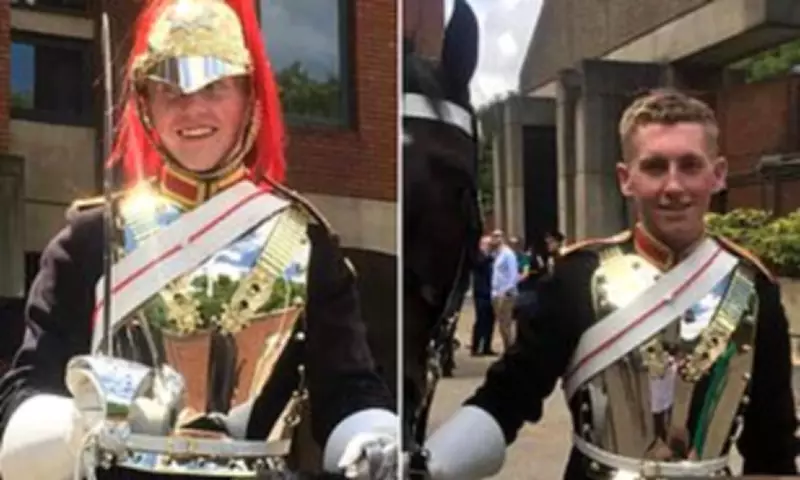
Images from the historic funeral procession show Mr Burnell-Williams in full ceremonial uniform as he helped escort the Queen on her final journey, representing one of the most visible public duties performed by the Household Cavalry.
Family Hopes for Lessons Regarding Army Mental Health Support
Present in court were Mr Burnell-Williams' mother, Laura Williams, 47, and father Dan Burnell, 45. Ms Williams has previously expressed hope that lessons can be learned from her son's passing, particularly concerning how the British Army addresses the mental wellbeing of young recruits during their initial postings and training periods.
The inquest, expected to continue through much of this week, will hear testimony from several of the teenager's Army colleagues and superiors under the direction of Assistant Coroner Bernard Richmond KC.
Transformation From Enthusiastic Recruit to Overwhelmed Soldier
Ms Holmes described meeting Mr Burnell-Williams online approximately two years before his death, with both undergoing initial training in Harrogate. Originally from Bridgend in Wales, he had aspired to join the Welsh Guards for opportunities to travel and undertake field work, but was instead posted to Windsor and subsequently Knightsbridge after failing to achieve the required grades.
During his time at Windsor for phase two training, Mr Burnell-Williams was introduced to equestrian duties which he accepted despite not being his preferred assignment. 'He said everyone was very nice and he got on well with them. He liked his instructors,' Ms Holmes recalled.
However, upon transfer to Knightsbridge barracks in 2022, she observed a dramatic change in his demeanor. 'At first he didn't know what to expect, but as it went on he absolutely hated it,' she stated, noting that parade duties became particularly loathsome to him.
Exhausting Schedule and Diminished Personal Time
Ms Holmes recounted one instance where Mr Burnell-Williams volunteered for extra weekend shifts hoping to secure subsequent leave to visit her, only to have that leave cancelled unexpectedly. When she visited him instead, she was shocked to discover his routine involved working from 5am until 8pm or 9pm daily at Horse Guards Parade.
'He said that was all the time,' she testified. 'He said it was because he was young. He was always so tired that we didn't have much time to talk or do anything in the evenings. He'd just go straight to bed.'
From September 21 onward, she noted he became 'very stressed and very tired, a lot more than usual,' repeatedly expressing that he needed a break from the overwhelming workload.

Colleagues Noted Visible Change in Demeanor
Friend and fellow soldier Col Maxwell, who met Mr Burnell-Williams during Windsor training and later shared accommodation with him in London, testified about observing a significant transformation. 'He became fairly apathetic. He didn't care as much about his job,' Mr Maxwell stated. 'In Windsor, he was keen to impress; in Knightsbridge, he was just trying to get by. I think the pressures of the job were just starting to get to him.'
Mr Maxwell added that while he didn't perceive Mr Burnell-Williams as struggling more than other young recruits—who often shoulder substantial workloads—it was 'fairly common' for soldiers at that stage to request transfers due to the 'very difficult' work-life balance.
Barriers to Seeking Welfare Support
The inquest heard concerning testimony about potential barriers preventing young soldiers from seeking mental health support. Mr Maxwell explained that consulting welfare officers about concerns could lead to being perceived by colleagues as 'a Jack'—an Army term denoting selfishness—as it might create additional work for others.
Days before his death, Mr Burnell-Williams had been assigned to Horse Guards Parade for ceremonial duties when his shift was unexpectedly extended. This development prompted him to threaten going AWOL (Absent Without Leave), which Ms Holmes described as 'out of character.'
Family photographs presented during proceedings show the teenager beaming proudly in his ceremonial uniform while mounted in London, where his parents regularly visited him. The inquest continues its examination of the circumstances surrounding this tragic loss.