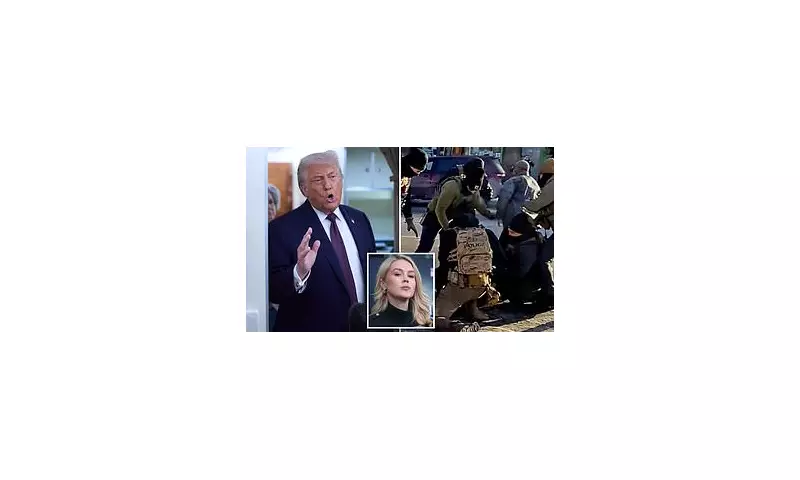
The White House has declined to provide any commitment regarding the public release of body camera footage that captured the final, fatal moments of Alex Pretti's life. Pretti, a 37-year-old intensive care unit nurse employed by the Department of Veterans Affairs and residing in Minneapolis, was shot multiple times by U.S. Border Patrol officials last Saturday.
Contrasting Official Responses and a Fatal Encounter
The incident unfolded after Pretti began filming federal agents and became involved in an altercation with another protestor. Disturbing video evidence from the scene depicts Pretti being forced to the ground and surrounded by approximately half a dozen agents. One agent is seen disarming the nurse, after which Pretti was shot multiple times in the back. He was pronounced dead at the location.
When questioned directly on Monday about the potential release of the bodycam footage, White House Press Secretary Karoline Leavitt offered a non-committal response. 'That’s not something I’ve heard the president commit to, so I won’t do that here,' she stated, deflecting the reporter's inquiry.

A Schism in Official Characterisations
The administration's stance appears fragmented regarding how to characterise the deceased. Department of Homeland Security Secretary Kristi Noem has publicly labelled Pretti a 'domestic terrorist,' while White House Deputy Chief of Staff Stephen Miller escalated the rhetoric by calling the nurse a 'would-be assassin [who] tried to murder federal law enforcement.'
However, Press Secretary Leavitt indicated a divergence when pressed on whether President Trump agrees with these severe accusations. She noted she had not heard the president 'characterize Mr. Pretti in that way,' highlighting a clear schism among top officials concerning the interpretation of the shooting.
Stark Contrast with Previous Incident
This cautious, withholding approach stands in stark contrast to the administration's handling of a similar tragedy just over two weeks prior. Following the January 7th shooting of Renee Good by an Immigration and Customs Enforcement (ICE) agent, multiple senior officials proactively disseminated video clips of the incident on social media.
Vice President JD Vance publicly condemned Good's actions, and by January 9th, DHS and other officials were reposting footage from the agent's perspective, often accompanied by commentary suggesting the angles vindicated the shooter. This concerted public relations effort has been entirely absent in the wake of Pretti's death.
Unanswered Questions and Operational Upheaval
The White House offered no explanation for this markedly different response when questioned. A DHS official confirmed to the Daily Mail that 'There is body camera footage from multiple angles which investigators are currently reviewing,' but did not address whether it would ever be published.
Reports indicate Pretti was armed with a pistol and multiple loaded magazines during the protest, though he was legally permitted to carry the weapon. The two consecutive shootings of U.S. citizens by federal officers in Minnesota have triggered significant turbulence within the administration's deportation operations there.
In response, President Trump announced early Monday that Border Czar Tom Homan would assume operational control of the programme and the roughly 3,000 federal officers stationed in the state. This move sidelines Border Patrol Commander Greg Bovino, who had been the public face of the operation and is now expected, along with some deputies, to soon depart Minneapolis.