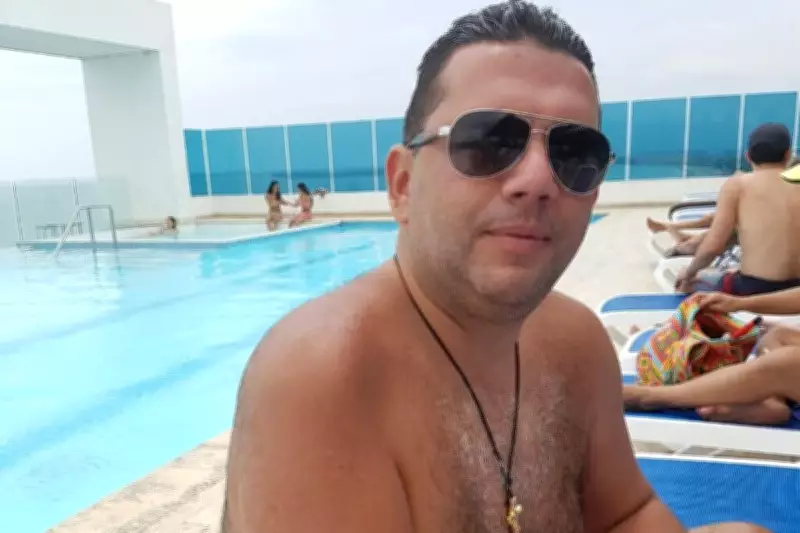
DEA Informant Escapes Prison Sentence Over Tax Evasion on Millions
A longtime informant for the U.S. Drug Enforcement Administration (DEA) has avoided a prison term this week after confessing to failing to pay taxes on nearly $4 million he received for years of undercover operations. Andres Zapata, 48, was sentenced on Wednesday in Austin, Texas, to time already served, following his cooperation in a decade-long investigation that has implicated multiple agents in misconduct.
Background of the Case and Sentencing Details
Zapata, a professional money launderer, was extradited to the United States last year from his native Colombia, where he had collaborated closely with José Irizarry, a former DEA agent now serving a 12-year sentence for embezzling millions from money laundering stings. According to court records, the DEA paid Zapata $3.8 million from 2015 to 2020 for his services as a confidential informant. He pleaded guilty in July last year to a single charge of not reporting these earnings on his tax returns.
At the sentencing hearing, U.S. District Judge David Ezra described Zapata as "very cooperative" with the government. The judge ordered him to pay $1.2 million in restitution, reflecting the tax loss to the U.S. government, but denied a request by The Associated Press to unseal sentencing records. Zapata expressed remorse, stating, "I've learned my lesson," after spending over a year in a Colombian prison awaiting extradition.

Legal Arguments and Informant Practices
Zapata's lawyer, Don Bailey, argued that it was unusual for prosecutors to target someone who had risked his life assisting U.S. law enforcement against violent cartels for an offense he claimed Zapata was unaware of committing. Bailey noted that informants like Zapata often do not receive standard tax forms such as 1099s or W-9s, making it unclear what taxes they owe. "You sign a piece of paper for money. You don't get receipts," he said.
Informants are required by the DEA to report their income to the IRS, but prosecutions for failure to do so are rare. The Justice Department's criminal division, which handled the case, declined to comment, and the DEA did not immediately respond to requests for comment.
Extensive Career and Alleged Misconduct
Internal DEA records obtained by The Associated Press reveal that Zapata first became an informant in 1998, initially employed as a vacuum salesman whose brother-in-law was involved in drug trafficking. Over the next two decades, he evolved into one of the agency's most prolific informants, earning more than $4.6 million from the DEA by arranging covert cash pickups and aiding investigations across locations from Peru to Los Angeles.
However, his role extended beyond typical informant duties. Under the guise of DEA assignments, Zapata, a Colombian-American dual national, traveled globally with agents and sometimes prosecutors from Miami, in what Irizarry termed a "world debauchery tour" that violated strict rules against fraternizing with informants. Secret WhatsApp chats detail Zapata's involvement in procuring prostitutes and helping agents, referred to as "Team America," evade trouble, including an incident in Madrid where an agent was briefly detained for alleged sexual assault.
Additionally, Irizarry told investigators that Zapata kicked back reward money, such as delivering $40,000 in cash used to buy a Tiffany ring for Irizarry's wife. Zapata also allegedly acted as an intermediary for payments from Diego Marin, a former DEA informant known as Colombia's "Contraband Czar," who was arrested in 2024 in Spain as part of a bribery investigation. Video evidence shows Zapata and Marin partying with agents at a Madrid restaurant.
This case underscores the complexities and potential for corruption within undercover operations, raising questions about oversight and accountability in law enforcement informant programs.