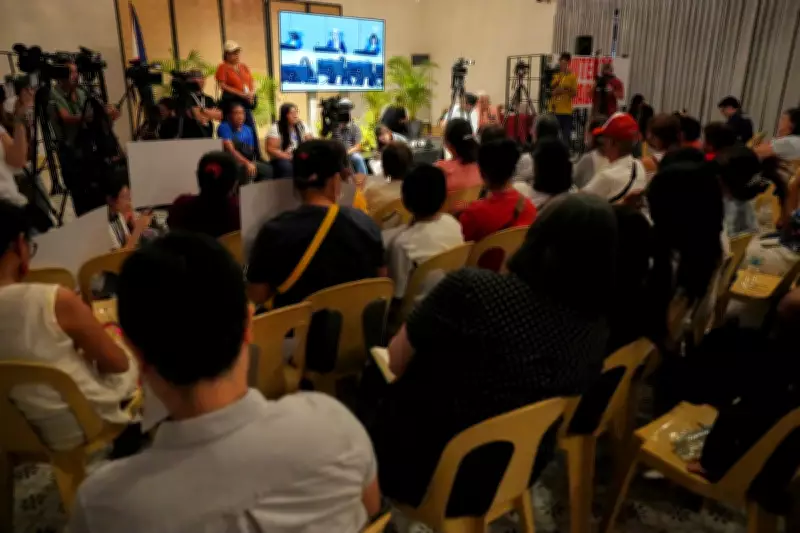
ICC Prosecutor Presents 'Deeply Disturbing' Testimony on Duterte's Drug War
Prosecutors at the International Criminal Court have made explosive allegations that former Philippine president Rodrigo Duterte personally compiled so-called "death lists" and openly bragged about killings during his brutal anti-drug crackdown. On the second day of proceedings at The Hague, prosecutor Edward Jeremy presented what he described as "deeply disturbing" testimony detailing systematic violence.
'Execution Roster' Function of Duterte Lists
"As president, Duterte publicly named persons he alleged were involved in drugs, and many of those would end up as victims in his so-called war on drugs," Mr Jeremy told the court. According to the prosecution, the so-called "Duterte list" functioned as an execution roster, with one witness describing it as "basically a death list."
The prosecutor showed footage in which Mr Duterte declared: "I am the sole person responsible for it all." This admission forms part of the evidence against the former leader, who faces three counts of crimes against humanity at the ICC.

Systematic Targeting of Vulnerable Populations
Prosecutors presented evidence that the poor were disproportionately targeted during the campaign. "As witnesses stated, the poor were often targeted because they were the ones least likely to file complaints against the police," Mr Jeremy explained. One witness testified that police were instructed to focus on "those who do not have the means to file a complaint or to complain."
The prosecution linked Mr Duterte to at least 76 specific killings between 2013 and 2018, describing this figure as only a small portion of the thousands believed to have died during his anti-drug campaign. This violence spanned both his tenure as mayor of Davao City and later as president.
Chilling Accounts of Teenage Victims
Among the most harrowing testimony presented were accounts of minors being killed. Mr Jeremy described two incidents in which teenagers, around 14 or 15 years old, were detained by police and allegedly strangled to death.
"It's difficult to imagine a more terrifying end to two lives that had barely even begun," the prosecutor stated. "And these murdered children were then sold to funeral homes."
Police Operations Described as 'Hunting Season'
An insider witness told prosecutors that Philippine police carried out "one time big time drug operations," including a single night in 2017 in Bulacan that left 32 people dead. "As one witness stated, 'It was hunting season, a killing spree,'" Mr Jeremy recounted.
Prosecutors presented an expert on political violence who found a staggering 1,600 percent surge in police killings in Bulacan and a 598 percent rise nationwide after Mr Duterte took office. The expert concluded that such dramatic increases point to a widespread policy of extrajudicial executions.
Duterte's Absence and Defense Arguments
The current proceedings are not a full trial but a confirmation-of-charges hearing, during which judges will decide whether the case should proceed. Mr Duterte, now 80, chose not to attend, invoking his right to be absent.
His legal team, led by lawyer Nicholas Kaufman, has argued that the former president is frail and experiencing cognitive decline. On February 23, Mr Kaufman stated his client "maintained his innocence absolutely" and claimed that although Mr Duterte was known for "bluster and hyperbole" in his speeches, he repeatedly instructed law enforcement officers to use lethal force only in self-defense.
Prosecutors and victims' representatives dispute this characterization, contending he is medically fit but unwilling to confront victims' families in court. Judges ruled he is capable of attending but allowed him to waive his presence.
Recording Reveals Chilling Remarks
In court, Mr Jeremy played a recording of Mr Duterte making light of "extrajudicial killings" during a public address. "In this opulent, gilded presentation room, the officials laugh along with their president while he boasts about his skills in extrajudicial killing," said Mr Jeremy. "And outside on the streets of the Philippines, the bodies pile up."
At that point in the campaign, the prosecutor alleged, nearly 1,500 people had already been killed.

Judicial Process Moving Forward
Once hearings conclude, judges are expected to take up to 60 days to determine whether the case will move forward to a full trial. The decision will determine whether the former Philippine leader will face formal charges for crimes against humanity in what has been described as one of the most significant cases in the ICC's history.