FBI Files Unearth New Suspect in America's Only Unsolved Skyjacking
After more than five decades, the enigmatic case of DB Cooper remains the sole unsolved skyjacking in American history. On Thanksgiving Eve, November 24, 1971, a mysterious man in a business suit and dark sunglasses boarded a flight from Portland, Oregon, to Seattle-Tacoma International Airport. He purchased his twenty-dollar ticket under the alias 'Dan Cooper,' but an early news report mistakenly identified him as 'DB Cooper,' a name that would become legendary worldwide.
The Audacious Hijacking and Disappearance
After takeoff, the man seated at the rear of the aircraft handed a note to a flight attendant, stating: 'Miss, I have a bomb and would like you to sit by me.' He proceeded to demand two hundred thousand dollars in cash and four parachutes. Upon landing in Seattle, he received the ransom and parachutes, releasing all thirty-six passengers. The plane then took off again, and at ten thousand feet over southwestern Washington state, he lowered the rear stairs and vanished into the freezing rain with the money, never to be seen again.
Raymond Sidney Russell: A New Name Surfaces
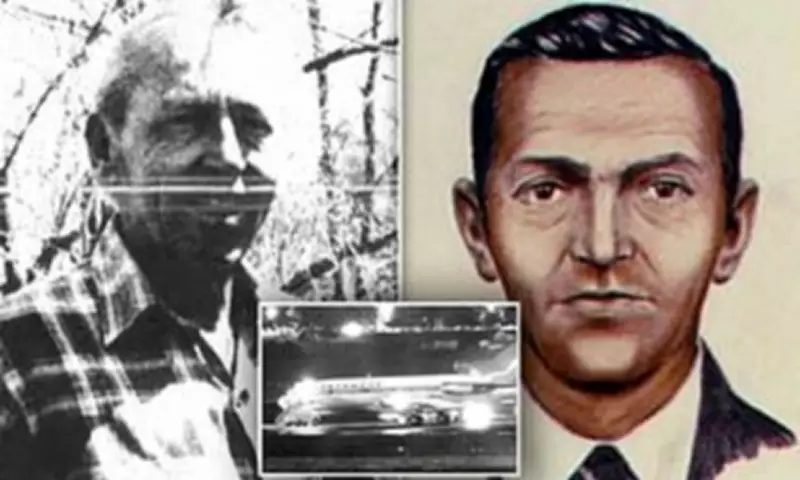
Buried within recently released faded FBI documents from the era, a new suspect has emerged: Raymond Sidney Russell. An artist's sketch created from passenger and crew recollections shows a striking resemblance to Russell, as depicted in a 1988 photograph uncovered by investigators. The FBI launched a comprehensive nationwide investigation into Russell in 1972, a year after the hijacking, which had not been publicly disclosed until now.

Known as Sid, Russell was described by one associate to FBI agents as an 'exact likeness' for the famous composite sketch of Cooper released by authorities. FBI offices across Seattle, Denver, Los Angeles, Salt Lake City, San Francisco, and Boston collaborated on the investigation, interviewing numerous individuals who had known Russell.
Russell's Background and Suspicious Profile
Agents pieced together that Russell, aged forty-eight at the time, had served in the Air Force during World War II before working as an inspector at a Boeing factory. He later became a commercial pilot for Flying Tiger, a cargo airline based in Seattle, and also served as an air traffic controller in the city. Informants noted he was a ski instructor, parachutist, and adventurer who had once mined for uranium.
In the late 1960s, Russell struggled with alcoholism and traveled to Australia, returning to the United States to sell real estate in Lake Tahoe. FBI documents recorded that an associate, when shown the Cooper sketch, stated the picture was an exact likeness of Russell and believed him 'entirely capable of hijacking.' The associate added that Russell was in Seattle around the time of the hijacking, left suddenly afterward, and was described as adventuresome, well-educated, and extremely cool.
Conflicting Testimonies and FBI Investigation
Another witness who had known Russell for two decades described him as a former Air Force officer, college graduate, top skier, and proficient in various skills, with a nomadic personality. However, this friend also labeled Russell as law-abiding. The FBI investigation revealed Russell attended Alcoholics Anonymous in Manhattan Beach, California, in 1967, where he was described as a very sick man who suffered convulsions and appeared unfit to fly airplanes.
A Flying Tiger pilot who employed Russell briefly in Lake Tahoe until April 1971 told the FBI he believed Russell might have committed the hijacking due to his personality, but could not imagine him threatening anyone. Other pilots in Seattle speculated Russell may have been DB Cooper, noting he dropped out of sight during the hijacking period.
Russell's Interview and Alibi
The FBI eventually tracked Russell to Maine, where he agreed to be interviewed at his summer residence in 1976. Russell waived his rights and denied involvement, claiming he left the West Coast in the summer of 1971 with his mother and had not returned since. He provided an alibi, stating he was driving a friend from Maine to New Hampshire on the night of the skyjacking, though exact details and the friend's name were redacted in documents.

Intriguingly, Russell offered his own theory on how the hijacking was executed, displaying detailed knowledge of the area. He suggested the skyjacker used a fan beacon near Woodburn, Washington state, as a marker for parachuting out of the aircraft. The FBI agents recorded his denial of ever being in a Boeing 727 or involved in the crime.
Discrepancies and Unresolved Mystery
It remains unclear how thoroughly the FBI verified Russell's alibi, though one message ordered agents to continue efforts. Russell was never arrested, indicating he may have been eliminated from the investigation. Discrepancies also counted against him: FBI agents described Russell as five feet eight inches tall, while witnesses estimated DB Cooper to be at least five feet ten inches. Russell also had a scar on his left temple, not mentioned by hijacking witnesses.
More than fifty years later, the true identity of DB Cooper remains an enduring mystery, with Raymond Sidney Russell now added to the list of potential suspects in this captivating unsolved case.