Brazil's Deadliest Police Raid: The Untold Story of Rio's 122 Fatalities
In the early hours of October 28, a massive police operation in Rio de Janeiro's Complexo da Penha favela escalated into the deadliest police raid in Brazilian history, leaving 122 people dead. This investigation, based on interviews with community leaders, lawyers, security experts, and bereaved families, uncovers the harrowing details of a day that has sparked national outrage and raised serious questions about police tactics and accountability.
The Dawn of Carnage
At 4:30 a.m., Juliana Conceição was jolted awake by gunfire as thousands of police officers surrounded the Complexo da Penha, a labyrinthine favela considered a stronghold of the Red Command drug faction. The operation, dubbed "Operation Containment," involved 2,500 officers targeting an estimated 800-1,000 traffickers armed with automatic rifles and explosives. By nightfall, the father of Conceição's six children, Ronaldo Julião da Silva, lay dead in a nearby alley, one of 117 non-police fatalities, alongside five police officers.
Silva, a 46-year-old bricklayer, was found with his skull and hand shredded by gunfire. His death certificate attributed it to "cerebral and cardiac laceration caused by perforating blunt force." Relatives insist he was not involved in crime, contradicting official claims that all those killed were traffickers. His daughter, Ana Beatriz, tearfully stated, "My dad wasn't a crook. My dad was a worker."

The Hunt for 'the Bear'
The prime target of the operation was Edgar Alves de Andrade, known as "the Bear," the local drug boss. Police had issued 100 arrest warrants, but none of the 117 non-police fatalities were on that list. Lieutenant Kelly Patricia Camara da Silva, commanding a team in the Shock Battalion, described the perilous climb into Vila Cruzeiro, where barricades and armed resistance made progress treacherous. As police advanced, traffickers fled into the Hill of Mercy, a rocky massif covered in Atlantic rainforest, where most would meet their end.
Community leader Erivelton Vidal Correia recounted how mothers and partners gathered at Saint Luke Square, receiving desperate WhatsApp messages from loved ones trapped in the forest. Tauã Brito, whose 20-year-old son Wellington was among them, shared their final exchange, where he texted, "I want to turn 21," before going silent.
Chaos on the Hill of Mercy
For the first time, police deployed elite units to occupy the Hill of Mercy, forming "a wall" to prevent traffickers from escaping. However, the situation spiraled out of control as gunfire erupted from all sides. Sergeant Jorge Martins described the disorientation, saying, "You hear the shots, try to locate them, but then fire comes from the other side." By 4 p.m., Martins was shot in the calf, and two Bope officers died, along with three civil police officers, marking the highest police casualty count in a single Rio operation.
A source close to the investigation questioned police accounts, suggesting the disproportionate number of civilian deaths—23 to one compared to police—indicated possible punitive killings. Police deny this, insisting all fatalities occurred during legitimate self-defense actions.
Aftermath and Accountability
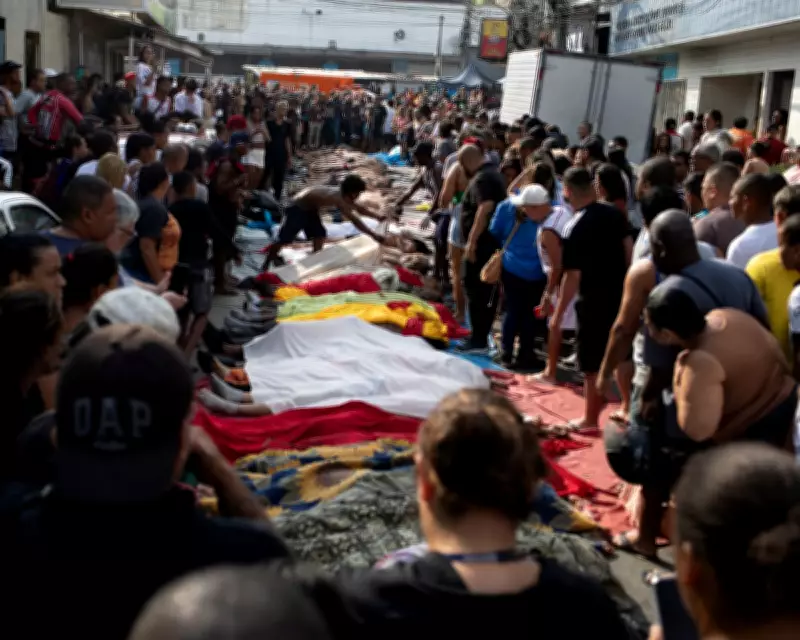
As police withdrew at 10 p.m., locals ventured into the forest to retrieve bodies, discovering horrific scenes, including a decapitated 19-year-old. By morning, over 60 corpses lay at Saint Luke Square, with women cradling their loved ones. The youngest victim was 14-year-old Michel Peçanha, described by a family friend as a sweetcorn seller, not a "narco-terrorist."
Rio's rightwing governor, Cláudio Castro, defended the operation, claiming "the only victims were police," but activists and President Luiz Inácio Lula da Silva have condemned it as a massacre. So far, nine police officers face charges for alleged offences, including theft, and an investigation is ongoing into the use of lethal force. Despite 3,000 hours of footage from body cameras, fewer than half of officers wore them, complicating accountability.

An Endless Cycle of Violence
In the weeks following, the Red Command quickly reestablished control in the favela, with drugs back on sale and barricades rebuilt. Correia reflected on the trauma, stating, "You kill 100 traffickers and tomorrow another 100 will appear. It's an infinite war." The operation, while hailed by some as a blow to organized crime, has done little to alter Rio's entrenched conflict, leaving families like Brito's shattered and communities questioning the efficacy and ethics of such police actions.
This tragedy underscores broader issues of police violence, racial disparities—with most victims being Afro-Brazilian—and the need for reform in Brazil's security strategies. As investigations continue, the legacy of October 28 serves as a stark reminder of the human cost in the war on drugs.