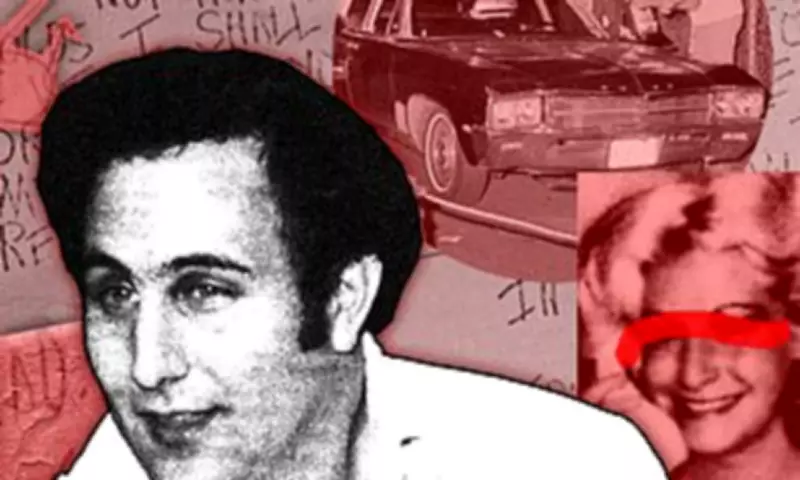
Son of Sam Breaks Decades-Long Silence in Exclusive Prison Correspondence
From the gutters of 1970s New York City, filled with what he described as "dog manure, vomit, stale wine, urine and blood," the self-styled Son of Sam unleashed a reign of terror. Now, nearly fifty years later, David Berkowitz is breaking his silence from behind bars, engaging in a series of exclusive letters with the press that starkly contrast his earlier, chilling communications.
The Summer of Fear and the Capture of a Killer
During the sweltering summer of 1977, a serial killer prowled the streets of New York City after dark, targeting young women and couples in their cars with a .44 caliber Bulldog revolver. After taunting police with a letter left beside two victims, he penned another rambling note to New York Daily News columnist Jimmy Breslin, declaring, "Sam's a thirsty lad and he won't let me stop killing until he gets his fill of blood."
On August 10, 1977, the Son of Sam was captured and unmasked as David Berkowitz, a 24-year-old postal worker from Yonkers. His correspondence with the media, however, did not cease with his arrest. In the ensuing years, he continued to court journalists, most notably investigative reporter Maury Terry, who became consumed by theories of a broader Satanic cult behind the shootings.

A Quiet Life Behind Bars and a Return to Writing
Today, the man who once held the Big Apple in a chokehold of fear resides quietly within Shawangunk Correctional Facility in upstate New York. Yet, Berkowitz has once again taken up his pen, corresponding with the Daily Mail in a series of jailhouse letters. Their tone is markedly different from the fear-spreading messages of fifty years ago—polite, articulate, and focused on diminishing rather than boasting about his murderous exploits.
In these rare communications, the 72-year-old has broken his silence regarding two specific cases: the near-fatal 1976 shooting of Wendy Savino, recently classified by the NYPD as his first known attack, and bombshell allegations linking him to the 1970 murder of teenager Margaret Iglesias. Berkowitz vehemently insists on his innocence in both instances.
Denials and Deflections: Berkowitz's Claims of Innocence
"As a man and as a Christian, I would've confessed," Berkowitz wrote. "But I never brought harm to these two women. So how could I confess to something I didn't do? That would be doing a disservice because the real perpetrators would continue to escape justice."
In 2024, the NYPD identified Berkowitz as the perpetrator of the April 1976 shooting of Wendy Savino. Subsequently, late last year, calls grew for the department to reinvestigate the unsolved 1970 murder of Margaret Iglesias, exploring possible ties to Berkowitz. Speaking to the Daily Mail, Berkowitz dismissed these accusations as "preposterous" and "ridiculous," complaining that he, the confessed serial killer, is the victim of a "hate campaign" that has inflicted "pain, loss, grief, shame, aggravation and heartache" upon him.
The Bronx Sniper Theory and Berkowitz's Counterarguments
Six years before the Son of Sam terrorized New York, a sniper using a .22 caliber rifle carried out a string of shootings on 169th Street in the South Bronx. Over an eight-week period from August to October 1970, six people were shot in nighttime attacks, with five surviving. The final victim, 16-year-old Margaret Iglesias, died after being shot three times while walking home from a party. No arrests were ever made, and the case remains unsolved.
Son of Sam researcher Manny Grossman and retired Yonkers detective Mike Lorenzo have theorized that Iglesias could be an early victim of Berkowitz, noting that the shootings matched his modus operandi and that he worked at his father's hardware store just a mile from the attack sites. Berkowitz, who was 17 at the time, enlisted in the Army months later and was sent to South Korea.
Berkowitz furiously dismissed this claim, arguing that the crime scene was not close to his father's store and that roaming a dangerous neighborhood late at night would have been illogical. "To get home I would have to take the subway line all the way into Manhattan to switch over and catch the train going to the opposite side of the Bronx," he wrote. "I wouldn't get home until 3:30 or 4 o'clock in the morning. And get up for school the next day?"

The Wendy Savino Case and Police Confirmation
On April 9, 1976, Wendy Savino was sitting in her parked car behind Nina's Restaurant in the Bronx after dining with her husband. A man approached and shot her five times, laughing as he unloaded his .32-caliber gun. Savino survived but lost an eye, providing a composite sketch of her attacker. Two months later, the Son of Sam's shooting rampage began, resulting in six deaths and seven injuries over thirteen months.
When Berkowitz was arrested for the Son of Sam slayings, Savino recognized him as her attacker, but he was never charged. Years later, Grossman urged police to reexamine Savino's case, presenting research connecting the shooting to Berkowitz. Police visited Berkowitz in prison, where he denied responsibility but reportedly made knowledgeable comments about the gun used. In 2024, the NYPD publicly confirmed Savino as Berkowitz's first known victim, though the statute of limitations prevented charges.
Berkowitz told the Daily Mail that Savino's case was new to him when allegations surfaced, and he claimed that NYPD detectives discounted his statements during a prison visit. "And without ever being charged with a crime in the Savino case, and without any solid forensic evidence, and not even being afforded a trial so I could defend myself, they found me guilty, despite my protests to the contrary," he wrote.
Contradictory Stories and Demonic Claims
Following his arrest, Berkowitz confessed to the Son of Sam shootings, claiming to have been driven by a 6,000-year-old demon named Sam that spoke through his neighbor's dog. He pleaded guilty to six counts of second-degree murder and seven counts of attempted murder, receiving multiple life sentences. However, he later changed his story, alleging involvement in a Satanic cult with neighbors John and Michael Carr, who were never charged. John died from a gunshot wound ruled a suicide, and Michael perished in a car crash.
Berkowitz later found faith in prison, rebranding himself as the Son of Hope, yet he has continued to toy with mystery. In a 2017 interview, he refused to give a straight answer about accomplices, saying, "Let's put it this way, there were demons." In messages to the Daily Mail, he described the shootings as "demonically engineered and satanically driven," claiming to have been a passive pawn.
Parole Looming and Unresolved Questions
Berkowitz has been behind bars for close to five decades, denied parole twelve times. He is eligible again in May, and his refusal to accept responsibility for Savino's shooting—despite NYPD confirmation—will likely weigh heavily on the board's decision. Questions about his accountability and the truth behind his crimes remain front and center as he prepares to face the parole panel once more.
Whether Berkowitz was involved in the murder of Margaret Iglesias over fifty-five years ago remains unclear. But his persistent denials and cryptic explanations continue to fuel speculation, ensuring that the shadow of the Son of Sam still lingers over New York's darkest chapters.