Texas Officials Face Federal Lawsuit Over Camp Mystic Flood Tragedy
Nine grieving families whose daughters perished in the catastrophic Camp Mystic flooding have transformed their anguish into a comprehensive federal lawsuit. The legal action targets Texas state officials, accusing them of licensing a riverside camp situated in the notorious 'Flash Flood Alley' without verifying it possessed a legally mandated evacuation plan. This alleged regulatory failure occurred before the devastating July 4, 2025, floodwaters claimed the lives of 27 campers and counselors.
Lawsuit Alleges 'Anti-Evacuation' Policy and Systemic Neglect
Filed in the US District Court for the Western District of Texas, the lawsuit presents a damning indictment of the Texas Department of State Health Services and six of its officials. The core allegation is their failure to enforce state law, which explicitly requires youth camps to maintain and post written emergency evacuation plans in all cabins. Instead, the plaintiffs contend Camp Mystic operated under what they describe as an 'anti-evacuation plan.' This policy reportedly instructed campers to remain inside their cabins during flood events, a directive that the lawsuit claims 'delayed moving girls to safety until it was too late.'
'Young campers and counselors were killed because the camp had no plan,' the legal complaint starkly declares. 'The camp is responsible, but so are the state officials who helped create this inexcusable risk to life by directing and executing a policy of non-compliance with Texas law.'

The Tragic Events of July 4, 2025
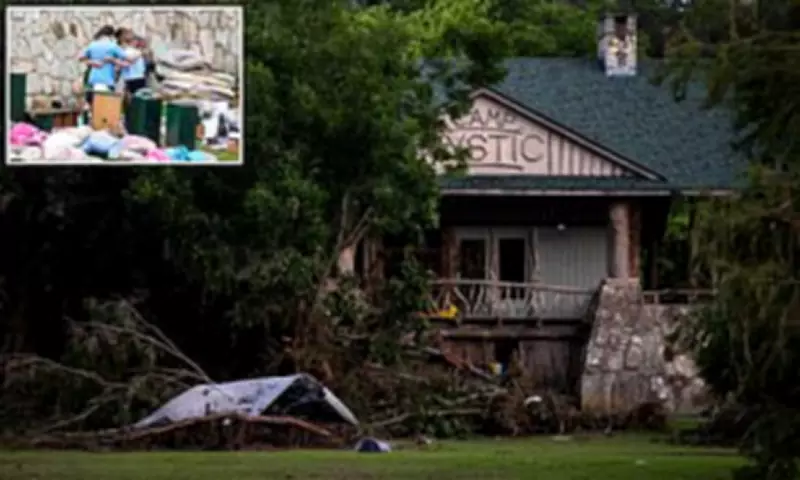
The tragedy unfolded in the early morning hours of Independence Day, 2025, when torrential rains overwhelmed the Guadalupe River. A wall of water tore through the historic Christian girls' camp located in the Texas Hill Country. According to the lawsuit, staff managed to evacuate only five of the eleven cabins located in a low-lying area known as 'the flats,' despite plaintiffs alleging there was sufficient time to move all campers to safety.
Most of the victims were sleeping in two riverside cabins constructed less than 250 feet from the riverbank. Among the 27 fatalities was camp owner and executive director Richard 'Dick' Eastland, 70, who died while attempting to evacuate one of the cabins. The lawsuit represents nine victims, comprising seven young campers and two teenage counselors. One camper, eight-year-old Cecilia 'Cile' Steward, remains missing. The flooding event was historic in scale, claiming over 100 lives across Central Texas.
Allegations of Decade-Long Regulatory Failure
The lawsuit places the Texas Department of State Health Services at the center of the controversy. DSHS is the agency responsible for licensing and inspecting youth camps in Texas for over twenty years. The complaint alleges that while DSHS inspectors conducted annual reviews, they 'systematically ignored required safety rules' and failed to verify that emergency plans included specific evacuation procedures as mandated by law.
The suit names six officials involved in the youth camp program: Commissioner Dr. Jennifer Shuford, Deputy Commissioner Timothy H. Stevenson, Jeffrey Adam Buuck, Annabelle Dillard, Lindsey Eudey, and inspector Maricela Torres Zamarripa. Notably, the complaint states that Inspector Zamarripa reported Camp Mystic had a written disaster plan a year before the flood. She inspected the property again just two days before the disaster and filed a report two days after, again citing no violations and stating the camp had the required plan.
'DSHS officials quietly decided not to enforce this requirement,' the lawsuit asserts. 'For at least a decade, they licensed a camp on the banks of a river, in the heart of 'Flash Flood Alley,' with no evacuation plan. In fact, officials knew the camp had an anti-evacuation plan – a 'stay put' policy.'
Legal and Political Repercussions
The lawsuit seeks general and compensatory damages, along with 'all other relief that is equitable,' arguing that officials deprived the victims of their 'constitutional rights to life and bodily integrity.' This legal action broadens the focus from the camp itself to the regulators who approved its licenses annually.

Plaintiffs' attorney Paul Yetter emphasized the suit's purpose in a statement: 'DSHS licensed a camp without it having a required evacuation plan. We filed this lawsuit to expose another failure that led to these tragic deaths - and to keep other children who attend Texas camps safe in the future.' A DSHS spokesperson declined to comment, citing the pending litigation.
The filing coincides with mounting political scrutiny. Texas Lieutenant Governor Dan Patrick sent a letter urging DSHS not to renew Camp Mystic's license for the 2026 summer season until legislative investigations are complete. 'Twenty-eight lives were taken, and until these deaths are investigated and any necessary corrective actions are taken to ensure this never happens again, a camp license should not be issued,' Patrick wrote. Camp Mystic's current youth camp license expires on March 31.
Camp's Response and Separate Legal Actions
In response, Camp Mystic issued a statement asserting that its new Cypress Lake location, approximately 500 yards from the destroyed riverside site, is 'in compliance with all aspects of the state's new camp safety laws.' The camp argued this separate property, which sustained no significant flood damage, presents 'no regulatory basis to deny' its license and announced plans to reopen there for the 2026 season.
Other families have initiated separate lawsuits against the camp and its longtime owners. CiCi and Will Steward, parents of the missing eight-year-old Cile, expressed their motivation: 'Cile was taken from us 7 months ago and while we recognize this lawsuit will not bring her back, we feel compelled to ensure the truth of Camp Mystic's failures are exposed.' The federal case represents a significant escalation in the legal battle to assign responsibility for one of Texas's deadliest recreational tragedies.