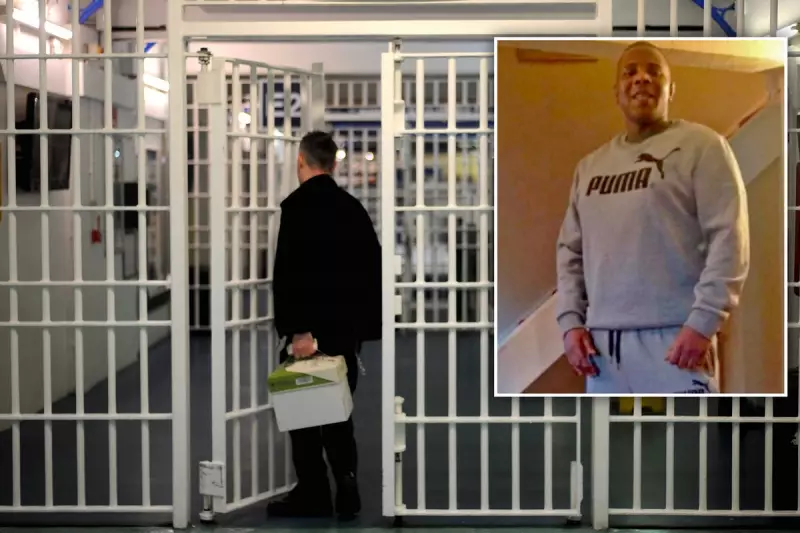
Father of Five Faces Deportation After Two Decades in Prison for £20 Theft
A man who has called Britain home since he was just 16 months old now faces deportation to Jamaica after serving almost 20 years in prison for robbing £20. Sheldon Coore, 47, was handed an Imprisonment for Public Protection (IPP) sentence in 2005, a type of indefinite jail term that was abolished in 2012 but not retrospectively applied.
A Life Defined by an Abolished Sentence
Mr Coore arrived in the UK in 1988 when his mother brought him to Huddersfield to join his grandparents, who had settled during the Windrush era. He has only visited Jamaica once as an adult, for a two-week holiday 26 years ago, yet the Home Office has successfully applied to remove him from the country where his five daughters were born.
The original offence occurred when Mr Coore put a man in a headlock and stole £20 from his pocket, having accumulated previous convictions to fund a drug addiction. Despite receiving a minimum tariff of just over two years, he has remained incarcerated for nearly two decades under the controversial IPP system.

The Psychological Toll of Indefinite Detention
"Every day I wake up, I feel like I am being punished twice and thrice and even tenfold despite the IPP sentences being acknowledged to be a mistake," Mr Coore told The Independent from HMP Erlestoke in Wiltshire, where he awaits potential deportation.
He was initially released in 2015 after serving ten years but was recalled indefinitely around 18 months later over allegations for which he was never charged. A subsequent conviction for affray added 15 months to his sentence after he ran out with a knife when police came to arrest him, though he insists he only had the weapon to take his own life.
Human Rights Concerns and Family Anguish
Mr Coore's latest appeal to remain in Britain was dismissed by an immigration tribunal judge last August. The judge ruled that although he maintains close contact with his family, he has "no realistic or effective integration" with British society due to his prolonged imprisonment.
His eldest daughter, Karrera Coore, 27, expressed deep concern about her father's potential deportation: "He doesn't know anyone in Jamaica. He would have nowhere to go - he would be at risk." His mother, Dorrett Miller-Douglas, 62, added that the government has her child's "life in their hands" and fears for his wellbeing if removed to a country where he has no support network.
The Wider IPP Scandal
The IPP sentence was scrapped following a ruling from the European Court of Human Rights, but approximately 2,500 people already sentenced remain trapped without release dates. Successive governments have refused recommendations to resentence remaining prisoners, despite at least 94 taking their own lives while losing hope of release.
Campaign group United Group for Reform of IPP (UNGRIPP) described Mr Coore's case as illustrating why IPP sentences are considered the greatest stain on the UK's justice system. A spokesperson stated: "To serve 20 years for a £20 theft is not justice; it is a life destroyed by a sentence that was abolished over a decade ago precisely because it was found to be unlawful and inhumane."
Government Stance and International Scrutiny
A Home Office spokesperson defended the deportation action: "This government will not allow foreign criminals and illegal immigrants to exploit our laws, which is why we are reforming human rights laws and replacing the broken appeals system, allowing us to scale up deportations."
The United Nations is currently investigating whether Britain is breaching human rights law regarding five IPP prisoners whose cases were lodged in a complaint to the UN's working group for arbitrary detention. This international scrutiny highlights growing concerns about the treatment of individuals still serving these abolished sentences.
Mr Coore, who will turn 48 next month, summarised his predicament: "I came to prison aged 26 for £20. I will be 47 next month. How can anybody justify keeping someone in prison for so long for £20." He added that deportation would represent an "alien" world to him, stating he would rather take his own life than board a plane to Jamaica.