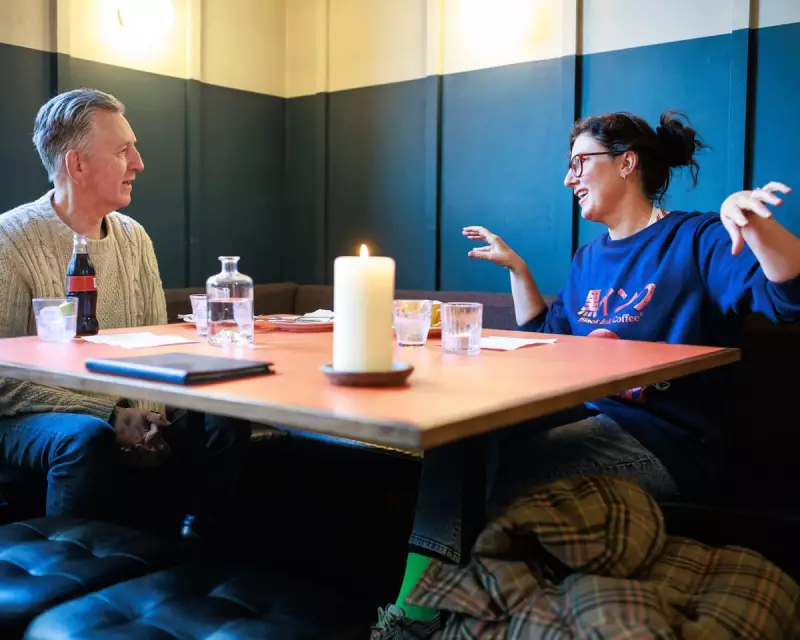
In a unique social experiment, two individuals from Manchester with differing perspectives on justice and politics came together for a meal to bridge divides. Ian, a 60-year-old retired operations manager from the medical technology sector, and Nina, a 37-year-old tram driver and former prison officer from Cheadle, engaged in a frank discussion over dinner at the Jane Eyre restaurant in Manchester.
Background and Initial Impressions
Ian, a lifelong Labour voter, has dabbled in film and TV extra work since retiring, while Nina, who previously voted Labour but now leans towards the Green or Liberal Democrats, spent seven years as a prison officer at Styal women's prison. She left her role partly due to the influx of Just Stop Oil and Free Palestine protesters as inmates, which she did not want to be involved in containing.
Upon meeting, both found the encounter pleasant. Ian noted that Nina was a little flustered from a motorway accident delay but was very nice, and Nina described Ian as a welcoming, friendly older guy who put her at ease. They enjoyed dishes such as crispy roast potatoes with chilli mayonnaise, pumpkin risotto, hispi cabbage, coley, and sticky toffee pudding, with Ian indulging in a Basque cheesecake for dessert.

The Core Debate on Incarceration
The conversation quickly turned to the topic of prisons, with Ian expressing a firm belief that certain individuals need to be locked up, especially those beyond rehabilitation who pose a lifelong danger to the public. He was surprised to learn that Nina, despite her insider knowledge, is not entirely anti-prison but supports incarceration for public safety reasons. However, her focus was on repeat low-level offenders.
Nina argued that prisons are ineffective due to insufficient staff, funding, and rehabilitation opportunities. She highlighted the mental health struggles of female inmates, who are often cut off from their families and children, and pointed out that staff lack the training to address these issues adequately. Ian maintained that shoplifters deserve punishment, but Nina countered that many are driven by economic necessity, entering and leaving prison in cycles without proper support.
Ian found it eye-opening to hear about individuals who deliberately reoffend to return to prison, often smuggling drugs to sell inside, a practice he sees as harmful to both society and the inmates. Nina questioned where the funding for prison reform would come from, noting public apathy and government tendencies to apply temporary fixes, such as building more prisons. She also criticised the private sector's involvement in the prison system, describing it as worse than Her Majesty's Prison service.
Political and International Issues
The discussion expanded to international politics, with Ian expressing disapproval of Venezuelan leader Nicolás Maduro, whom he labelled as brutal and accused of election theft. He voiced concerns about former US President Donald Trump's actions, suggesting they undermine the international order, particularly regarding Greenland, and attributed Trump's motivations to a desire for historical legacy and narcissism.
Nina shared her recent experience in Barbados, near Venezuela, where flight cancellations occurred due to airspace uncertainties amid tensions. She learned from Ian about allegations linking Maduro to cartels and dictatorship, which she found intriguing.
Social Tensions and Antisemitism
Antisemitism emerged as another key topic, with Ian referencing a recent synagogue attack near his home in Manchester, perpetrated by a neighbour. He observed a clear increase in antisemitism, affecting many Jewish friends and neighbours. Nina, on the other hand, noted more instances of racism and Islamophobia in her area but had not encountered antisemitism, attributing this to the smaller Jewish population locally.
Conclusion and Takeaways
Despite their differences, the meal ended on a positive note. Ian mentioned that Nina drives a tram line serving his station, hinting at a potential future encounter. Nina reflected that they had more in common than not, emphasising the value of such dialogues in fostering understanding across divides.

This encounter underscores the importance of open conversations in addressing complex social and political issues, from criminal justice reform to global tensions and community relations.