Major Jewish organisations in the United States have issued an urgent call for all Jewish groups to significantly increase security at public gatherings. This directive follows a devastating mass shooting that targeted a Hanukkah celebration on Sydney's Bondi Beach in Australia over the weekend.
Security Advisory Calls for Strict Access Control
The groups, which include three specialising in security issues, advised that Jewish public events in the immediate future should be open only to individuals who have pre-registered and been screened. The advisory explicitly stated that details like location and time should only be provided upon confirmed registration.
It further recommended implementing strict access control, including locks and entrance procedures, to ensure only known and confirmed attendees can enter a facility or event. This move underscores the community's ongoing struggle to balance open religious practice with necessary safety measures.

Defiance and Resilience in the Face of Violence
Alongside the urgent security warnings, many rabbis and congregations have declared their intention to proceed with planned large-scale Hanukkah celebrations as an act of resilience. A message from Temple Beth Sholom, a major synagogue in the Miami area, urged the community to "choose Jewish joy, communal strength, and courageous hope."
Rabbi Jeffrey Myers of Pittsburgh’s Tree of Life Congregation, who survived a deadly antisemitic attack in 2018, echoed this sentiment. "Hanukkah is supposed to be a time of light, celebrating the resilience of our people," Myers said. "In the face of antisemitism and violence, my prayer is that we don’t let the fear win."
Global Community Mourns and Responds
The attack on Sunday claimed at least 15 lives and has sparked criticism of Australian authorities' efforts to combat a surge in antisemitic crimes. In response, Australian leaders have promised to review the nation's already stringent gun control laws.
Among the victims was Eli Schlanger, assistant rabbi at Chabad of Bondi and an organiser of the family event. Chabad, the Orthodox Jewish movement known for its public menorah lightings, reported that just a year earlier, Schlanger had urged Jews to respond to rising antisemitism by being "more Jewish."
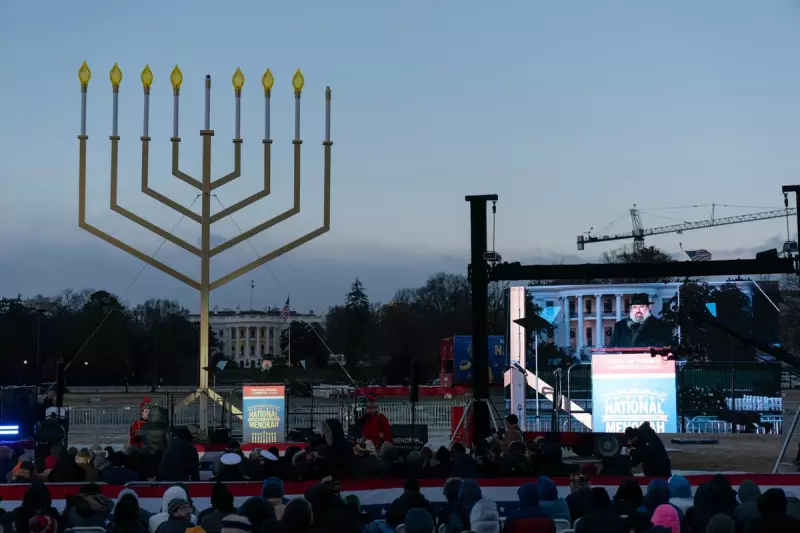
Despite the tragedy, Chabad centres worldwide are moving forward with thousands of planned public menorah lightings, albeit with heightened security, aiming to "drown out hate with greater light."
Rabbi Rick Jacobs, president of the Union for Reform Judaism, North America's largest Jewish denomination, articulated the community's complex response. He acknowledged the difficult security questions facing Jews today but invoked the "defiant spirit of the Maccabees" from the Hanukkah story.
"Our Jewish community will not go into hiding," Jacobs asserted. "We are proud Jews and will remain so even as we make the security of our Jewish community a primary obligation." He noted that while tradition encourages displaying the menorah in a window, Jewish law permits moving it indoors in times of danger—a reality for many today.
Alon Shalev, a research fellow at the Shalom Hartman Institute in Jerusalem, argued for a bold public response. "When Jews are attacked for being visibly Jewish, the instinct to retreat is understandable—but it is precisely the wrong response," he told The Associated Press. He emphasised that safety in democratic societies relies on open civic affirmation, not retreat.