A former top Australian Federal Police officer has provided a compelling insight into why the hero of the Bondi Beach attack chose not to fire the weapon after wrestling it from a terrorist.
A split-second decision defined by humanity
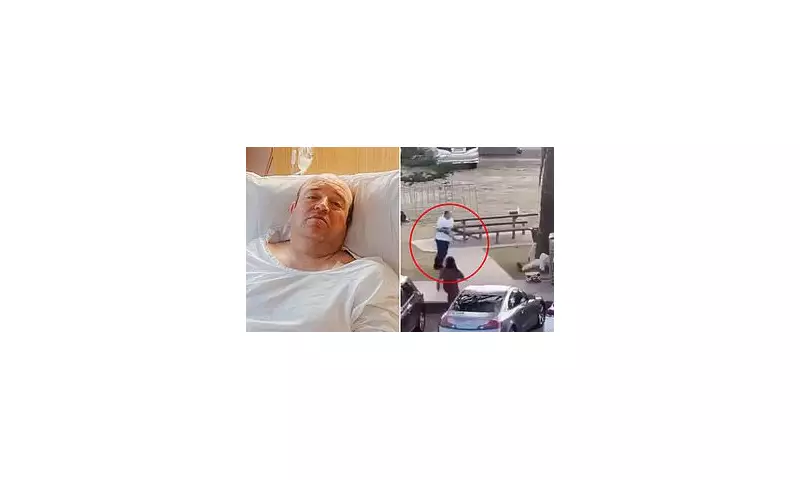
In dramatic footage from the Sunday night atrocity, 43-year-old father-of-two Ahmed al-Ahmed is seen grabbing terrorist Sajid Akram from behind and disarming him. Mr al-Ahmed then lifts the rifle and aims it toward the disarmed gunman—but he never pulls the trigger.
Former AFP officer Dr John Coyne, who specialises in counter-terrorism, stated on Tuesday that this critical decision was rooted in Mr al-Ahmed's profound humanity. "It's not like the movies," Dr Coyne told the Daily Mail. "This is a guy who literally sacrificed, or was willing to sacrifice, himself to save lives."

He elaborated that to take another life when there was no immediate danger to his own would have been a terribly difficult choice to make in a split second. "I think it shows a deep humanity to not do that, to not be caught in the emotions. He made real decisions and I take my hat off to him," Dr Coyne said.
Training may not have changed the outcome
Dr Coyne, who served for a decade in the AFP and is now director of the National Security Program at the Australian Strategic Policy Institute, argued that even a trained police or military officer might have acted the same way.
"The guy Sajid was on the ground. He was unarmed... He was no physical threat to Ahmed at that time," he explained. "So even for someone who was trained, I doubt they would have pulled the trigger on an unarmed person lying on the ground."
He also observed that Mr al-Ahmed did not appear familiar with firearms, making his actions even more remarkable. "It looked like he was someone who saw a chance that he could stop something horrible from happening, who gave no thought. And if you look at the way he moved, he gave no thought to his own personal safety beyond, 'how do I get this gun off this person?' It is truly inspiring."
The severe cost of heroism and ongoing investigation
Mr al-Ahmed's bravery, which has drawn praise from figures including Anthony Albanese and Donald Trump, came at a significant personal cost. He was shot in the shoulder and arm while hiding behind a tree after confronting the gunman and remains in care at St George Hospital.
His former migration lawyer, Sam Issa, revealed the injuries are worse than first reported. "He's having multiple surgeries, he's got five gunshot wounds. It's a serious injury - far more serious than has been reported," Mr Issa said. "He said he'd do it again... But the pain has started to take a toll on him. He's not well at all. He's riddled with bullets. Our hero is struggling at the moment."
The attack on the Hanukkah by the Sea event claimed fifteen innocent lives, including a ten-year-old girl, with dozens more seriously injured. The attackers, Naveed Akram, 24, and his father Sajid, 50, fired from a footbridge connecting Campbell Parade to the Bondi Pavilion.
Investigations are ongoing into reports the pair travelled to the southern Philippines in November for 'military-style' training. NSW Police Commissioner Mal Lanyon confirmed officers are probing the reason for the trip. However, Dr Coyne urged caution, noting there is no clear evidence yet that overseas travel explains their actions or supposed precision, and that such trips are often linked to personal or ideological connections rather than formal training.