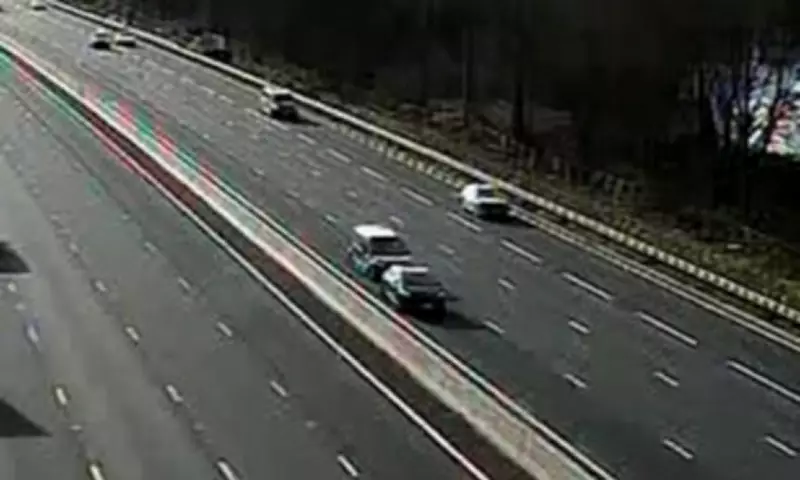
This is the harrowing moment a Ford Transit van smashed into the back of a broken-down car on a smart motorway with critically defective safety systems, resulting in the death of a grandmother. The incident has raised serious questions about the reliability of smart motorway technology designed to protect drivers when hard shoulders are removed.
Fatal Collision on Defective Smart Motorway
Pulvinder Dhillon, a 68-year-old grandmother, was a front-seat passenger in her daughter's Nissan Micra when it experienced sudden engine failure and came to a stop in the outside fast lane of the M4. This particular section of smart motorway near Reading had no hard shoulder available for emergency stops.
The dramatic CCTV footage, presented to jurors at Reading Crown Court, reveals how multiple drivers were forced to take evasive action, swerving dramatically around the stationary vehicle. For six terrifying minutes, the Nissan remained stranded in live traffic before Barry O'Sullivan's van approached at high speed.

Safety Systems Failure Lasted Five Days
The court heard that the smart motorway's safety technology had been dangerously defective for five consecutive days prior to the March 2022 collision. National Highways, responsible for maintaining the roads, was apparently unaware of the system failure.
This critical malfunction meant that fourteen overhead gantries and roadside signs failed to warn approaching drivers about the obstruction ahead. The safety systems, designed to close lanes with red X symbols when vehicles break down, remained completely inactive.
Defence Blames Technology Failure
Barry O'Sullivan, 45, has pleaded not guilty to causing death by careless driving. His defence team argues that the crash was not his fault, claiming the "over-riding cause" was the failure of the smart motorway's safety infrastructure.
Defence barrister Ian Bridge told the court: "Mr O'Sullivan's case is that he didn't cause this. If it wasn't him, it would have been somebody else. People who use motorways rely on the safeguards motorways have in place."
He emphasised that the stretch of M4 between Junctions 11 and 12 was "dangerously defective" and that this represented the "dominant and overwhelming cause" of the tragic incident.
Prosecution Highlights Driver Responsibility
Prosecutor Ian Hope acknowledged that the crash might not have occurred if the safety technology had been functioning properly. However, he stressed that drivers "can't just drive how they like" and "ignore the rules of the road."
The prosecution presented crash investigation evidence showing O'Sullivan began steering to avoid the Nissan less than half a second before impact, suggesting he was "not focusing" on the road ahead. The van had been travelling between 70mph and 82mph at the time of collision.
Morning Rush Hour Tragedy
The fatal crash occurred during morning rush hour at approximately 8.30am. For reasons still unknown, the Nissan Micra's engine failed completely, losing all power while in the outside lane. The driver, Rajpal Dene, activated hazard lights and attempted to restart the vehicle without success.
Other motorists managed to pull Ms Dene to safety following the high-velocity impact, but her mother, Mrs Dhillon, died at the scene. The collision was described as "calamitous" and resulted in the Nissan being "incinerated" after turning into a fireball.
Trial Continues Amid Safety Concerns
The ongoing trial at Reading Crown Court continues to examine the complex interplay between driver responsibility and infrastructure safety. The case has brought renewed scrutiny to smart motorway systems across the UK, particularly regarding their reliability and maintenance protocols.
As the legal proceedings continue, questions remain about how safety-critical technology could remain defective for five days without detection, and what measures are being taken to prevent similar tragedies on smart motorways nationwide.