State Report Uncovers Years of Missed Warnings Before Oakley Carlson's Disappearance
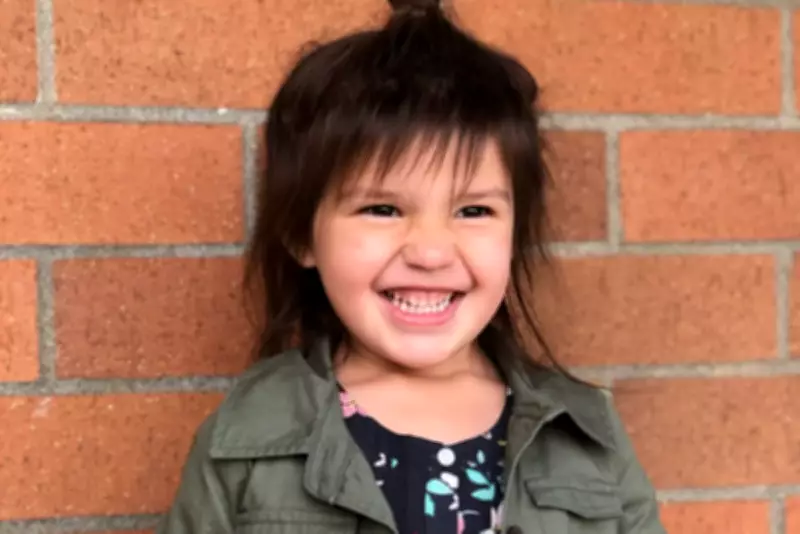
A newly released state report has exposed a troubling pattern of missed warning signs and repeated child protection failures in the case of Oakley Carlson, a five-year-old girl who vanished from her Washington home in 2021 and was declared dead in 2025. The child fatality review, published by the Washington Department of Children, Youth, and Families (DCYF), documents at least 14 referrals to Child Protective Services involving Oakley's family, raising serious questions about systemic oversights.
Timeline of a Tragedy
Oakley Carlson was last seen by someone outside her family in February 2021. Authorities were not alerted to her disappearance until nine months later, in December 2021, when a school principal requested a welfare check. The child was officially declared dead in July 2025, triggering this legally mandated review of how caseworkers responded to allegations of abuse and neglect.
Andrew Carlson and Jordan Bowers, Oakley's biological parents, have never been charged in connection with her disappearance or presumed death, though law enforcement maintains they are persons of interest. Both were later convicted on drug-related child endangerment charges involving other children.

Countless Red Flags Ignored
For Jamie Jo Hiles, Oakley's former foster mother, the report confirms her worst fears about how the case was handled. "I mean, honestly, when I read through it, it was just disheartening to read the countless red flags that were presented in regards to Oakley and her siblings," Hiles told The Seattle Times.
Oakley lived with Hiles from approximately nine months old until just before her third birthday, when she was returned to Carlson and Bowers. "DCYF just lets kids fall through the cracks," Hiles added, expressing frustration with the agency's response.
Alarming Statements and Disturbing Allegations
The search for Oakley began on December 6, 2021, after her older sister made chilling statements during a sleepover. According to an affidavit obtained by KCPQ, the sister said that "Oakley is no more" and that "there is no Oakley." In a later interview, she reportedly stated that her mother Jordan had told her not to talk about Oakley and claimed Oakley "had gone out into the woods and had been eaten by wolves."
Oakley's nine-year-old brother told detectives that Bowers would "put Oakley in the closet, possibly under a stairwell" and that he "witnessed Jordan beat Oakley with a belt and has been worried about her starving."
House Fire and Failed Interventions
Carlson and Bowers told investigators the last time they saw Oakley alive was November 30, 2021. However, authorities found no evidence she was alive after a house fire on November 6 that displaced the family. Carlson claimed Oakley started the fire by lighting a couch, but investigators have not determined whether she was alive before or after the incident.
Hiles said she warned the agency after learning about the fire. "I sent an email to Oakley's caseworker and I said, 'hey, this is not normal, this not safe, and I'm letting you know now that if something happens to these kids that you have been forewarned,'" Hiles recalled. "When you send a child back from foster care and a mandated reporter calls, you listen to that call. You don't screen that out."
Despite three reports citing the house fire and unsafe living conditions, DCYF determined the allegations did not meet the legal standard for intervention.
Long History of CPS Involvement
According to the report, DCYF received at least 14 referrals about the family, some predating Oakley's birth in 2016:

- Between 2013 and 2014, five reports involved Bowers, her partner, and Oakley's half-sibling. That child was briefly placed out of the home and later returned.
- In 2017, CPS received allegations that Bowers yelled profanities at a 17-month-old sibling and failed to provide necessary medical care. That report was closed for not meeting intervention thresholds.
- A month later, another caller raised similar concerns about drug use and domestic violence. A CPS investigation followed, and DCYF filed dependency petitions, leading to the children's removal from the home.
In January 2018, the court declared the children dependent after the parents failed to appear at a hearing. DCYF later sought to terminate parental rights. Carlson and Bowers began completing court-ordered services, though Carlson was "discharged from domestic violence treatment due to non-compliance."
A judge granted Bowers' appeal, and the termination case never went to trial. In 2019, a caseworker and court-appointed advocate asked to change the plan to adoption for Oakley, but the court denied the request.
Pandemic Complications and Final Contacts
That fall, DCYF began allowing unsupervised visits. A caseworker documented that Oakley appeared to be doing well with no concerning disclosures. The court approved a trial return home with regular monitoring. "My husband and I were over the moon excited to adopt Oakley, then months later, to be told, 'just kidding, she's returning home next month,' blows my mind," Hiles said.
Then the pandemic hit. Governor Jay Inslee ordered safety visits to be conducted virtually. In June 2020, the court dismissed Oakley's dependency case, ending DCYF supervision.
In January 2021, DCYF received a report that Oakley had scratches and bruises on her face around Christmas, with the person reporting they heard screaming from the home. When a caseworker tried to visit, Bowers refused entry, saying she "was afraid of CPS." The caseworker briefly saw Oakley through a sliding glass door, wearing only a diaper, and observed no visible injuries.
A school principal conducted a welfare check on February 10, 2021, but did not see Oakley. A caseworker checked again on March 8, 2021, but was refused entry by Bowers, who said she "would not answer any questions without an attorney present." This was the final documented in-person contact with Oakley by a caseworker.
Systemic Failures and Calls for Accountability
The report notes that there should have been more effort during the January 2021 visit to interview Oakley's siblings and relatives, identifying areas for improvement. However, a DCYF spokesperson told KIRO7 that "any identified improvement opportunities are not intended to suggest a direct correlation with the presumed fatality in this case."
For Hiles, reading the account in the report was devastating. "I thought, 'That's it. That's all you did to check on her... That's the last time my baby was OK.'" She added, "This whole write-up to me felt like an applause for DCYF and how they handled everything like, 'you know what, you did the best you could with what you had.' Like what a slap in the face to those kids."
The case continues to highlight critical gaps in child protection systems, with the report serving as a sobering reminder of the consequences when warning signs are repeatedly overlooked.