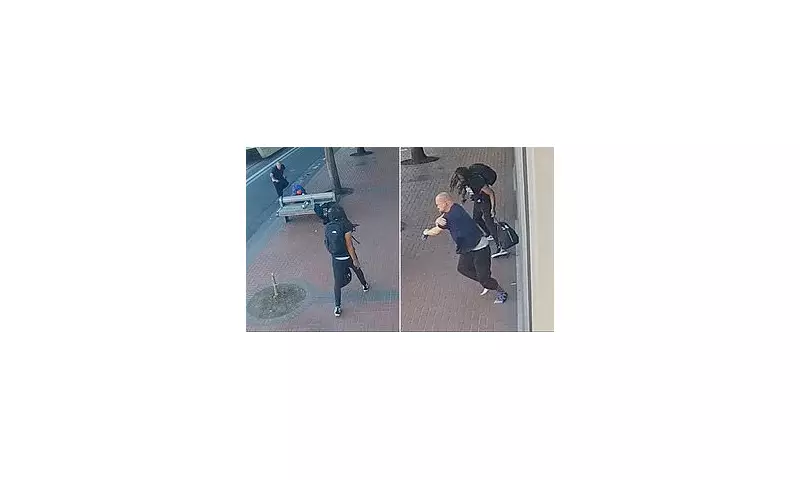
A homeless man has been cleared of a serious assault charge in Oregon after a jury accepted his claim that he acted in self-defence when he stabbed another man who he said called him a racial slur.
The Altercation and Arrest
Gary Edwards, 43, was charged with second-degree assault for stabbing Gregory Howard Jr. near a light rail stop in Portland on July 8. The incident was captured on security cameras, which showed Edwards approaching Howard, who was seated on a bench, while holding a fixed-blade knife. Howard immediately stood up, pushed Edwards, and a physical struggle ensued, culminating in Howard being stabbed in the shoulder.
Edwards, who has a previous assault conviction, admitted to knifing Howard but argued it was a justified act of self-defence. His defence centred on the claim that Howard had provoked the confrontation by using the n-word. Edwards's lawyer, Daniel Small, told the court his client had initially approached Howard to see if he would trade his knife for cigarettes.

The Crucial Evidence and Court Arguments
The trial, which concluded on October 31, saw conflicting narratives presented to the jury. A key piece of evidence was body camera footage from security officers that captured Howard shouting a racist slur at Edwards after he had been stabbed. However, it remained unclear whether Howard had used the slur before the attack, as the security camera footage had no audio.
Prosecutor Katherine Williams argued that Edwards's actions were not defensive. "The defendant is not scared for his life. He didn't retreat, he sauntered up - and he sauntered away after he stabbed someone. The defendant created the situation," she told the jury, asserting that the victim's words post-stabbing were irrelevant.
In contrast, defence attorney Daniel Small posed the question: "What other than racism could explain why Mr. Howard perceived hatred, animosity and aggression from a complete stranger?" He later insisted the case should never have gone to trial, stating he had warned the prosecution of the likely outcome.
Verdict and Aftermath
Despite the prosecution's case, the jury found Edwards not guilty. Edwards, who is homeless, had spent approximately three months in custody before the trial after prosecutors argued his lengthy criminal record made him a threat to the public. His record includes a conviction for attempted second-degree assault in 2021 and a three-year prison sentence for a separate stabbing in 2020.
This case highlights the complex legal intersections between self-defence, provocation, and hate speech. The jury's decision to acquit suggests they found reasonable doubt based on the context of the alleged racial abuse, even in the absence of clear evidence it was uttered before the violence began.