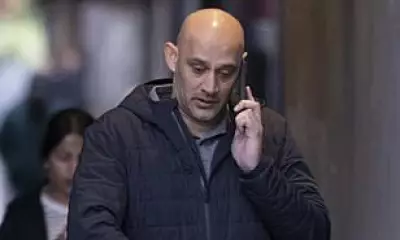
A 49-year-old electrician was beaten to death at a Kent seaside resort by teenagers who allegedly branded him a paedophile, a murder trial has heard.
Fatal Meeting by the Sea Wall
Alexander Cashford, from Kent, suffered multiple injuries and was pronounced dead on August 10 in Leysdown-on-Sea on the Isle of Sheppey. Woolwich Crown Court was told that three children from London – a 16-year-old girl and two boys aged 14 and 15 – have been charged with his murder by joint venture.
Prosecutor Kate Blumgart KC outlined the case to jurors, explaining that the teenagers first met Mr Cashford on August 8 last year. He gave the girl his phone number, after which the group began messaging him using the fake name 'Sienna'. These messages led to an arrangement to meet again by the sea wall two days later, on the fateful day of August 10.

Alleged Attack and Witness Accounts
Jurors heard that just over an hour after that meeting, Mr Cashford was dead. Witnesses described a harrowing scene. One account stated the 16-year-old boy was throwing rocks at Mr Cashford, who was lying face down in the mud. The first throw was described as a powerful and frantic 'lob'.
When a bystander shouted at the group to stop, the court was told the 16-year-old boy shouted 'he's a f****** paedophile'. The 16-year-old girl is also alleged to have echoed the taunt, saying 'he's a f****** paedo'.
Emergency services were called to the Warden Bay Road area after reports of an altercation. Witnesses reported Mr Cashford had a severely damaged nose, visible blood, and a lump the size of a ping pong ball on the back of his head.
Defendants Deny Murder Charges
The three defendants, who cannot be named for legal reasons, each deny one count of murder. The court heard the 16-year-old girl and the 15-year-old boy are related. The trial, which is ongoing, will continue to examine the circumstances leading to the death of Alexander Cashford.
Kent Police confirmed the teenagers were charged with murder on August 12, two days after the incident. The prosecution's case rests on the premise that the defendants acted together in a joint venture which resulted in the electrician's death.