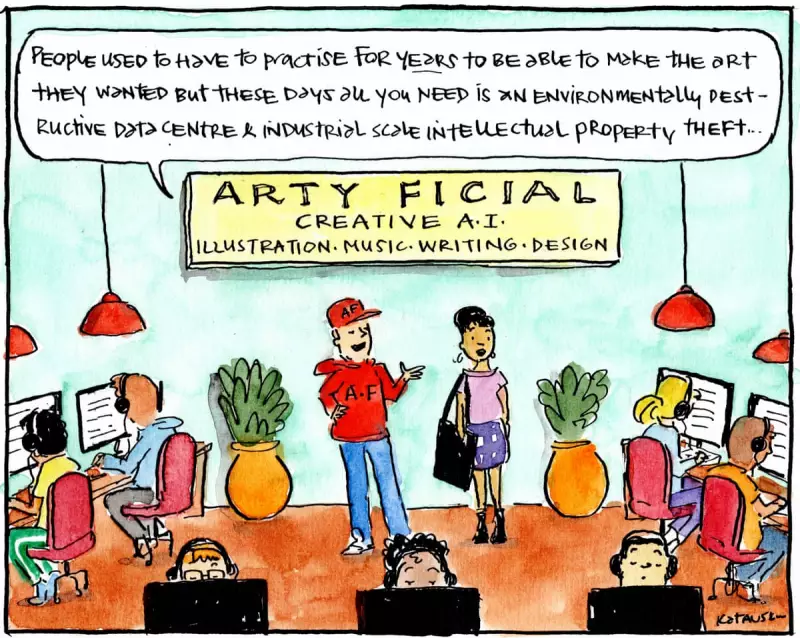
The arts world is facing an existential question that's dividing creators and technologists alike: can artificial intelligence genuinely replicate human creativity? The debate has been reignited by The Guardian's recent publication of an entirely AI-generated image in its picture desk section.
The Digital Canvas Controversy
When readers encountered the AI-created artwork in one of Britain's most respected publications, it sparked immediate controversy. The image, while technically impressive, lacked the human touch that traditionally defines artistic expression. This experiment has forced the creative community to confront uncomfortable questions about technology's expanding role in spaces once considered exclusively human.
What AI Brings to the Easel
Proponents of AI in the arts highlight several advantages:
- Unprecedented speed - generating complex images in seconds rather than hours
- Limitless variation - exploring artistic styles and combinations beyond human imagination
- Democratisation of creation - allowing non-artists to visualise their ideas
- Cost efficiency - producing commercial artwork at significantly lower costs
The Human Element Machines Can't Capture
Critics argue that AI fundamentally misunderstands what makes art meaningful. While algorithms can analyse patterns and replicate styles, they lack:
- Emotional depth - genuine feeling and personal experience
- Intentional storytelling - the conscious narrative behind each brushstroke
- Cultural context - understanding of social and historical significance
- Personal growth - the artistic journey that evolves with each creation
The Future of Creative Professions
As AI technology advances at breakneck speed, artists and cultural institutions face difficult questions. Will AI become another tool in the creative toolkit, like photography or digital editing? Or does it represent an existential threat to professional artists already struggling in an increasingly digital economy?
The Guardian's experiment serves as a watershed moment, forcing us to consider whether technical proficiency alone constitutes art, or if something more profound - something uniquely human - remains essential to creative expression.