Afghanistan's Catastrophic Hunger Crisis Intensifies Amid Drastic Aid Reductions
The World Food Program (WFP) is being compelled to turn away three out of every four acutely malnourished children in Afghanistan due to devastating funding cuts, exacerbating what officials describe as an unprecedented nutritional emergency. With two-thirds of the country now facing severe or crisis levels of acute malnutrition, the lives of approximately 4 million children hang in the balance.
Unprecedented Scale of Malnutrition and Desperation
John Aylieff, the WFP's Country Director for Afghanistan, has stated that this represents the highest surge in malnutrition ever recorded in the nation's history. "We have a catastrophic nutritional crisis on our hands," Aylieff warned. "This is unprecedented and I've never seen this in my more than 30-year career as a humanitarian." The crisis is driven by a confluence of factors: the halt of direct foreign aid following the Taliban takeover in 2021, a moribund economy, severe drought, two devastating earthquakes in late 2025, and the return of over 5.3 million Afghans expelled from neighboring countries.
Of the 17.4 million people experiencing acute hunger, the WFP can now only provide assistance to 2 million, and even that aid is being reduced. The organization's budget in Afghanistan has plummeted from $600 million in 2024 to an expected $200 million this year, a sum utterly inadequate to address a hunger problem that Aylieff says is "spiraling out of control."

Personal Tragedies Amid Systemic Failure
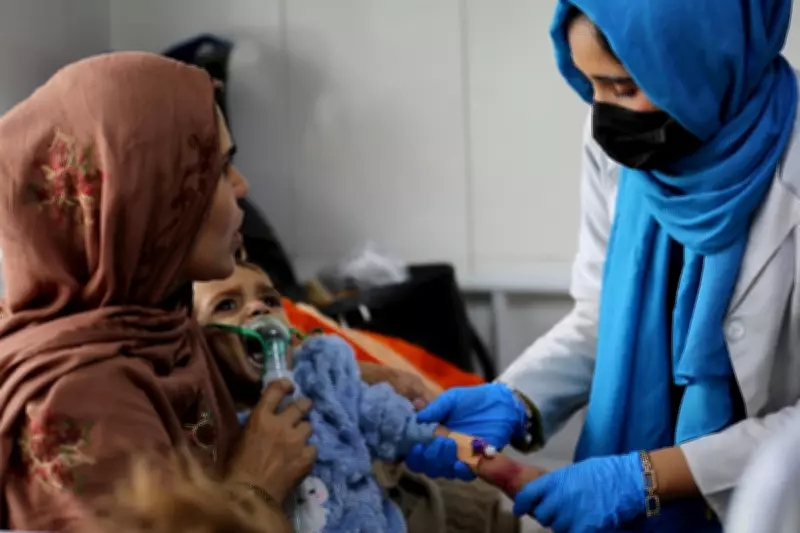
The human cost is starkly visible in hospitals like Kabul's Indira Gandhi Children's Hospital. Two-and-a-half-year-old Abu Bakar, weighing just 6 kilograms—half his expected weight—is receiving life-saving care, but he is among a fortunate minority. His mother, Latifa, 36, recounts how vital food assistance stopped three years ago. With her husband unemployed, she often has nothing to feed her five sons. "I can control my hunger. I will handle it. But my child can't," she said, cradling her emaciated toddler.
Hunger is directly increasing child mortality. The WFP has documented over 500 child deaths in recent months, a figure Aylieff describes as "the tip of the iceberg," with many winter deaths in snow-blocked villages going unrecorded. "How many more Afghan children will die here before the world wakes up?" he implored.
Government Response and the Plight of Women
The Afghan government, through Health Ministry spokesman Dr. Sharafat Zaman, acknowledges the decades-long problem rooted in poverty and conflict. It has expanded malnutrition treatment facilities from 800 to about 3,200, treating around 3 million malnourished children and mothers in 2025. Zaman emphasized that "health is separate from politics" and that providing health services is an inalienable right.
However, women are bearing a disproportionate burden. Subject to draconian Taliban restrictions banning them from most employment, widows with children are particularly vulnerable. The WFP reports a 30% increase in acutely malnourished pregnant and breastfeeding women—a surge unseen by nutrition experts. Disturbingly, the organization is receiving more suicide calls from desperate women who see no way to feed their children.
"These are the women to whom the world pledged unwavering solidarity in 2021," Aylieff noted. "Those same women are asking us, where is the solidarity of the international community? If I had one plea, it's to not walk away from Afghan women who are now facing abject misery, hunger, malnutrition and watching their children die."
The crisis is compounded by global donor fatigue, with budgets stretched thin by emergencies in Sudan, Gaza, and Ukraine. As funding evaporates, the WFP's ability to act as a lifeline for millions is being severed, leaving Afghanistan's most vulnerable populations in a fight for survival with dwindling support.