Ancient Roman-Era Footprints Unearthed by Dog Walkers on Scottish Shore
In a remarkable archaeological discovery, two dog walkers have uncovered 2,000-year-old human and animal footprints on a beach in Scotland, providing a unique snapshot of life at the height of the Roman Empire. Ivor Campbell and Jenny Snedden made the find while walking their dogs at Lunan Bay in Angus during late January, where recent storms had exposed a fresh layer of clay.
A Race Against Time to Preserve History
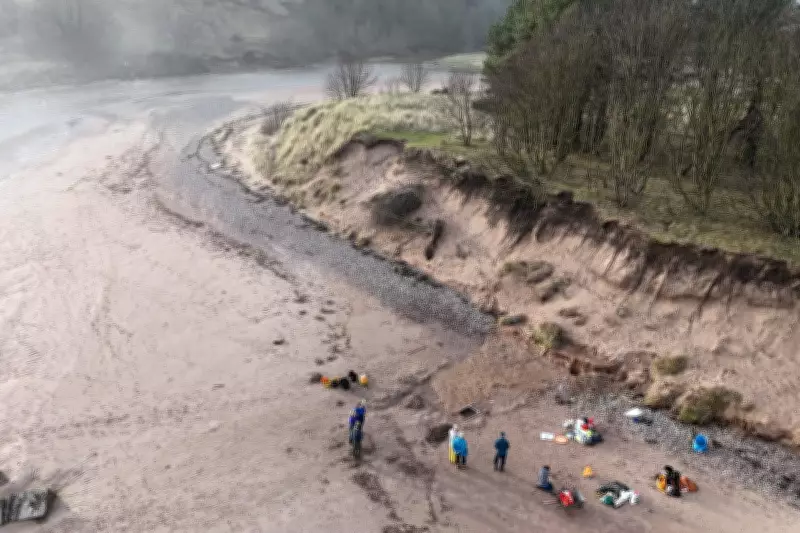
Mr Campbell initially spotted the distinct markings, which experts later confirmed were made by human and animal feet approximately two millennia ago. Archaeologists from the University of Aberdeen faced an urgent challenge to document the site before it was reclaimed by the sea. Working in windspeeds exceeding 55 miles per hour, the team battled harsh conditions to capture data from the rapidly eroding site.
Professor Kate Britton, who led the excavation team, described the situation as "a race against the elements." She explained, "We knew we were dealing with a really rare site and that this discovery offered a unique snapshot in time – but it was also clear that the sea would soon take back what had so recently been revealed. We had to work fast in the worst conditions I’ve ever encountered for archaeological fieldwork."

Unprecedented Discovery in Scottish Archaeology
Experts noted there is no previous record of such a footprint site in Scotland, though similar markings have been identified at a small number of locations in England, including Formby in Merseyside, Happisburgh in Norfolk, and the Severn Estuary in the South West. The team managed to record and map the site comprehensively, creating 3D models and physical casts of the prints before the entire site was destroyed by the sea within 48 hours.
Once back in the laboratory, researchers selected preserved plant remains found in deposits just below the footprints for radiocarbon dating, which confirmed the markings were made around 2,000 years ago. Ongoing analysis has identified prints from roe deer, red deer, and other animals, alongside humans who would have walked barefoot on what is now semi-fossilised clay.
Historical Context and Environmental Insights
Professor Gordon Noble, a member of the research team, highlighted the historical significance of the discovery. "The late Iron Age dates are in keeping with what we know about the rich archaeology of nearby Lunan Valley," he said. "It’s very exciting to think these prints were made by people around the time of the Roman invasions of Scotland and in the centuries leading up to the emergence of the Picts."
When weather conditions permitted, researchers flew a drone to capture aerial views of the site, enabling them to map the footprints in 3D with millimetre accuracy as a permanent record. Dr Will Mills, one of the post-doctoral researchers involved, noted that "the site also tells us how this now sandy beach was once a muddy estuary and that humans were using this environment, perhaps for hunting deer or to collect wild plant foods such as samphire."
Community Involvement and Bittersweet Preservation
When Mr Campbell first noticed the markings, he contacted council archaeologist Bruce Mann, who immediately recognised the urgency of the situation and reached out to university experts. Mr Mann, who serves as regional archaeologist for Aberdeenshire, Angus, Moray and Aberdeen City councils, reflected on the experience. "Standing there, watching the site being destroyed as the waves crashed over it, was heartbreaking in some ways, but at least we got the chance to record most of it," he said. "There is nothing left now, the storms having both revealed and then destroyed the site in just over a week."
The research team included post-doctoral researchers Dr Will Mills and Dr Elinor Graham, along with PhD students Sarah Barakat, Thomas Warrington and Tayla Sanders. Their collaborative efforts ensured that despite the site's physical destruction, its historical significance has been preserved through detailed documentation and analysis for future study.