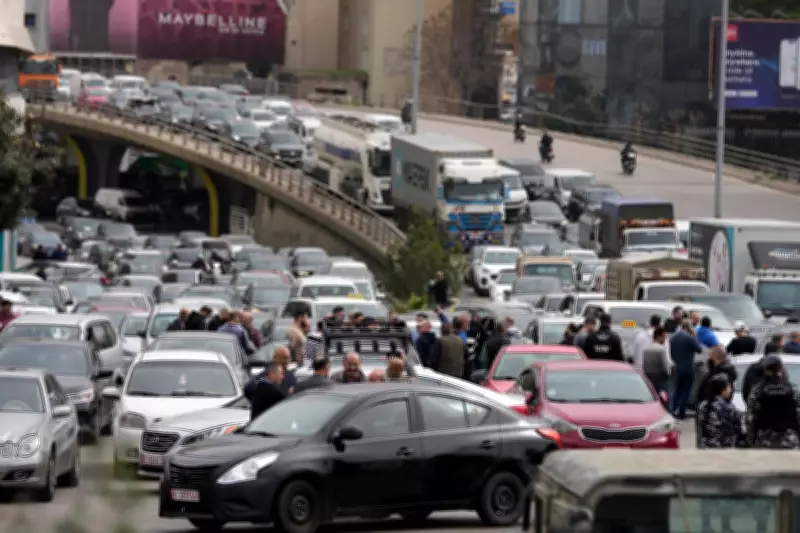
Protesters have blocked major roads in and around Beirut on Tuesday, following the Lebanese Cabinet's approval of new taxes that will increase fuel prices and other products to fund public sector pay rises. The demonstrations erupted after the government moved to implement measures aimed at supporting public employees whose wages were devastated by the 2019 currency collapse.
Details of the New Tax Measures
The Cabinet approved a specific tax of 300,000 Lebanese pounds, equivalent to approximately $3.30, on every 20 liters of gasoline. Notably, diesel fuel was exempted from this new levy, as most Lebanese citizens rely on it to power private generators due to severe shortages in state-provided electricity.
In addition to the fuel tax, the government has agreed to increase the value-added tax on all products already subject to the levy from 11% to 12%. This particular measure still requires approval from the Lebanese parliament before it can be enacted.

Funding Public Sector Salary Increases
The tax increases are specifically designed to fund raises and pension boosts for public employees. These salary enhancements are intended to compensate for wages that lost significant value during the 2019 currency collapse, effectively providing public workers with the equivalent of an additional six months' salary.
Information Minister Paul Morcos stated that the estimated cost of these pay increases is approximately $800 million. This comes as Lebanon continues to grapple with ongoing inflation and widespread corruption, despite sitting on one of the largest gold reserves in the Middle East.
Protesters Voice Their Anger
Ghayath Saadeh, one of the taxi drivers who blocked a main road leading into downtown Beirut, expressed the frustration felt by many citizens. "They consider us taxi drivers to be garbage," he said of the country's leaders.
"Everything is getting more expensive, food and drinks, and Ramadan is coming," Saadeh added. "We will block all the roads, God willing, if they don't respond to us."
The current protests echo similar demonstrations that occurred in 2019 when the Lebanese government proposed new taxes, including a controversial $6 monthly fee for using internet calls through services like WhatsApp. Those mass protests paralyzed the country for months as demonstrators called for political change, an end to corruption, and reforms to the sectarian power-sharing system.
Broader Economic Context
Lebanon has faced international pressure to implement financial reforms for years, with little progress made thus far. The cash-strapped nation also suffered approximately $11 billion in damages during the 2024 war between Israel and the Hezbollah militant group, further straining its already fragile economy.
Disarmament Plan Progress Report
Separately, on Monday, the cabinet received a report from the Lebanese army regarding progress on a plan to disarm non-state militant groups in the country, including Hezbollah. Last month, the army announced completion of the first phase of this plan, covering areas south of the Litani River near the border with Israel.
The second phase will cover segments of southern Lebanon between the Litani and Awali rivers, including the port city of Sidon. Information Minister Morcos indicated that this second stage is expected to take four months but could be extended depending on available resources, continued Israeli attacks, and obstacles on the ground.
This disarmament initiative follows a U.S.-brokered ceasefire that nominally ended the war between Hezbollah and Israel in November 2024. Since that time, Israel has accused Hezbollah of rebuilding its capabilities and has continued near-daily strikes in Lebanon while occupying several hilltop positions on the Lebanese side of the border.
Hezbollah has maintained that the ceasefire agreement only requires disarmament south of the Litani River and that it will not discuss disarming in other areas of the country until Israel ceases its strikes and withdraws from all Lebanese territory.