British Families Flee Dubai as Iranian Attacks Transform Holiday Paradise into War Zone
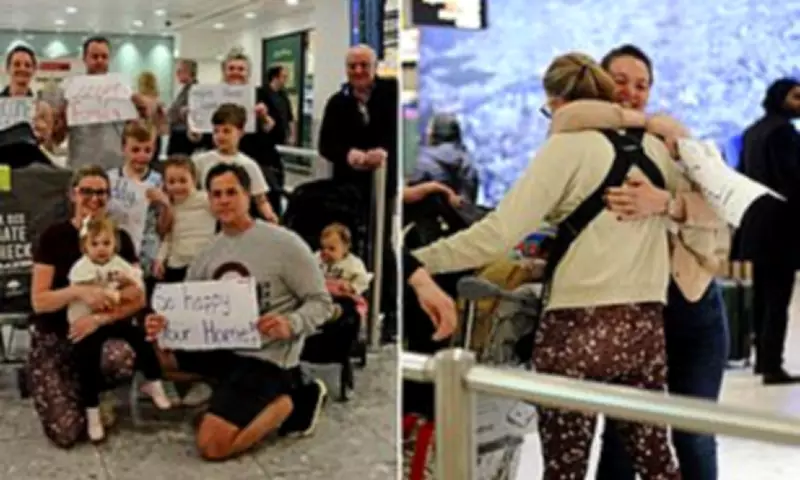
British holidaymakers who found themselves trapped in Dubai during unprecedented Iranian attacks have described terrifying scenes of missile explosions, rumbling fighter jets, and emergency bunkers as they returned to emotional reunions at Heathrow Airport on Friday evening.
The city of Dubai, often described as one of the world's safest destinations, has been rocked by sustained conflict in recent days following relentless attacks by Iranian kamikaze drones and missile strikes. The escalation began on Saturday, February 28, when Tehran launched bombings against American military bases across the Middle East in retaliation for a joint US-Israeli operation aimed at preventing Iran's nuclear weapons development.
Emotional Heathrow Reunions After Escape from Conflict
Sable Cooper, 31, and Brandon Cooper, 34, from Wickford, Essex, were among the British families who made it home on Friday night after ten days in Dubai with their three young children, aged six, two, and one. They were greeted with tearful hugs and "welcome home" signs by relieved family members at Heathrow's arrivals lounge after their Virgin Atlantic flight landed.

"It's been a stressful process because we've been travelling with three small children so that added on top of everything else has been extremely difficult," Mrs. Cooper told reporters. "The hotel were good, they were very helpful, but obviously, we just wanted to get home as quickly and as safely as we could."
The Coopers had been staying at the luxurious Atlantis The Palm hotel on Palm Island resort, approximately three miles from the Fairmont the Palm hotel which suffered a direct hit from an Iranian missile on Saturday. Minutes before emergency alerts sounded, they witnessed a rocket flying across the sky from their 14th-floor balcony.
"It looked like a giant firework," Mr. Cooper recalled. "We were very scared." His wife added: "We were petrified. Absolutely petrified. We already had emergency bags packed and we just grabbed the children and got down to the ground floor."
Makeshift Bunkers and Hotel Transformations
The family spent nights in a conference room converted into an emergency bunker beneath their hotel, where approximately 200 holidaymakers from the Atlantis slept for safety. Initially, they slept on the floor with only towels for comfort, but hotel staff soon installed proper beds along with 24-hour food and beverage facilities.
"They made us very comfortable… They did what they had to do really," Mr. Cooper said of the hotel's response. Eventually, the family was relocated to a fifth-floor room for the remainder of their stay, providing greater security than their original higher-floor accommodation.
Dramatic footage circulating on social media has captured the unprecedented scenes in Dubai, showing drones exploding, hotels burning, and missiles being intercepted mid-air. The Fairmont hotel attack resulted in four reported injuries according to Dubai media office statements, with an orange aura filling the sky as the supersonic missile struck the luxury property.
Central Dubai Experiences and Missile Sightings
Angela Clarke and her partner Brian Hill from Colwyn Bay, north Wales, experienced the conflict from a more central location during their nine-day holiday. The cleaning business owner and retiree were staying by the marina in Dubai's city centre when they witnessed their first missile three days into their trip.
"It was pretty terrifying. I saw one of the rockets go over. We were very much by the marina, basically right in the middle of things," Ms. Clarke described. "It looked like a firework. It was pretty terrifying. We didn't get much sleep at all."
The couple experienced emergency alarms on their phones around 12:30 AM while staying on the 19th floor of a 22-story hotel. "Petrified," Ms. Clarke recalled of the experience. "The day after again, that was when my partner saw the rocket outside our hotel go off and more drones intercepted as well."
Fortunately, they managed to return to the UK on their originally booked flight. "We were lucky," Ms. Clarke noted. "The security was tight, very, very good. We're lucky really for the UAE to be knocking those drones out to be honest with you."

Normalization of Conflict and Continued Tourism
Remarkably, some holidaymakers described becoming accustomed to the ongoing attacks. Karolina Buhtina and Dominic Adair, who returned on the same Virgin Atlantic flight with their three children after a nine-day holiday, were staying on Al Marjan Island slightly north of Dubai's centre.
"It was so weird because everyone just got used to it," Ms. Buhtina explained. "You would hear them, you would hear the bangs in the sky. It's mad explaining it to someone. You would hear the bangs in the sky and you would look up and see the trails and then jets just flying by."
Despite the attacks, tourism activities continued in some areas. "But to be honest, we still went ahead," she continued. "At our hotel, everyone was always outside. But we did avoid it in the evenings. I was having anxiety, I thought, 'I don't want to stay out at night', so after dinner, we would just go to bed but everyone was just partying outside."
Mr. Adair added: "Some people were panicked, especially when it first started. As the days went on, I think everyone became a bit immune, as mad as it sounds. When the jets first started popping out, you could hear them really rumble through the air."
British Government Response and Rescue Planning
The British government has been developing evacuation plans for approximately 140,000 citizens who have registered their presence in the Middle East region. The conflict escalation follows strikes on the Iranian capital that resulted in the death of Supreme Leader Ayatollah Ali Khamenei on Saturday.
While some British tourists managed to secure flights home, others faced rebooking challenges as Dubai's airport experienced closures and disruptions. The Iranian-made Shahed drones involved in the attacks are reported to fly at least five times faster than the speed of sound, presenting significant interception challenges for defense systems.
For returning families like the Coopers, the Heathrow reunions marked the end of a harrowing experience. "We were lucky to make it on the flight we originally bought," Mrs. Cooper noted, mentioning that friends holidaying in Dubai at the same time had been forced to rebook their travel arrangements amid the escalating conflict.