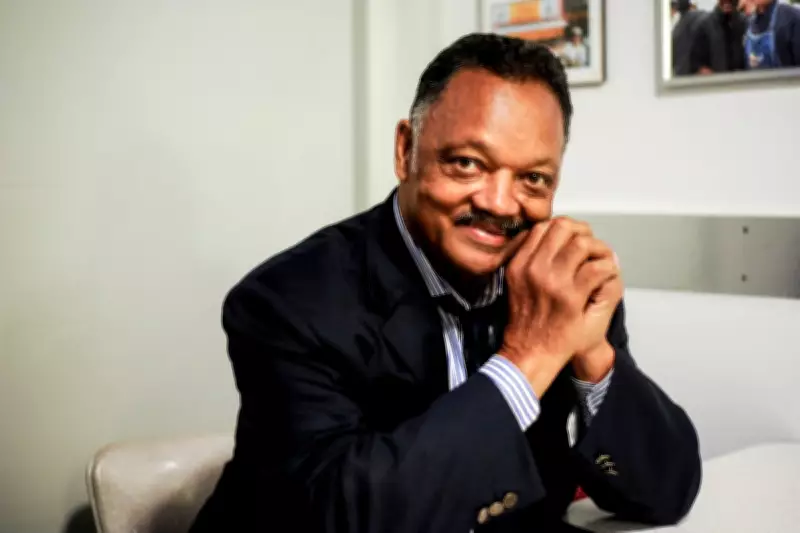
Civil Rights Icon Reverend Jesse Jackson Dies at Age 84
The Reverend Jesse Louis Jackson, a monumental figure in the American civil rights movement and a former presidential candidate, has passed away at the age of 84. His family announced his death in a statement on Tuesday, describing him as a "servant leader... to the oppressed, the voiceless and the overlooked around the world". Jackson had been living with Parkinson's disease since 2017 and was hospitalised last November with progressive supranuclear palsy, a rare neurological condition he had managed for over a decade.
A Life Dedicated to Racial Equality
Jackson's tireless dedication to racial equality spanned more than six decades, profoundly shaping the modern Civil Rights Movement. His work inspired a generation of minority leaders and influenced the Democratic Party's platform towards greater social and economic progressivism as the nation entered the 21st century.
Born Jesse Louis Burns on October 8, 1941, in Greenville, South Carolina, Jackson grew up in poverty during the Jim Crow era. He faced societal judgment for being born out of wedlock and personal challenges regarding his biological father's identity. Jackson later took the surname of his stepfather, Charles Jackson, considering both men as his fathers. He channelled his fears into excellence, excelling academically and athletically to shield himself from rejection.

Early Activism and Mentorship Under Dr. King
From his early adolescence, Jackson displayed remarkable charisma and intelligence, being elected class president at Sterling High School and graduating with honours. He rejected a minor league baseball offer for a football scholarship at the University of Illinois, later transferring to North Carolina A&T State University. There, he became active in the civil rights movement, joining the Congress of Racial Equality and organising sit-ins.
One pivotal protest occurred on July 16, 1960, when Jackson and seven other Black students staged a sit-in at the "whites only" Greenville County Public Library. Dubbed the "Greenville Eight", they were arrested after refusing to leave. Their actions led to the closure of segregated library branches and the opening of an integrated facility. This activism attracted the attention of Dr. Martin Luther King Jr., who recruited Jackson to the Southern Christian Leadership Conference.
Jackson deferred his theology studies at the Chicago Theological Seminary to work full-time with King, who appointed him director of Operation Breadbasket, a programme dedicated to improving economic conditions in Black communities. Jackson's magnetic speeches, including his famous "I Am Somebody" chant, energised thousands to boycott businesses that refused to hire qualified Black Americans. His efforts created 4,500 jobs in Chicago alone and generated millions in income for Black communities.
The Assassination of King and Founding of PUSH
At 27, Jackson was a rising voice in the movement, considered a potential successor to King. However, King's assassination on April 4, 1968, while Jackson was present on the balcony of the Lorraine Motel in Memphis, dramatically altered the SCLC's future and Jackson's role within it. "Every time I think about it, it's like pulling a scab off a sore," Jackson later reflected, describing the profound pain of losing a man of peace to violence.
Following a falling out with SCLC's new leader, Ralph Abernathy, Jackson left to found his own organisation in 1971: Operation People United to Save Humanity, or PUSH. This nonprofit engaged Black and minority communities through politics, including voter registration initiatives, and later merged with the National Rainbow Coalition in 1996 to form the Rainbow PUSH Coalition. Jackson even urged the Republican National Committee to appeal to Black voters with policies supporting economic, health, education, and media equality.

Presidential Campaigns and Political Influence
Throughout the 1970s and 1980s, Jackson undertook high-profile international trips, advocating for Palestinian statehood, encouraging desegregation in South Africa, and appealing to Pope John Paul II on refugee issues. Leveraging his political momentum, he launched a bid for the Democratic presidential nomination in 1984, campaigning on liberal policies considered radical at the time.
Although viewed as a "fringe" candidate, Jackson outperformed expectations, securing 18 percent of the primary vote and winning two states. He ran again in 1988, earning 29 percent of Democratic primary votes and winning 13 states, becoming the first Black candidate to win the nationwide Democratic youth vote. His campaigns were historic, inspiring future leaders like Kamala Harris's ex-chief of staff, Tina Flournoy, who noted, "So many leaders of the African-American community have come from that campaign."
Later Years and Enduring Legacy
Jackson remained a powerful political figure in subsequent decades, serving as Washington D.C.'s "shadow senator" from 1991 to 1997, advocating for statehood. He declined a third presidential run but supported Bill Clinton's presidency, later serving as a special envoy for democracy and human rights in Africa. Jackson endorsed Barack Obama in 2008, tearfully witnessing Obama's victory as the first Black president, reflecting on the sacrifices of civil rights pioneers like King and Medgar Evers.
After his Parkinson's diagnosis in 2017, Jackson stepped down as leader of Rainbow PUSH in 2023 but remained a central figure, encouraging activism during the Black Lives Matter movement. "We cannot give up the country, we cannot let darkness cast shadow on our light," he urged in a 2021 interview, emphasising that racism is unscientific.
Jackson is survived by his wife, Jacqueline, and their six children. Jesse Louis Jackson, born October 8, 1941, died on Tuesday, February 17, 2025, leaving behind a legacy of relentless advocacy for equality and justice that continues to inspire generations.