Cuba's Crumbling Revolution: A Personal Tale of Crisis and Resilience
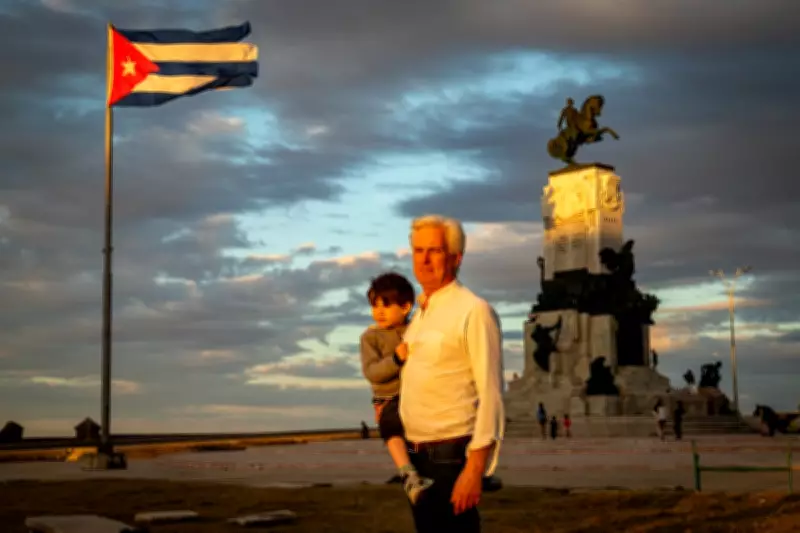
In the heart of Havana, the Malecón stands as a weathered symbol of Cuba's turbulent history. Here, Ruaridh Nicoll walks with his son, Santiago, amidst a landscape where rolling blackouts and overflowing rubbish bins have become the grim norm. Yet, for Nicoll and his family, this island, spiralling into tragedy, remains home. Whether blame is placed on the US embargo or the communist regime's failures, Cuba's vast human experiment is undeniably reaching a bitter end.
The Roots of Revolution and Ruin
Felix Valdés García was just nine years old when revolutionaries dynamited his family's cherished trees on their 800-hectare farm near the Sagua River. This act, part of the 1970s Revolutionary Offensive to boost sugar production, marked the beginning of a lifelong connection to Cuba's communist ideals. Decades later, as Nicoll's father-in-law, Felix's memories echo through a country now grappling with economic collapse. The economy has contracted by 11% between 2019 and 2024, with a further 5% decline through September 2025, leaving streets littered with waste and children begging for scraps.
Power cuts are relentless, spoiling food and disrupting sleep, while protests are met with authoritarian force. Unlike the "special period" after the Soviet Union's fall, when hope persisted despite starvation, today's crisis is marked by despair. Carlos Bustamante, a film producer, notes, "Now there is food, if you can afford it, but no hope." A small super-class has emerged, importing goods at inflated prices, while most Cubans struggle on pensions worth mere dollars monthly.

The Human Cost of Collapse
The revolution once lifted many from poverty, offering free healthcare and education, but now it beggars them anew. An estimated 20% of the population has emigrated since the pandemic, often the best and brightest, leaving behind elderly relatives in tattered clothes. Martha Ortega, a former Communist party secretary, lives on a $5 monthly pension, lamenting, "We lived with a dream, with a devotion. And then everything was gone."
For Nicoll, daily life is a battle. During a five-day blackout, his toddler son, Santiago, fell ill due to unsanitary conditions, prompting a moment of doubt. Yet, his wife, a literary professor at the University of Havana, remains steadfast, awed by the city's beauty despite friends fleeing abroad. She teaches in darkened classrooms, her students showing up in the gloom, a testament to enduring resilience.
Missed Opportunities and Baffling Policies
Cuba's history is riddled with failed attempts at prosperity. The sugar harvest that destroyed Felix's trees fell short, and later ventures—like nuclear power stations or bioengineering—fizzled out. Tourism, once a hope, now sees half the visitors since 2019, even as 7,000 hotel rooms were added. A 2021 currency unification sparked hyperinflation, decimating state salaries and pensions, while corruption trials offered no explanations.
Michael Bustamante of the University of Miami argues the government "missed every opportunity" to improve the economy. Children skip school to beg, and hospitals lack basic medicines, doubling infant mortality rates. Doctors persevere in dirty facilities, but the once-vaunted healthcare system is crumbling.
Exile and Opposition
Across the Florida Straits, Miami's exile community watches closely. Pedro Freyre, a prominent attorney from a family that fled the revolution, recalls efforts to invest during Obama's thaw, now replaced by calls for intervention. José Daniel Ferrer, a former political prisoner, endured years of torture in Cuban jails before accepting exile, declaring, "There is nothing to lose with the fall of the regime."
Yet, within Cuba, a bitter cynicism prevails. Jokes circulate about May Day marches leading to psychiatric hospitals, and intellectuals like Katrin Hansing note a growing anti-education sentiment among youth. Felix, reflecting on communism, calls it "a beautiful idea," even as its reality fades.

A Glimmer of Hope in Decay
On a family trip to Viñales, Nicoll encounters a new class of traders flaunting wealth, a stark contrast to revolutionary ideals. Later, visiting Felix's old farm, they find it reclaimed by forest, all traces of past labour gone. Planting a lemon tree in the clearing, they witness a yellow butterfly float by—a fleeting moment of beauty in a land of madness.
Cuba's revolution may be ending, but for those who stay, like Nicoll's family, it's a complex tapestry of loss, loyalty, and lingering hope. As the island awaits an uncertain future, its people endure, caught between a crumbling past and an elusive tomorrow.