Cyberscam Survivors Face Homeless Crisis as Aid Falls Short in Southeast Asia
Charities and aid workers are urgently calling for international government support for victims of southeast Asia's deadly scam compounds, following a damning report by Amnesty International. The research, published in January, reveals that survivors of cyberscam "farms" are being left destitute and abandoned on city streets in Cambodia and Myanmar, describing the situation as an "international crisis."
Aid workers report that not enough humanitarian organisations are stepping up to assist survivors, despite a mounting number of foreigners sleeping on streets and in desperate need of food and shelter. Hundreds of thousands of people from over 50 countries are estimated to be trapped inside vast compounds across Cambodia, Myanmar, Laos, the Philippines, and Malaysia.
Trafficked and Trapped in Hellish Conditions
Most victims are enticed to the region with promises of well-paying jobs, only to be trafficked across borders and forced by criminal gangs into catfishing unsuspecting individuals out of money. Refusal risks torture, sexual assault, or even death. Amnesty's research identifies a growing number of traumatised individuals stuck in Cambodia, homeless and without passports or money, as "an international crisis on Cambodian soil."

Montse Ferrer, Amnesty's regional research director, stated, "We don't see the Cambodian state offering victim screening for these individuals or other support that you'd expect in a situation like this: a humanitarian crisis. NGO support is insufficient, especially in the wake of widespread aid funding cuts over the past year."
Inadequate Shelter and Support Systems
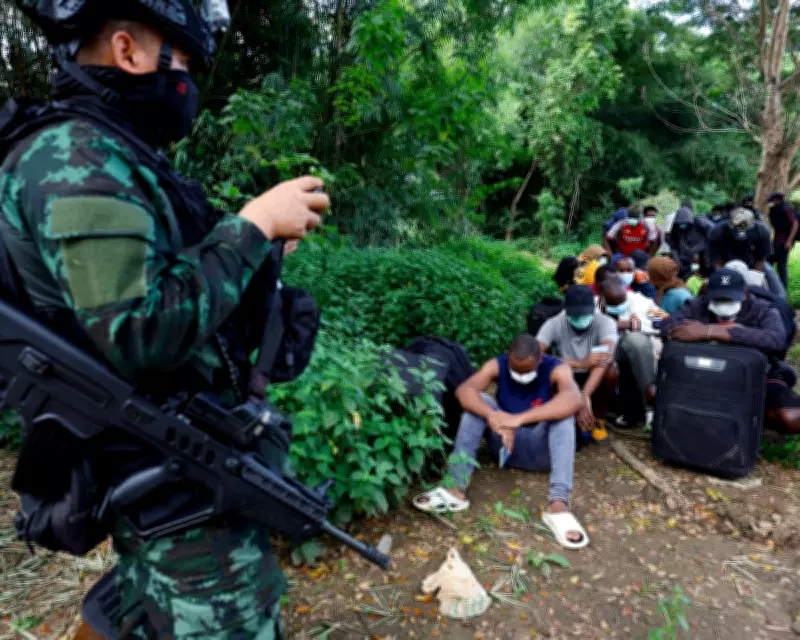
In Cambodia, many escapees are sleeping on the streets, while in Myanmar, those rescued by authorities are held in car parks, military camps, or detention centres for weeks while awaiting processing, according to Amy Miller, southeast Asia director of aid agency Acts of Mercy. Over the past year, Thailand and Cambodia's governments, along with Myanmar's military junta, have begun cracking down on these operations, which became permanent fixtures along borders since the Covid pandemic.
More than 7,000 people were rescued in an operation in Myanmar last February, with a further 2,000 in October. Andrey Sawchenko, the International Justice Mission's vice-president for programme impact in Asia-Pacific, emphasised that if more operations are planned, support must be available for thousands of survivors who may have physical and mental health needs.
Personal Stories of Survival and Suffering
Felix, a 31-year-old from Ethiopia, was trapped for 18 months in two different compounds in Myanmar before being released by his captors after 18-hour shifts at a computer triggered a chronic kidney problem that made him a hindrance. He described the conditions, with no medical care and frequent violence, as "like hell," saying, "They punch you, they kick you, everything."
Some victims escape by hiding in dense jungle, risking capture and death, while others pay a ransom for release. An increasing number are rescued by local NGOs like the Thailand-based Immanuel Foundation and governments. Local authorities or charities then work with embassies to repatriate them, but during the wait, finding food or shelter can be extremely difficult.
Overwhelmed Aid Groups and Systemic Barriers
The International Justice Mission supported Felix with money for food during his two-month wait in Bangkok until repatriation. He later had to have his kidney removed. Smaller aid groups and local shelters are overwhelmed and underfunded, said Miller, noting that large organisations like the Red Cross are not engaged. "There is very little humanitarian assistance across the board for this issue," she added.
Agencies face challenges due to widespread funding cuts and access problems in Cambodia and Myanmar, where strict rules govern international group operations. Ferrer commented, "It would be great if there were more humanitarian aid organisations, NGOs, civil society organisations operating."

Bias and Legal Hurdles Compound the Crisis
Further barriers to aid include bias against survivors involved in cybercrime, making them less than ideal beneficiaries. Miller explained, "There is a major bias that's happening across the sector in general; that most do not see them as victims of human trafficking." While Thailand has a more robust victim screening process compared to Cambodia, both countries have arrested victims, which Miller calls "a blind spot in the humanitarian resource category."
In Cambodia, Ling Li of the EOS Collective, which supports scam industry survivors, noted that the UN International Organization for Migration cannot provide accommodation without a valid visa, which victims rarely have after being smuggled across borders. Li questioned, "If international institutions who have victim protection in their mandate cannot provide protection, emergency assistance, or even a safe space for trafficking survivors, what is their role on the ground?"
Risk of Re-trafficking and Calls for Government Action
Without proper help, victims might return to scam farms for shelter. Miller warned, "The potential to be caught back up in this form of trafficking or any other kind of exploitation in their home countries or wherever they are is high." Tomoya Obokata, UN special rapporteur on contemporary forms of slavery, believes governments should provide safe houses, medical, and psychological support before victims travel home.
Miller highlighted that the sheer volume of escapees is overwhelming, calling for cross-government cooperation and for people to be treated as victims until proven otherwise. Obokata suggested governments confiscate scam proceeds to fund frontline groups, stating, "There's no excuse for governments to say they do not have any resources."