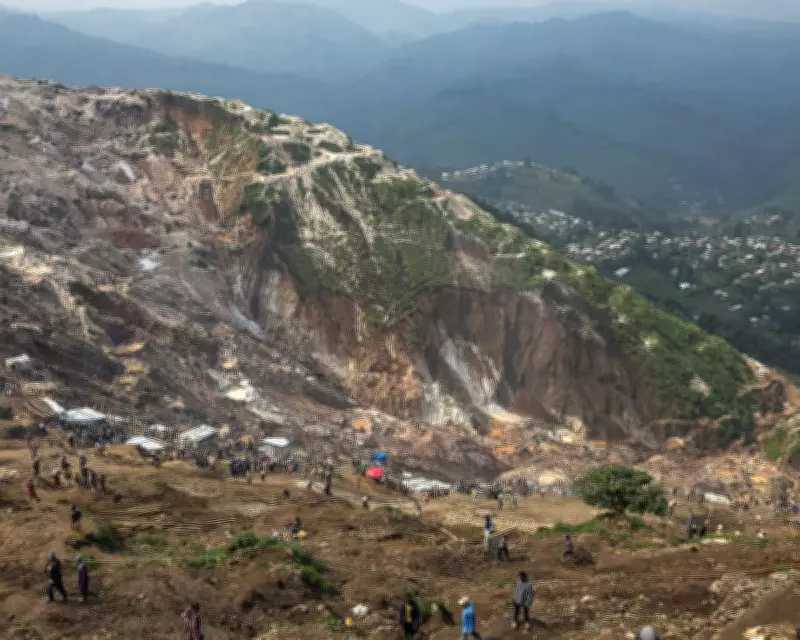
A devastating landslide at an open-pit coltan mine in Rubaya, Democratic Republic of Congo, at the end of January, which claimed the lives of at least 200 artisanal miners, has cast a stark and tragic light on the human cost of the global scramble for critical minerals. This catastrophic event, where workers were crushed or suffocated, transforming the site into what one survivor described as a tomb, underscores the perilous conditions faced by labourers as international powers intensify their competition for resources deemed essential for the green energy transition and advanced military technology.
Geopolitical Maneuvering and Resource Extraction
Former US President Donald Trump recently boasted about halting conflict between Rwanda and the DRC, though fighting persists at an appalling human cost, and explicitly linked this to mineral access, stating that regional leaders had implored him to "take our minerals." Following through, the Trump administration launched "Project Vault," a nearly $12 billion strategic reserve plan, and Senator JD Vance convened a summit to establish a critical minerals trade zone. These moves are widely seen as efforts to counter Beijing's dominance, as China was quicker to recognize the strategic importance of such resources and has aggressively pursued infrastructure-for-resources deals across Africa.
A Flawed Deal and Weakened Safeguards
Central to international strategies is a deal touted to bring wealth and peace incentives to the DRC. However, ground-level observers remain deeply sceptical, noting the agreement fails to help the DRC build domestic processing capacity and locks in a decade-long freeze on tax and regulatory reforms. Meanwhile, the European Union, often portraying itself as taking the ethical high ground, agreed in December to weaken key due diligence rules in its minerals legislation, further eroding protections.

The DRC's immense mineral wealth, including coltan which yields tantalum vital for jet engines, missiles, smartphones, and laptops, has been violently plundered for centuries, enriching foreign nations and a select few locals while leaving four-fifths of the population in poverty. As journalist Nicolas Niarchos articulates in his book The Elements of Power, a troubling trade-off has been made: "cleaner power at home for pollution and suffering elsewhere."
Conflict, Smuggling, and Regional Instability
The disaster in Rubaya occurred in territory seized by M23 rebels, with mines there generating an estimated $800,000 monthly, directly funding the insurgency. Rwanda is accused of backing M23, a claim Kigali denies, and experts report Rwanda is now selling far more coltan than it produces, indicating unprecedented levels of smuggling across the border. The EU's minerals pact with Rwanda has faced justified criticism for exacerbating these dynamics.
The Broader Continental Security Nexus
Natural resources are increasingly intertwined with security policies across Africa, as noted by the African Policy Research Institute. This involves Russian private military companies, US promises of peacebrokering, and China's infrastructure model. While rising demand could theoretically give African states leverage to negotiate more equitable partnerships that benefit their populations, this depends critically on institutional strength, regional coordination, transparency in deal-making, and an unwavering commitment not to compromise human rights, environmental standards, or national sovereignty. The current situation in the DRC offers little encouragement that these conditions are being met.
Meeting global climate goals will require a massive increase in production of minerals like lithium and cobalt, but environmental despoliation, community evictions, and the exploitation of labourers, including children, are not inevitable consequences of shifting away from fossil fuels. As Global Witness suggests, the driving force behind initiatives like Project Vault may be less about green energy and more about securing minerals for military technology. The Rubaya disaster is a grim reminder that without robust safeguards and ethical frameworks, the race for critical minerals will continue to extract a deadly human toll.