Ethiopia's Sea Access Ambitions Spark Fears of Regional Conflict
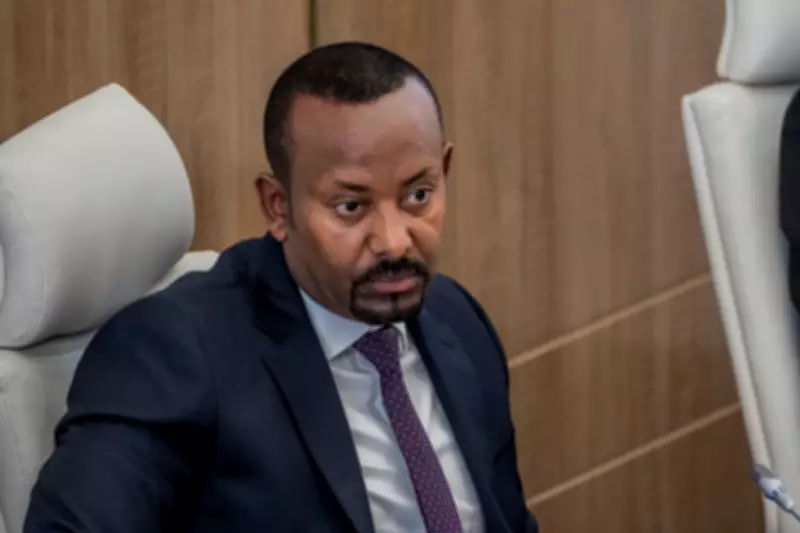
Ethiopian Prime Minister Abiy Ahmed presents himself as a renaissance leader striving to restore his nation's historical greatness. However, his determined pursuit of sovereign access to the sea through neighboring Eritrea is stoking fears of a dangerous regional confrontation.
Provocative Military Displays
During a recent stadium parade in southern Ethiopia, special forces demonstrated maneuvers widely interpreted as a message to Eritrea. A prominent banner declared Ethiopia would not remain landlocked "whether you like it or not," accompanied by imagery of a soldier breaking through a door toward the port of Assab.
This display occurred before top government and military officials, with Eritrea subsequently warning that Ethiopia harbors a "long-brewing war agenda" to seize Assab. Analysts report military buildups along the Ethiopia-Eritrea border, heightening tensions in the volatile Horn of Africa region.

Economic Imperatives and Regional Tensions
Ethiopia's landlocked status imposes significant economic burdens. Most trade passes through Djibouti's port, costing approximately $1.5 billion annually—a sum that recently exceeded the country's entire foreign exchange reserves according to the Africa Practice consulting firm.
Abiy previously sought sea access through a controversial deal with Somaliland two years ago, angering Somalia which claims authority over the semiautonomous region. While that dispute has cooled, the current focus on Assab—part of Eritrea since its 1993 independence—threatens more serious consequences.
Complex Regional Dynamics
The International Crisis Group warns that without international intervention, belligerents "could find themselves party to a new regional war that would prove difficult to contain or end." United Nations Secretary-General António Guterres has urged respect for the border treaty signed 25 years ago.
Complicating matters, Tigray's rebellious leaders and Eritrea appear to be coordinating against Ethiopian forces according to Professor Kjetil Tronvoll of Oslo New University College. This follows the brutal 2020-2022 civil war where Ethiopia's military and Eritrean allies fought against the Tigray People's Liberation Front.
Abiy's Ambitious Agenda
Since rising to power in 2018 as a reform-minded pragmatist, Abiy has pursued an expansive vision for Ethiopia's renewal. His "medemer" philosophy emphasizes strength through unity, while concrete projects include the controversial Grand Ethiopian Renaissance Dam, a nuclear power program, 1.5 million housing units, and Africa's largest airport outside Addis Ababa.
However, the prime minister faces significant challenges beyond sea access. Ethiopia remains the world's most populous landlocked nation with over 130 million people, while ethnic conflicts persist in Amhara and Oromia regions where federal troops battle militants.
Diplomatic Fallout and Domestic Criticism
Eritrean officials dismiss Abiy as foolish, with government spokesman Yemane Gebremeskel describing Abiy's Prosperity Party as the "Potemkin party" that "continues to spew toxic and provocative vitriol against the sovereignty and territorial integrity of neighboring nations."
Critics argue Abiy's public provocations mask internal problems, noting that ambitious infrastructure projects contrast with reports of hunger in parts of Ethiopia. A war over sea access would divert troops and resources from domestic development goals, potentially undermining Ethiopia's economic progress.
The situation remains volatile with sporadic clashes within Ethiopian territory and accusations of drone attacks by Tigrayan officials. As Ethiopia asserts that Eritrea is "actively preparing to wage war," the international community watches anxiously, hoping diplomatic solutions can prevent another devastating conflict in the region.