The Mysterious Disappearance of Bolivia's Former Leader
For more than a year, former Bolivian president Evo Morales maintained a surprisingly public profile despite facing serious legal challenges. An arrest warrant for human trafficking charges did little to deter the nation's first Indigenous president from attending rallies, granting interviews to foreign journalists, and even casting his vote in the 2025 presidential election. However, this visible presence came to an abrupt halt shortly after the United States launched an attack on Venezuela and detained President Nicolás Maduro.
From Vocal Critic to Complete Silence
Morales initially responded to the Venezuelan crisis with characteristic vigour, condemning the American action as "brutal imperial aggression" both on social media and during his regular Sunday radio broadcast from the Chapare region. This coca-producing heartland in central Bolivia had long served as his political base. Yet, since that broadcast, Morales has vanished entirely from public life, missing four consecutive editions of his radio programme and all scheduled public appearances.
The sudden disappearance has ignited a firestorm of speculation across Bolivia's political landscape. Conservative MP Edgar Zegarra Bernal has claimed Morales fled to Mexico, though he provided no evidence to support this assertion. Bernal instead challenged the government to prove otherwise, questioning why the arrest warrant against Morales hasn't been enforced.

Official Explanations and Unofficial Theories
Political allies and coca growers' unions have offered a medical explanation for the absence, stating that Morales contracted dengue fever, a mosquito-borne illness common throughout Latin America. During the first radio broadcast without Morales, the presenter announced the former president had "caught dengue". The following week, former senator Leonardo Loza added to the mystery by refusing to disclose Morales's location, saying only that he was "in some little corner of our Patria Grande" - a term referring to Hispanic America.
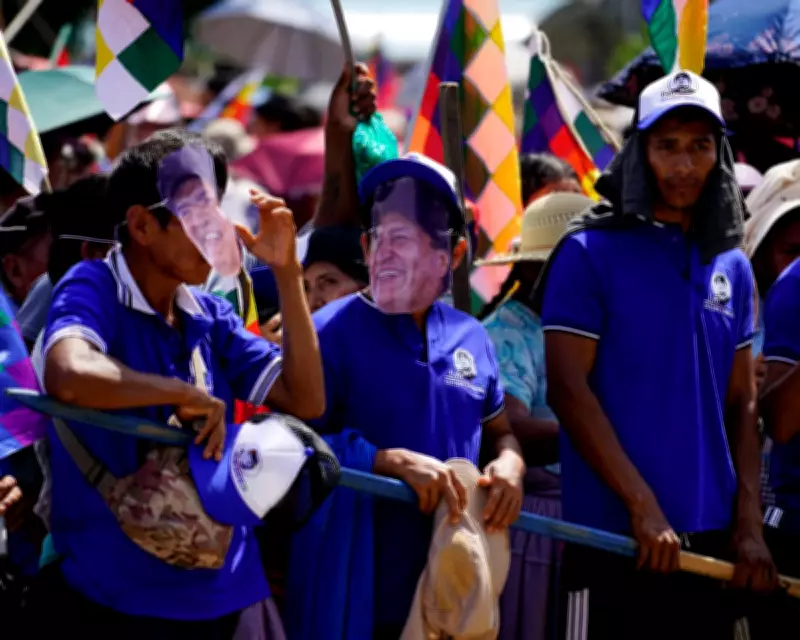
Supporters have responded to the uncertainty with characteristic creativity, donning masks of Morales's face during celebrations and even producing a musical tribute titled "Where Is Evo?" The song recounts his achievements as Bolivia's longest-serving president before concluding he remains "with the people".
Geopolitical Context and Historical Parallels
The disappearance occurs against a backdrop of shifting international alliances. Centre-right President Rodrigo Paz Pereira has been actively strengthening ties with the United States, seeking support for Bolivia's struggling economy and acute dollar shortage. A key objective involves reinstating the US Drug Enforcement Administration (DEA), which Morales expelled in 2008 following violent clashes in Chapare that resulted in dozens of coca growers' deaths.
Political analyst José Orlando Peralta notes the significance of this diplomatic realignment: "Given the relationship Paz Pereira has sought to establish with the White House and the emphasis Trump has placed on a so-called 'war on drugs', it's surely only a matter of time before the DEA returns to Bolivia." Peralta believes this development would "obviously complicate Evo Morales's political and private life."
Legal Troubles and Political Persecution Claims
Since October 2024, Morales had been effectively barricaded in a remote jungle village where hundreds of coca farmers prevented police from executing an arrest warrant. The warrant stemmed from allegations that he fathered a child with a 15-year-old girl during his presidency in 2016 - accusations Morales has consistently denied as political persecution orchestrated by his former protégé, ex-president Luis Arce.
Arce, deeply unpopular amid Bolivia's worst economic crisis in four decades, declined to seek re-election. Paz Pereira's subsequent victory brought an unexpected twist: rather than moving against Morales, the new government arrested Arce on accusations of enabling illicit enrichment during his tenure as Morales's finance minister.

Conflicting Accounts and Limited Information
Government Minister Marco Antonio Oviedo has stated that "the information available" suggests Morales remains in Chapare, though Paz Pereira himself has declined to comment on the former president's whereabouts. A coca growers' leader speaking anonymously offered a more optimistic assessment: "Comrade Evo is already in full recovery and will soon resume his public agenda. There will be a surprise soon; he has already overcome dengue."
Morales has resumed social media activity, criticising Paz Pereira's government through posts, though analyst Peralta cautions that "that is no guarantee that he is here or elsewhere, because it's well known that he does not usually write his own tweets." Given that dengue symptoms typically don't exceed one week in milder cases, Peralta believes "either Morales has fled or he is more seriously ill - it is not typical of him to disappear from the media agenda for this long."
The mystery deepens as Bolivia navigates complex domestic politics and evolving international relationships, with Morales's fate remaining one of the nation's most compelling unanswered questions.