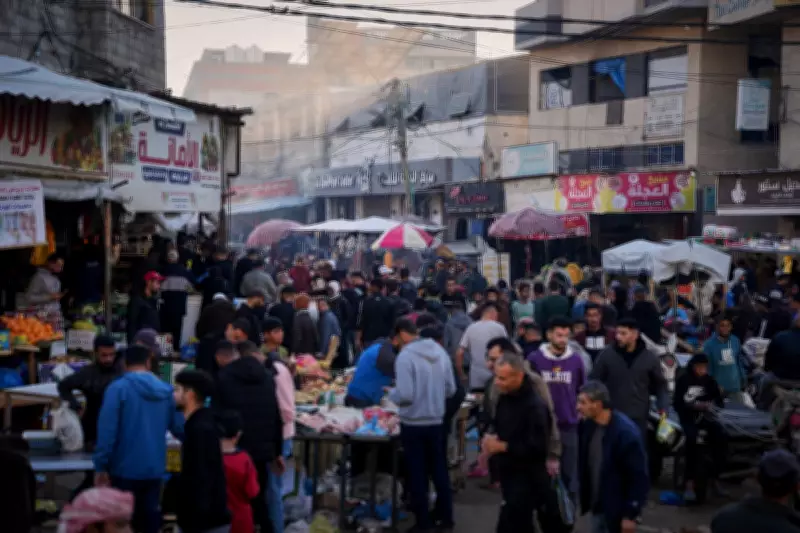
Panic buying and widespread stockpiling have erupted across Gaza as Israel shuttered all border crossings into the territory following coordinated US-Israeli strikes on Iran, sparking acute fears of a return to famine conditions.
Security Adjustments Trigger Immediate Closure
In a statement issued on Saturday, Israel's Coordination of Government Activities in the Territories (COGAT) agency declared that new "security adjustments" necessitated by the conflict with Iran required the immediate closure of all crossings into the Gaza Strip. The closures, affecting key transit points including the vital Rafah crossing with Egypt, are to remain in effect "until further notice."
Markets Emptied as Prices Soar
Reports from Associated Press and Al Jazeera depict scenes of frantic purchasing, with residents rushing to markets to secure dwindling supplies. Essential commodities such as sugar, flour, cooking oil, and yeast are in critically high demand, leading to rapidly emptying shelves and skyrocketing prices for basic goods.

This crisis emerges just months after the population endured severe food scarcity and localized famine due to an Israeli blockade last year. The territory, where almost all two million residents have been displaced since Israel's devastating offensive, is now almost entirely reliant on humanitarian aid—a lifeline that has been abruptly suspended by the border closures.
Contrasting Narratives on Food Security
Israeli COGAT officials asserted that the closure "will have no impact on the humanitarian situation in the Gaza Strip," claiming that substantial food quantities imported since the beginning of a recent ceasefire amount to "four times the nutritional needs of the population" according to United Nations methodology. They stated that existing food stocks "are expected to suffice for an extended period."
However, these assurances starkly contrast with the reality on the ground and prior warnings from the UN. In February, the UN cautioned that aid missions continued to face significant obstacles in delivering essential food and medicines to Gaza, a situation now exacerbated by the total border shutdown.
Resident Fears and Historical Trauma
Local residents have expressed profound anxiety about further neglect and deprivation. One Gaza resident told Al Jazeera, "I lived through famine like everyone else. The worst days were when I had to buy a sack of flour for more than 1,000 shekels. I don’t want to relive that experience."
He added, "Goods run out quickly, and the conditions we live in may spoil whatever we store. All we need is for someone to reassure us that the closure of the crossings will not last." This sentiment underscores the fragile psychological state of a population still grappling with the trauma of recent shortages.
Rafah Crossing's Brief Reopening
The Rafah crossing, on Gaza's southern border with Egypt, had only reopened at the beginning of February 2026, permitting a limited number of Palestinians—including patients requiring urgent medical care—to cross for the first time in months. Its renewed closure represents a significant setback for humanitarian access and civilian mobility.
Regional Escalation and Casualties
The border closures follow a significant escalation in regional hostilities. Separately, Israeli authorities reported that nine people were killed in an Iranian missile strike on the town of Beit Shemesh. The missile reportedly evaded Israel's air defenses, striking a residential area as Iran launched a fresh wave of retaliatory strikes against Israel on Sunday.
Israeli officials also stated they had neutralized an Iranian warhead that landed near holy sites in Jerusalem, highlighting the broadening geographic scope of the conflict and its direct impact on civilian areas.
The confluence of military strikes, border closures, and suspended aid has created a perfect storm of insecurity and scarcity in Gaza, leaving its beleaguered population once again facing an uncertain and precarious future.